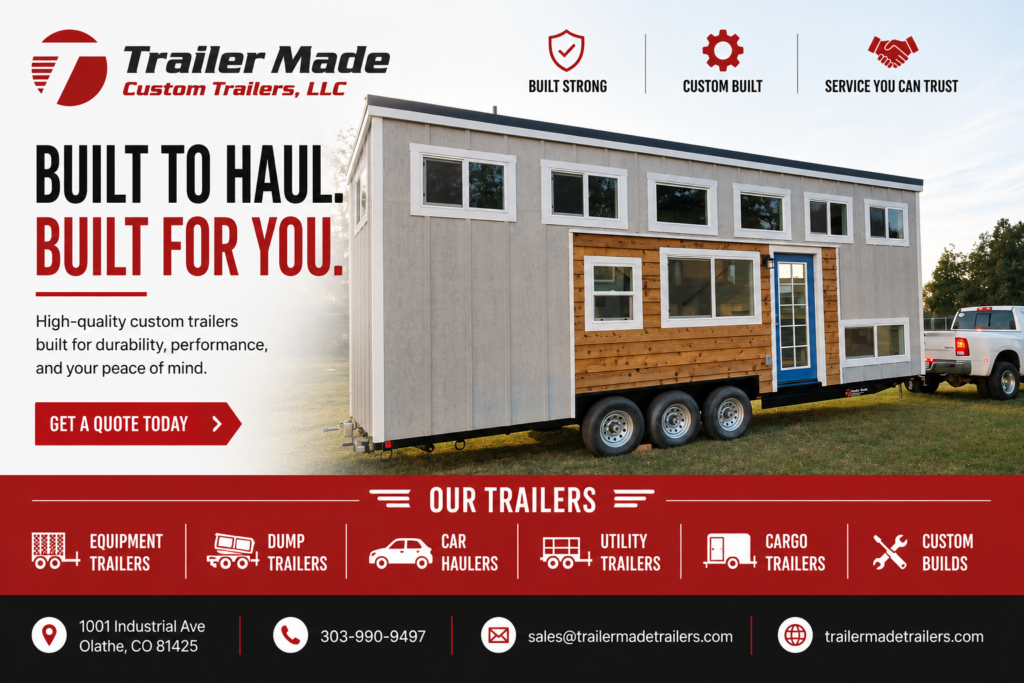
I’ve been around trailers long enough to know most people don’t think twice about where theirs came from. It’s a trailer, right? Hitch it, load it, go. But if you’ve ever hauled equipment through a Rocky Mountain winter or up a switchback with a full load of gravel, you know pretty quick that not all trailers are built the same. Colorado’s terrain and weather do something to metal that flatland states just don’t deal with. Elevation changes, temperature swings, ice on the axles in January and dust storms in July — it’s a lot to ask of a welded frame. That’s part of why trailer manufacturers in Colorado tend to build a little different, a little tougher, whether they say so outright or not.
The Terrain Problem Nobody Talks About
Steep grades chew up brakes. Thin air messes with engine performance, which means more strain gets transferred onto the trailer itself when trucks are already working harder than usual. Add gravel roads, ranch land, ski resort construction sites, oilfield access roads — Colorado throws a lot at a trailer that, say, a flat stretch of Kansas highway never would. Local builders know this because they live it. They’re not designing off a spec sheet from some coastal engineering team who’s never seen a 14,000-foot pass.
Why Custom Built Equipment Trailers Beat Off-the-Shelf Every Time
Here’s the thing nobody tells you at the dealership. A stock trailer is built for the average buyer, whoever that is. It’s a compromise, and compromises show up right when you need the trailer most, usually mid-load, usually in bad weather. Custom built equipment trailers get made around your actual equipment, your actual job site, your actual towing setup. Deck length, axle placement, ramp angle, tongue weight — all of it gets dialed in instead of guessed at. I’ve talked to contractors who switched to custom trailers just because their skid steer kept sitting crooked on a stock deck. Small thing. Big annoyance every single day.
Deck Configurations and Load Ratings, Explained Plainly
You’ll hear a lot of numbers thrown around — GVWR, payload capacity, deck height — and honestly some of it is marketing noise. What matters is whether the trailer’s rated for what you’re actually hauling, not what you might haul someday. A good builder will ask hard questions before they ask what color you want. If they don’t ask, that’s a flag.
How to Vet a Trailer Manufacturer Before You Buy
This part’s simple but people skip it anyway. Go look at the shop. Actually walk in. You can tell a lot from how organized the welding bay is and whether the steel stock looks half-rusted in a corner or properly stored. Ask who’s doing the welding and how long they’ve been there — turnover in a trailer shop usually means quality control problems somewhere down the line. And ask about warranty terms in plain language, not the fine print version.
Questions Worth Asking Before You Sign Anything
What gauge steel are they using on the frame versus the deck? Do they powder coat or just spray paint, because those age very differently under UV and road salt. Is the axle brand something you can actually get parts for locally, or is it some off-brand thing you’ll be waiting three weeks on when it fails. These aren’t trick questions, they’re just the ones a lot of buyers forget to ask until it’s too late.
What Local Builders Understand That Big Box Retailers Don’t
Big retail trailer lots move volume. That’s their whole model, and there’s nothing wrong with it if you’re hauling a couple lawnmowers to the dump twice a year. But if you’re running a business off that trailer, hauling skid steers or excavators or hay five days a week, volume-focused retail just isn’t built for your problem. Regional manufacturers, especially ones rooted in Colorado, tend to build relationships instead of just transactions. You can call them. They remember your name and probably your last order too.
The Real Cost of Cheap Trailers Over Time
A cheap trailer isn’t cheap, it’s just delayed spending. You’ll pay for it eventually in axle replacements, cracked welds, or a deck that starts to sag after two seasons of heavy use. I’ve seen guys go through three budget trailers in the time it would’ve taken to buy one solid custom trailer and just keep it running for a decade. Do the math on that and it stops looking like savings.
Final Thoughts on Choosing the Right Trailer Partner
At the end of the day, picking from trailer manufacturers in Colorado isn’t just about who’s got the lowest price this week. It’s about who’s going to build something that survives the mountains, the mud, the cold snaps, and years of hard daily use without falling apart on you halfway through a job. Custom built equipment trailers cost more upfront, sure, that’s just true. But they’re built around your actual work, not somebody’s average guess at what you might need. Ask questions, visit the shop, talk to the welders if they’ll let you. That’s really the whole trick to it.