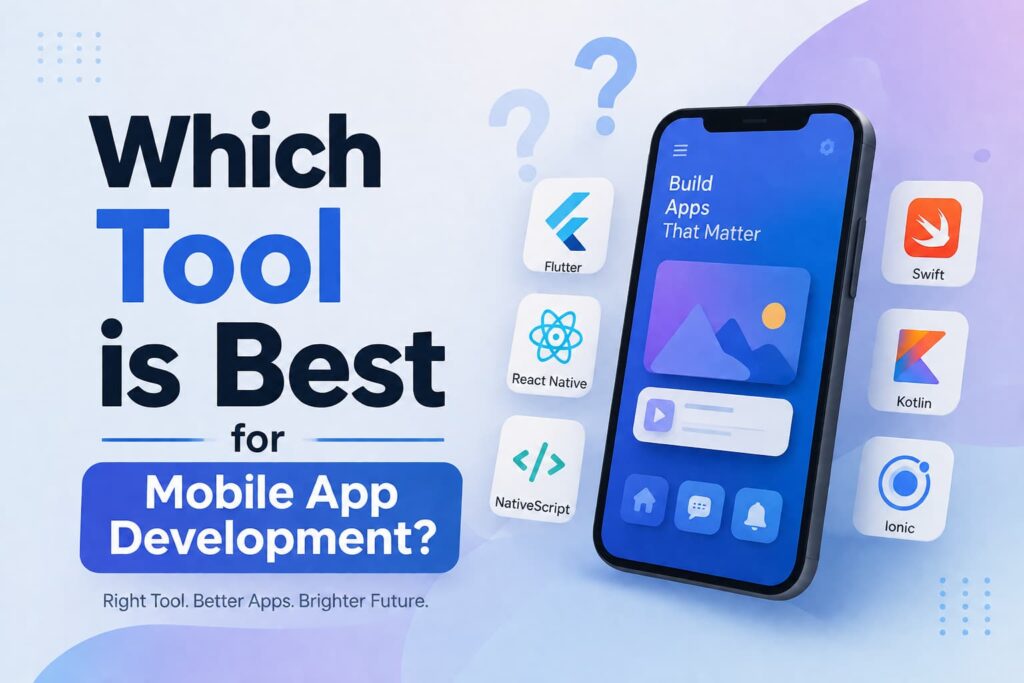
Picking a tool for your app feels harder than it should be. React Native, Flutter, Swift, Kotlin, the list keeps growing. Each one promises speed, quality, and easy scaling.
The truth is simpler than the marketing pages suggest. No single tool wins every time. The right choice depends on your app, your budget, and your team.
This guide walks through the major options honestly. No hype. Just facts you can actually use.
Why the Tool You Pick Actually Matters?
Your tool choice affects three big things: how fast you launch, how much you spend, and how your app performs later.
Pick the wrong one, and you might rebuild your app from scratch in a year. That costs time and money nobody wants to lose.
A good rule to remember: the best tool is the one that fits your project, not the one that’s trending on Twitter this month.
Native Development: Swift and Kotlin
Native tools build apps for one platform only. Swift works for iOS. Kotlin works for Android.
Why Teams Choose Native
Native apps run faster. They use less battery. They access phone features like the camera or GPS without extra work.
Big companies with big budgets often go native first. Think banking apps or apps handling sensitive data. Performance and security matter more than speed to market here.
The Downside
You need two separate codebases for iOS and Android. That means two teams, or one team working twice as long. Both options raise your mobile app development cost significantly compared to cross-platform tools.
Cross-Platform Tools: React Native and Flutter
Cross-platform tools let you write code once and run it on both iOS and Android. This saves serious time and money.
React Native
Built by Facebook, React Native uses JavaScript, a language many developers already know. This makes hiring easier and cheaper.
Popular apps like Instagram and Discord use React Native for parts of their apps. It has a huge community, which means faster bug fixes and more tutorials online.
Flutter
Google built Flutter using a language called Dart. It’s newer than React Native but growing fast.
Flutter apps often look more polished right out of the box. Its widget system gives designers tighter control over how things look on every screen.
|
Feature |
React Native |
Flutter |
|
Language |
JavaScript |
Dart |
|
Learning curve |
Easier for JS developers |
Steeper for beginners |
|
Performance |
Very good |
Excellent |
|
Community size |
Larger |
Growing fast |
|
Best for |
Content-heavy apps |
Design-heavy apps |
Neither tool beats the other in every category. Your project’s needs decide the winner here.
No-Code and Low-Code Platforms
Not every app needs custom code. Tools like Bubble, Adalo, and FlutterFlow let you build apps by dragging and dropping pieces together.
These platforms work well for:
-
Simple apps with basic features
-
Startups testing an idea quickly
-
Small businesses with tight budgets
They fall short when your app needs complex logic or heavy customization. At that point, you’ll likely outgrow the platform fast.
Many growing businesses eventually move toward custom app development services once their no-code app hits a ceiling. Custom code gives you full control that drag-and-drop tools simply can’t match.
Comparing Costs Across Tools
Cost is often the deciding factor for most teams. Here’s a rough breakdown to set expectations.
-
No-code platforms: cheapest option, good for testing ideas
-
Cross-platform tools: moderate cost, covers both iOS and Android together
-
Native development: highest cost, but best performance and polish
Keep in mind, cost also depends on your app’s features. A simple to-do app costs far less than an app with live chat, payments, and user accounts built in.
Hidden Costs to Watch
Beyond development, budget for these too:
-
App store fees (one-time and yearly)
-
Backend hosting and server costs
-
Ongoing maintenance after launch
-
Updates for new phone models and OS versions
Many first-time founders forget maintenance costs entirely. Your app needs care long after it launches.
How to Actually Choose
Ask yourself these questions before deciding:
-
Is speed to market your top priority? Choose cross-platform.
-
Does your app need top-tier performance? Choose native.
-
Are you just testing an idea? Try no-code first.
-
Do you have a tight budget but need real features? Cross-platform usually wins here.
There’s no universal answer. A gaming app has different needs than a simple booking app. Match your tool to your actual goals, not to what’s popular this year.
Final Thoughts
The best tool for mobile app development isn’t one fixed answer. It changes based on your project, budget, and long-term plans.
Native tools give you power and speed on the device. Cross-platform tools save money and time across two platforms at once. No-code tools help you test ideas fast without writing a single line.
Think about where your app needs to go in two years, not just where it starts today. That long view will guide you to the right choice.