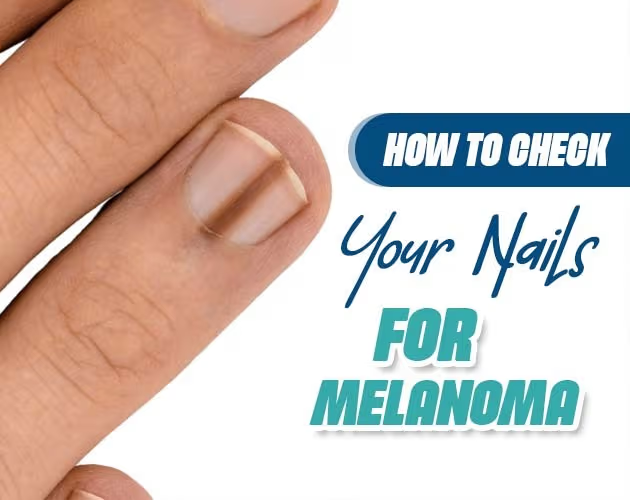
Noticing a dark line, unusual discoloration, or structural change under a fingernail or toenail can be alarming. While many nail changes stem from minor trauma, fungal infections, or benign bruises, some dark marks indicate a rare and serious condition known as subungual melanoma (melanoma of the nail unit).
Because subungual melanoma is frequently mistaken for everyday injuries, diagnosis is often delayed, giving the cancer time to advance.
If you suspect you may have melanoma in a nail, taking prompt, structured clinical action is critical. In this comprehensive guide, you will learn what nail melanoma is, how to identify its key warning signs, how doctors diagnose and treat it, and the precise steps you should take immediately to safeguard your health.
What is Subungual Melanoma? A Clinical Definition
Subungual melanoma (a form of acral lentiginous melanoma) is a subtype of skin cancer that originates in the nail matrix, the tissue located beneath the cuticle where new nail cells are generated.
Unlike typical skin melanomas that develop on sun-exposed areas due to ultraviolet (UV) radiation, melanoma in the nails is not primarily caused by sun exposure. Instead, it stems from genetic factors, cellular mutations in the nail matrix, or in some cases, repetitive micro-trauma. It occurs most frequently in the thumb, big toe, or index finger, though it can develop on any digit.
Because the nail plate obscures early tumor growth, subungual melanoma represents less than 3% of all melanoma diagnoses overall, but accounts for up to 75% of melanomas diagnosed in individuals with darker skin tones (including Black, Asian, and Hispanic populations).
Key Signs and Symptoms: The “ABCDEF” Rule
Dermatologists use the specialized ABCDEF mnemonic to help patients and clinicians recognize the clinical hallmarks of nail melanoma early:
- A – Age and Ancestry: Most cases occur in adults aged 50 to 70, with a higher relative prevalence among individuals of African, Asian, or Indigenous heritage.
- B – Brown to Black Band: The appearance of a vertical stripe (longitudinal melanonychia) running down the nail that is wider than 3 millimeters with irregular, blurred borders.
- C – Change: Rapid changes in the band’s size, color intensity, or width over time, or a lack of improvement despite anti-fungal treatments.
- D – Digit: Involvement of a single high-risk digit most commonly the thumb, big toe, or index finger.
- E – Extension (Hutchinson’s Sign): The darkening or spread of pigment into the skin surrounding the nail plate (the cuticle or lateral nail folds). Hutchinson’s sign is a major red flag for nail melanoma.
- F – Family History: A personal or family history of melanoma or dysplastic moles.
Additional Physical Symptoms To Watch For:
- Splitting, cracking, or crumbling of the nail plate (nail dystrophy).
- Lifting of the nail from the nail bed (onycholysis).
- Bleeding, oozing, or ulceration under the nail without an injury.
- A firm nodule or bump developing beneath the nail.
Subungual Melanoma vs. Subungual Hematoma (Nail Bruise)
Because many people mistake nail melanoma for a blood blister or bruise caused by stubbing a toe or catching a finger in a door, diagnosis is frequently delayed. Understanding the distinct differences between these conditions can help you act quickly.
| Feature | Subungual Hematoma (Bruise) | Subungual Melanoma (Cancer) |
| Primary Cause | Physical injury or blunt trauma. | Cellular mutation in the nail matrix. |
| Color Appearance | Reddish-purple, dark blue, or brown-black spot. | Dark brown to black vertical stripe or band. |
| Growth Pattern | Grows outward with the nail as it expands. | Remains fixed at the cuticle line and widens over time. |
| Surrounding Skin | Skin surrounding the nail remains clear. | Pigment often bleeds onto the cuticle (Hutchinson’s sign). |
| Pain Level | Painful initially, then fades within days. | Painless early on; becomes painful if it invades tissue or bone. |
What to Do Immediately: A Step-by-Step Action Plan
If you notice a dark line, changing mark, or suspicious deformity under your fingernail or toenail, follow these step-by-step clinical recommendations:
1. Document the Area Immediately
Remove any nail polish or artificial nails from all digits. Take clear, high-resolution photographs of the nail under bright, natural light. Note the exact date you first observed the dark mark.
2. Do Not Attempt to Treat It at Home
Avoid aggressive manicuring, picking at the cuticle, or digging beneath the nail plate. Do not apply over-the-counter anti-fungal creams assuming it is an infection, as this delays proper medical evaluation.
3. Book an Urgent Appointment with a Board-Certified Dermatologist
Contact a dermatologist or specialized skin cancer clinic. Inform the clinic staff that you have a “new or changing longitudinal dark streak on the nail,” which often allows for expedited triage.
4. Undergo Dermoscopy and Biopsy
At your appointment, the dermatologist will examine the nail using a dermatoscope, a specialized magnifying instrument that illuminates deep pigment structures. If suspicious features are detected, the doctor will perform a full-thickness nail matrix biopsy. A biopsy is the only definitive way to confirm or rule out cancer.
How is Melanoma in Nails Treated?
If a biopsy confirms subungual melanoma, a multidisciplinary oncology team will formulate a personalized treatment plan based on the cancer’s depth and stage.
1. Surgical Excision
Surgery is the primary treatment for localized nail unit melanoma:
- Melanoma In Situ (Stage 0): Managed conservatively by wide local excision of the affected nail apparatus while preserving as much surrounding skin and bone as possible.
- Invasive Melanoma: Requires surgical clearance of the primary tumor. While full digit amputation was historically standard, modern surgical approaches prioritize digit-sparing wide local excision whenever clinically safe to maintain functional use of the hand or foot.
2. Sentinel Lymph Node Biopsy (SLNB)
If the melanoma has penetrated deeper layers of the nail bed, your surgeon may evaluate adjacent lymph nodes (such as those in the elbow, armpit, or groin) to verify whether cancer cells have migrated beyond the digit.
3. Advanced Systemic Therapies (For Advanced Cases)
If melanoma has spread (metastatic disease), modern systemic treatments have drastically improved survival outcomes:
- Immunotherapy: Medications (such as checkpoint inhibitors) that train your body’s immune system to identify and destroy melanoma cells.
- Targeted Therapy: Drugs designed to target specific genetic mutations (such as BRAF or c-KIT mutations commonly found in acral melanomas).
Frequently Asked Questions
Is melanoma in the nail curable?
Yes. When detected early at Stage 1A (before the tumor penetrates deeply or spreads), the 5-year survival rate for subungual melanoma is approximately 95% to 97%. However, survival rates drop significantly if diagnosis is delayed until advanced stages, reinforcing the absolute importance of immediate screening.
Does gel polish or UV nail lamps cause subungual melanoma?
Subungual melanoma is not directly linked to UV light exposure in the same way traditional skin cancer is. However, excessive use of UV nail curing lamps can contribute to general UV-induced skin damage on the hands. Dermatologists recommend applying broad-spectrum sunscreen to hands or wearing fingerless UV-protective gloves before gel manicures.
Can a dark line under the nail be benign?
Yes. Many dark nail streaks (longitudinal melanonychia) are completely non-cancerous. They can be caused by simple trauma, fungal infections, pregnancy, certain medications, or benign racial melanonychia (common in individuals with darker skin tones). However, only a trained dermatologist can accurately differentiate a benign streak from melanoma.
How long does it take for a nail bruise to grow out?
A standard subungual hematoma (bruise) will visibly move toward the tip of the finger as the nail grows. Complete growth takes roughly 3 to 6 months for fingernails and up to 9 to 12 months for toenails. If a mark does not move outward as the nail grows, seek medical evaluation.
Conclusion
Subungual melanoma is rare, but its subtlety makes it dangerous. A dark streak, pigment extension around the cuticle, or unexplained nail damage should never be ignored or dismissed as a simple bruise. Early evaluation by a dermatologist can mean the difference between a simple local procedure and complex oncological treatment.