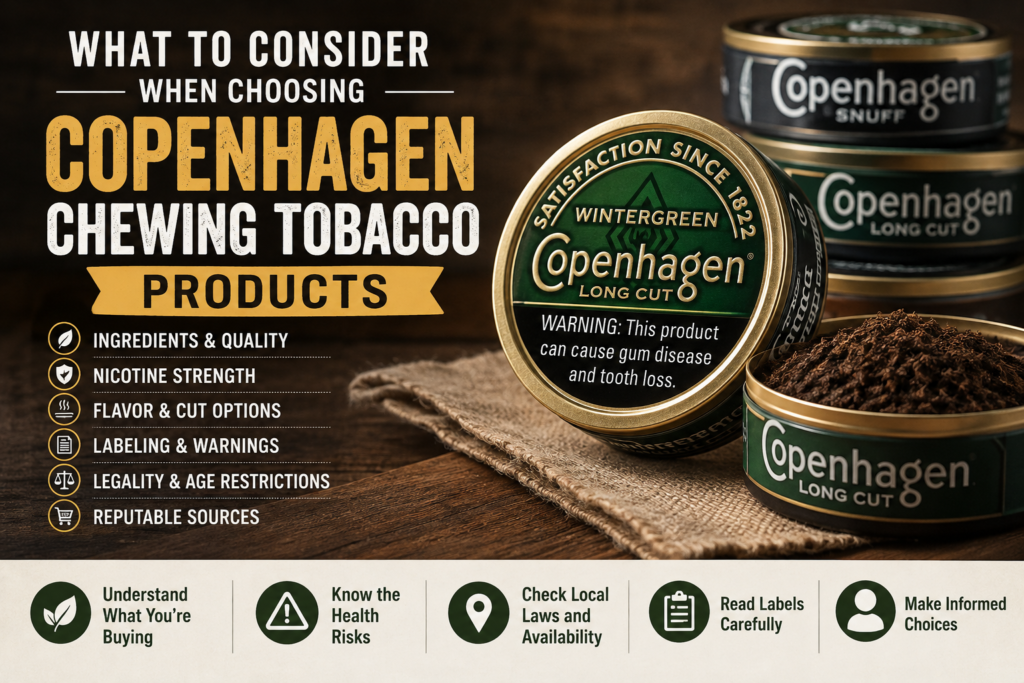
Choosing a tobacco product involves more than simply looking at packaging or brand recognition. Consumers may encounter different formats, flavors, strengths, ingredients, and labeling information, making it important to understand what distinguishes one product from another. This is particularly relevant when researching traditional smokeless tobacco products.
For readers exploring copenhagen chewing tobacco, understanding product information, health considerations, applicable regulations, and personal risk factors can provide a more informed perspective. This article looks at the main considerations without encouraging tobacco use.
Understanding the Product Category
Smokeless tobacco comes in several forms, including chewing tobacco, moist snuff, and related oral tobacco products. These products differ in how they are prepared, packaged, and used.
Before comparing products, it helps to understand exactly what type of tobacco is being considered. Terms such as natural chewing tobacco may describe a product’s positioning or ingredient presentation, but “natural” does not mean harmless or risk-free.
Consumers should carefully read the product label rather than relying on marketing terminology. Information about ingredients, tobacco content, nicotine, warnings, and manufacturer details can provide a clearer picture of what a product contains.
Check Ingredients and Product Information
Ingredient transparency is an important consideration when researching any tobacco product. Packaging may provide information about tobacco, flavoring agents, sweeteners, preservatives, and other ingredients.
Some consumers researching redman chewing tobacco may compare product descriptions, packaging, and ingredient information before deciding what they want to learn more about. However, differences in flavor, texture, or formulation do not eliminate the health risks associated with smokeless tobacco.
It is also important to distinguish between natural ingredients and safety. A product described as natural can still contain nicotine and other substances associated with significant health risks.
Consider Nicotine and Health Risks
Nicotine is addictive, and smokeless tobacco products can expose users to nicotine and other potentially harmful chemicals. Regular use can contribute to dependence and may have serious consequences for oral and overall health.
For this reason, health considerations should come before factors such as flavor, packaging, or perceived strength. People who do not currently use tobacco should avoid starting, while existing users who are concerned about dependence can consider speaking with a qualified healthcare professional about evidence-based cessation support.
This is especially important when comparing products simply because one appears milder or more traditional. Product differences should not be interpreted as evidence that one tobacco product is safe.
Compare Labels Rather Than Marketing Claims
Marketing language can sometimes make products appear substantially different from one another. Claims relating to tradition, heritage, ingredients, or preparation methods may attract attention, but they should not replace objective product information.
A better approach is to examine the actual package labeling and legally required health warnings. Consumers researching chewing tobacco for sale should also be aware that availability does not automatically mean a product is appropriate, safe, or legal for every individual or location.
Age restrictions, packaging requirements, taxation, and other tobacco regulations can vary by jurisdiction. These rules should always be checked using current official sources.
Understand Regional Differences
Product names and availability can differ considerably between countries. Someone searching for redman chewing tobacco in Canada, for example, may encounter different information than someone researching tobacco products in the United States.
Import restrictions, retail regulations, labeling requirements, and product availability can change depending on location. Therefore, consumers should not assume that information found on an international website applies to their own jurisdiction.
For informational research, it is useful to verify regulatory details with the appropriate government authority rather than relying solely on retailer descriptions or third-party articles.
Be Careful With “Natural” Tobacco Claims
The phrase natural chewing tobacco can create confusion if consumers interpret it as a health-related claim. Natural ingredients and reduced health risks are not interchangeable concepts.
Tobacco itself naturally contains nicotine, which is addictive. Tobacco products can also contain harmful substances regardless of whether they are described as natural, traditional, or minimally processed.
When evaluating such terminology, readers should focus on factual labeling and established health information rather than assuming that a particular preparation method makes a product safe.
Consider Dependence and Personal Circumstances
Another important factor is the potential for nicotine dependence. People who already use tobacco may find that repeated exposure makes stopping difficult.
Personal circumstances also matter. Individuals who are pregnant, have certain health concerns, take particular medications, or are trying to stop nicotine use should discuss tobacco and nicotine exposure with a healthcare professional.
For those considering purchasing tobacco products from retailers such as Backwoods Shop, understanding applicable age restrictions, laws, warnings, and health information should remain a priority.
Look Beyond Brand Recognition
Brand familiarity can influence consumer perception, but a well-known name should not automatically be treated as a measure of quality or safety.
When comparing products, readers should consider objective factors such as product category, ingredients, nicotine information, warning labels, packaging, legal requirements, and potential health consequences.
The same principle applies when comparing redman chewing tobacco with other smokeless tobacco products. Similar products may have differences in formulation, but all tobacco products should be assessed with an awareness of their associated risks.
Continue Reading
A previous article, “10 Factors to Consider When Choosing Natural Chewing Tobacco,” also emphasizes the importance of examining product characteristics before making assumptions based solely on presentation or terminology. That discussion provides useful background for readers interested in ingredients, product differences, and responsible evaluation.
Building on those ideas, this article highlights an additional point: product selection should not be separated from health awareness and legal considerations. Understanding what a product contains is useful, but understanding the risks associated with tobacco use is equally important.
Final Thoughts
Researching tobacco products requires a balanced approach. Packaging, ingredients, product type, nicotine content, labeling, regional regulations, and health considerations can all influence how a product should be evaluated.
Whether someone encounters copenhagen chewing tobacco, another traditional tobacco product, or information about redman chewing tobacco in Canada, it is important not to confuse product differences with differences in safety.
The most responsible approach is to review accurate product information, understand applicable laws, recognize the addictive nature of nicotine, and consider the established health risks associated with smokeless tobacco.
FAQs
1. What should consumers look at on a tobacco product label?
Consumers should review ingredients, nicotine information where provided, health warnings, manufacturer details, and applicable regulatory information.
2. Does “natural” mean that chewing tobacco is safer?
No. “Natural” does not mean harmless. Tobacco can contain nicotine and other harmful substances regardless of whether a product uses natural ingredients or terminology.
3. Is chewing tobacco addictive?
Yes. Tobacco products can contain nicotine, an addictive substance that can lead to dependence.
4. Do tobacco regulations differ between countries?
Yes. Age requirements, labeling rules, taxation, product availability, and import restrictions can vary significantly between jurisdictions.
5. What should someone do if they want to stop using tobacco?
People concerned about tobacco dependence can speak with a healthcare professional or a qualified tobacco-cessation service about evidence-based options and support.