Cape coral lots for sale
While many people take time to research neighborhoods, layouts, and building materials before purchasing a property, few people will spend the same amount of time investigating the ground beneath their property or any municipal requirements that must be completed before any digging is done on the property. The delay between the excitement and the research process wastes valuable resources for those involved.
Land in Cape Coral rewards buyers who do their homework early. This guest post goes into detail on all the important steps that need to be completed in advance before purchasing a lot in Cape Coral.
- Start With The Soil — Because It Dictates Everything
The city of Cape Coral is situated on unstable sandy soils. That soil composition directly influences the kind of foundation to be used, the amount of fill dirt needed, and the recommendations from the structural engineer.
Soil borings test will provide an accurate representation of what is found underneath. Engineers drill holes at different levels and take soil samples, among other tests, to establish the bearing load of the soil. In the absence of soil borings, construction companies build structures blindly, leading to costly changes during construction.
In case the soil borings indicate any form of inconsistency in the layers, then contractors are required to dig deeper and add more fill dirt to ensure a stronger foundation or redesign the entire structure. Catching this before you buy a home in Cape Coral keeps the project on budget.
- Flood Zones – Determine How You’ll Construct Your Home
The first thing to do is ensure that the lot you have set your eyes on is not in a flood-prone area. You can confirm this by checking its FEMA flood zone status. The designation will determine the construction specifications, the elevation certificates required, and the cost of insurance in the long run.
There are three flood zones in Cape Coral. Zone X is a low-risk flood zone where buying flood insurance is not necessary, though recommended. Properties belonging to Zone AE and Zone VE lie within the special flood hazard areas; therefore, the elevation of the house will be dependent on FEMA map data.
Cape Coral has one of the best ratings under FEMA’s Community Rating System, which has come from the city’s excellent canal network and flood plain management practices. As a result, the city has lower flood insurance rates, although stringent building standards will need to be followed as well.
Buyers exploring Cape Coral lots for sale should always request the flood zone designation and elevation certificate for any lot they consider seriously.
- Utilities – Don’t Assume They Exist
People often believe a lot will be automatically connected to the city’s sewer and water systems. This is usually not the case.
Make sure you know if your property can connect to the public water supply, or whether you will need to drill your own well and put in a septic system. Where utilities are currently being extended, you may also need to pay for a connection or sign a hold-harmless agreement between the seller and the city prior to constructing a home.
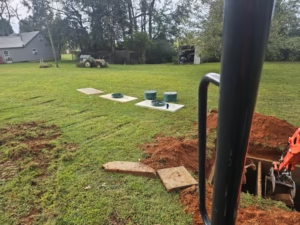
Where a septic system is required, a percolation test is conducted to check whether the soil can drain effectively. Soil incapable of this drainage is unsuitable for any septic system.
- Wetlands and Easements – The Unspoken Deal Breakers
Certain lots in Cape Coral include protected wetlands. According to Florida law, any development on protected wetlands requires a special permit, and often, construction in such areas is altogether impossible. Wetlands delineation check will help you identify the exact boundaries of the property in question, even before signing the purchase agreement.
Easements constitute another problem. Power lines and utilities may limit your freedom to construct buildings, driveways, and set up fences. It is always necessary to examine easement conditions and zoning requirements before treating a lot as fully developed land.
For waterfront Cape Coral lots for sale, it gets even more complicated. Each lot comes with its own requirements regarding seawalls, canal restrictions, and dock permits. If you decide to overlook these aspects, you’ll run into construction problems later.
- The Permit Process – What Is Needed in Cape Coral?
In Cape Coral, building permits are required for all construction. The permitting process is the coordination method for each department in the city. All necessary site plan information must be submitted to the Building Division before construction begins. Components of a complete site plan include: property boundaries; size and placement of all structures; setbacks; drainage calculations; soil boring data; and elevations.
Cape Coral requires a Notice of Commencement as part of the formal commencement of construction.
Those looking to buy a home in Cape Coral on a new lot should take permit time into consideration.
The Importance of the Right Contractor
All of this means the contractor has to be well-versed in the local area. Sposen Homes is an established home builder in Cape Coral with over 65 years of construction experience. They evaluate each lot before purchase, assist with permit approval, ensure compliance with flood zone laws, and take care of every detail so there are no surprises.
In addition, Sposen provides $35,000 of site prep for permits, impact fees, and site preparation costs included in all their prices. This means that the buyer will always know how much he or she needs to pay up front, without surprise fees during construction.
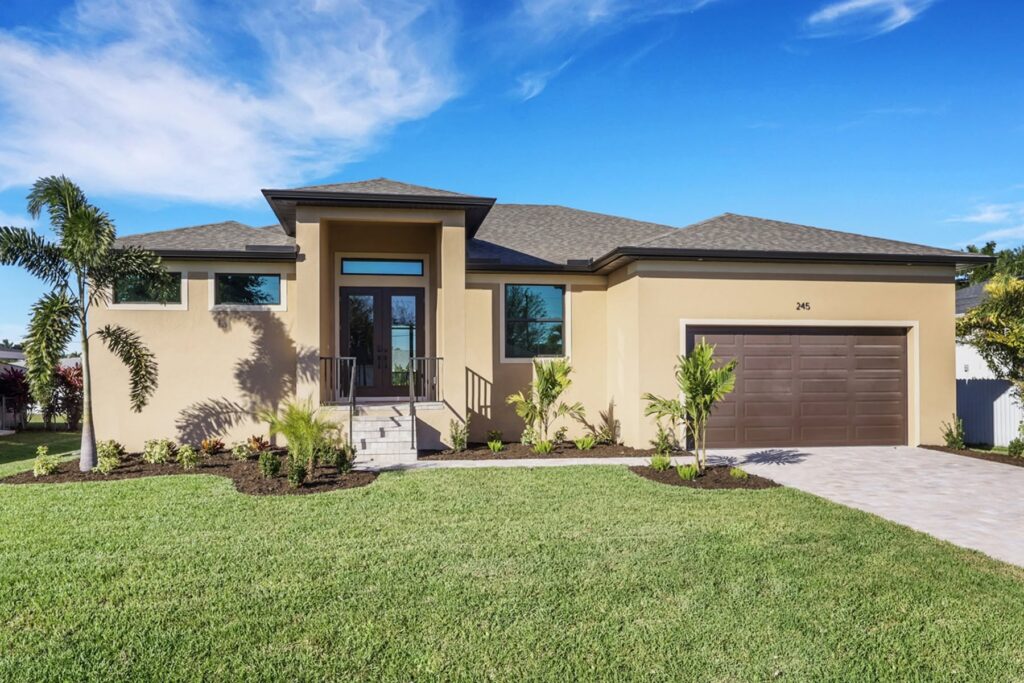
Check their list of current selection of homes available in Cape Coral.