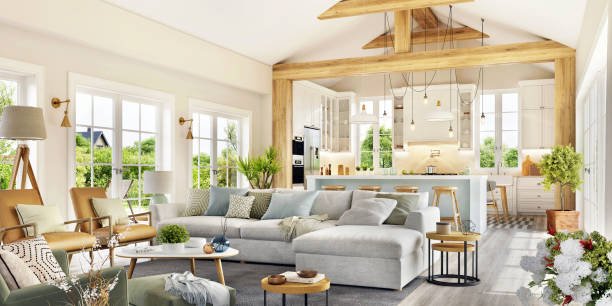
Most people think interior design is just… picking finishes and moving walls around. That’s only half true. The gap between building something from scratch and fixing what already exists is bigger than it looks. I’ve seen clients walk into a project thinking it’s all the same process, then get blindsided halfway through. Truth is, Dragon Residence Interior Design type projects (full custom homes) play by a totally different rulebook than renovation work. Not better or worse. Just different in ways that actually matter when money, time, and expectations are on the line.
Starting Point Changes Everything
Custom interior design begins with nothing. Blank slate. No awkward beams, no weird plumbing lines you’re forced to keep. That sounds freeing—and it is—but it also means every single decision carries weight. You’re not adjusting, you’re defining. Renovation design is the opposite. You inherit problems. Sometimes small, sometimes… not small at all. Ceiling heights you can’t change, structural walls that won’t budge, layouts that made sense in 1985 but feel off now. So instead of creating from zero, you’re negotiating with what’s already there. It’s a bit like cooking with leftovers versus starting with fresh ingredients. Both can work. But the mindset is different from the first step.
Freedom vs. Constraint (And Why Too Much Freedom Isn’t Always Great)
People assume custom design is easier because you can do anything. That’s not really true. Unlimited choice can slow things down. You second-guess more. You explore ten options when maybe three would’ve done the job. Renovation design forces quicker decisions because constraints narrow your path. You can’t move that staircase? Fine. Work around it. In custom homes, there’s no built-in resistance, so the designer has to create structure out of thin air. And if that doesn’t happen early, the whole thing drifts. I’ve seen it. Projects stall not because of problems—but because there were too many possibilities.
Planning Depth Is on Another Level in Custom Homes
With renovation work, you’re often reacting. You open a wall and find something unexpected. Then you adjust. That’s part of the game. Custom interior design, though, demands deeper planning upfront. Electrical layouts, lighting layers, circulation paths—all of it has to be thought through before anything is built. Miss something early and fixing it later costs real money. Not small money. The planning phase stretches longer for a reason. It has to. You’re not just decorating a space, you’re shaping how it will function for years. Maybe decades.
Budget Behavior Is… Different
Here’s where things get real. Renovations often come with surprise costs. Hidden damage, outdated systems, things nobody saw coming. You start with one number, and yeah, it tends to climb. Custom builds feel more controlled at first, but they come with a different risk—scope creep. Since everything is customizable, upgrades keep slipping in. Better materials, smarter systems, nicer finishes. “While we’re at it” becomes a dangerous phrase. In both cases, budgets move. Just for different reasons. One is reactive. The other is… temptation.
Timeline Isn’t Just About Speed
Renovations can be quicker on paper, but they’re unpredictable. Delays happen when you uncover issues mid-project. Custom homes take longer upfront, no question. Design, approvals, planning—it all adds time. But once construction starts, things can move smoother because fewer surprises pop up. Not zero surprises. Let’s not pretend. But fewer. The timeline in custom design is more about precision, while renovation timelines are more about flexibility. You either plan longer or adapt faster. Pick your challenge.
Design Intent Feels Different in Practice
In custom homes, the design intent is clear from day one. Every room connects to a bigger idea. There’s a flow you build intentionally. Renovation design often works in layers. You improve one part, then another, sometimes years apart. It’s less cohesive unless someone really pulls it together. That’s not a flaw, just reality. A full custom interior can feel more unified because it was imagined that way from the start. Renovations can get there too—but it takes more effort to align everything.
Sustainability Looks Different in Each Approach
This is where things get interesting. In a Sustainable Design Cardiff Residence, for example, sustainability can be baked into the design from the beginning—orientation, materials, energy systems, all aligned early. That’s a big advantage of custom work. You’re not retrofitting eco-friendly ideas, you’re building around them. Renovations, on the other hand, are inherently sustainable in a different way. You’re reusing structure, reducing waste by not tearing everything down. It’s less flashy, maybe, but still meaningful. Two paths to the same goal, just from different angles.
Client Involvement Isn’t the Same Either
Custom home clients are involved early and deeply. They make decisions that shape the entire structure, not just the look. That can be exciting… and exhausting. Renovation clients usually step in once the framework already exists. Their decisions feel more focused, sometimes less overwhelming. But also a bit limiting. You don’t get to rethink everything, only what’s within reach. So the experience itself feels different. One is immersive from start to finish. The other is more targeted, more contained.
Conclusion
So yeah, custom home interior design and renovation design might seem similar on the surface. Same tools, same professionals, same general goal—create a space that works and looks right. But underneath, they run on different logic. One builds from nothing and demands clarity early. The other adapts to what exists and requires flexibility along the way. Neither is easier. Just different kinds of hard. If you understand that going in, you make better decisions. And you avoid that moment halfway through where you think, “wait… why is this so complicated?” Because it is. Just in its own way.