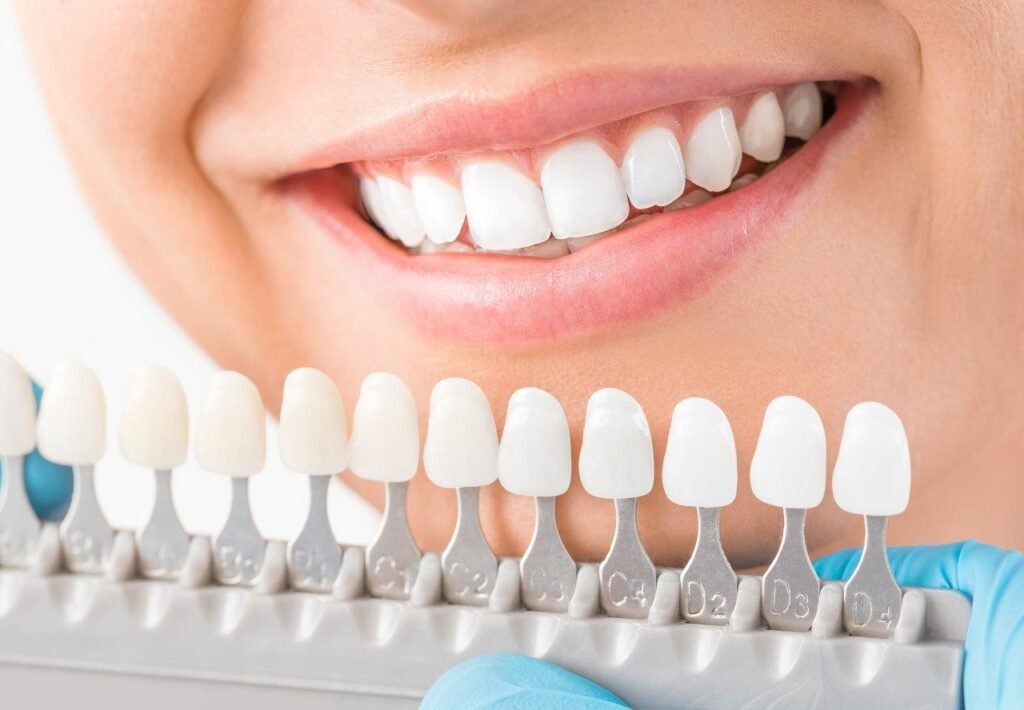
A well-designed smile depends on more than choosing a bright shade for the teeth. The shape, size, proportions, alignment, and relationship between individual teeth all contribute to the overall appearance of a smile. Before veneer treatment, a dentist therefore needs to assess the existing tooth shape carefully and determine how the proposed veneers can complement the patient’s natural dental features.
For patients considering Veneers Dubai, the assessment process can involve a detailed examination of the front teeth, their visible surfaces, surrounding gum line, bite, and overall smile. Veneers are custom-made coverings designed to improve the appearance of teeth, including teeth that are misshapen, chipped, stained, or uneven.
Tooth shape assessment helps the dentist understand what needs to be changed while maintaining an appearance that fits naturally with the rest of the smile. It can also help establish whether veneers are appropriate and what type of shape and contour may be suitable for the planned treatment.
Why Is Tooth Shape Important Before Veneer Treatment?
Every tooth has its own anatomical characteristics. Teeth can differ in width, height, curvature, surface contour, and position within the dental arch. These differences contribute to how the teeth function together and how the smile appears.
The American Dental Association notes that teeth vary in size, shape, and position, with these characteristics contributing to chewing, speaking, smiling, and facial form.
When veneers are being considered, simply covering the front surface of a tooth is not enough. The new veneer needs to be designed around the existing tooth and the desired final appearance. A dentist may therefore evaluate whether the teeth appear too short, narrow, wide, rounded, angular, uneven, or disproportionate in relation to neighbouring teeth.
The assessment also allows the dentist to consider the overall relationship between several visible teeth rather than treating each tooth as an isolated structure.
How Does a Dentist Examine Existing Tooth Shape?
The first stage usually involves a visual and clinical examination. The dentist looks closely at the teeth from different perspectives to understand their current form.
This may include assessing:
- Tooth height and width
- Overall tooth proportions
- Incisal edges
- Facial and labial surfaces
- Tooth contours
- Contact areas between neighbouring teeth
- Alignment within the dental arch
- Relationship between upper and lower teeth
- Gum-to-tooth proportions
- Symmetry between corresponding teeth
The American Dental Association’s dental terminology recognises different tooth surfaces, including facial or labial, incisal, mesial, distal, lingual, buccal, and occlusal surfaces. Understanding these individual surfaces is important when evaluating dental anatomy and planning restorations.
The dentist may also examine the teeth while the patient smiles naturally. This provides information that may not be apparent when the mouth is open but relaxed.
How Are Tooth Proportions Considered?
Proportion is an important part of evaluating tooth shape. A tooth that looks appropriate on its own may appear different when viewed alongside neighbouring teeth.
For example, if one front tooth is noticeably narrower than the tooth beside it, a veneer may need to be designed with particular attention to width and contour. Similarly, a tooth that appears shorter than the surrounding teeth may require a different approach to its visible length.
The dentist considers the relationship between width and height rather than selecting an arbitrary measurement. The objective is to develop a shape that fits the individual smile.
This assessment can be particularly important when several front teeth are being treated. The dentist can compare the teeth with one another and plan a consistent appearance while retaining subtle variations that help the result look natural.
How Are Facial and Smile Features Considered?
Tooth shape is not assessed separately from the smile. The dentist may observe how the teeth appear when the patient is speaking, smiling, and at rest.
The position of the lips can influence how much of the teeth is visible. The smile line, tooth display, and relationship between the upper teeth and surrounding facial features may therefore form part of the assessment.
This does not mean that every patient receives the same tooth shape. Instead, the proposed veneer design is considered in relation to the individual’s existing facial and dental characteristics.
A comprehensive assessment can help the dentist determine whether a softer, more rounded contour or a more defined shape would be appropriate for the planned smile design.
How Are The Incisal Edges Assessed?
The incisal edge is the biting edge of an anterior tooth and is particularly visible when a person smiles.
Before veneers are placed, the dentist may examine whether the incisal edges are level, uneven, worn, chipped, or positioned differently from neighbouring teeth. The existing edge can influence how the final veneer is shaped.
The dentist may also consider the relationship between the upper and lower teeth. Veneers are intended to work within the patient’s existing bite, so the final shape should be planned with the functional relationship between the teeth in mind.
This is one reason why veneer planning involves more than selecting a preferred tooth shape from a photograph or catalogue.
Are Digital Scans Used to Assess Tooth Shape?
Modern dental practices may use digital scanning to record the shape and surfaces of the teeth. A three-dimensional dental surface scan can capture tooth anatomy and surrounding structures for diagnostic and treatment-planning purposes. The ADA recognises dental surface scans as a method of documenting tooth anatomy and dental structures.
Digital records can provide a detailed representation of the existing teeth. Depending on the practice and treatment plan, these records may support the design and fabrication of custom restorations.
Traditional impressions or physical diagnostic models may also be used. The ADA describes a diagnostic cast as a replica of the teeth and adjoining tissues that can be used to examine relationships between oral tissues and assist with planning restorations.
The choice between digital and traditional techniques depends on the dentist’s assessment and the clinical requirements of the case.
How Does Tooth Alignment Affect Shape Assessment?
Alignment is another consideration when evaluating tooth shape. Teeth may be rotated, positioned slightly forward or backward, or located differently within the dental arch.
A dentist needs to distinguish between the visible shape of a tooth and the effect created by its position. A tooth may look unusually narrow because part of its surface is turned away from the front view, for example.
Understanding the position of each tooth helps the dentist decide how much of the final appearance can be achieved through veneer design and whether other dental considerations should be addressed as part of the treatment plan.
The aim is to develop a veneer shape that works with the existing dental arrangement rather than treating tooth shape in isolation.
How Are Neighbouring Teeth Compared?
When multiple veneers are planned, neighbouring teeth are carefully compared. The dentist may assess whether corresponding teeth have similar widths, lengths, contours, and visible proportions.
For example, the central incisors are highly noticeable because of their position near the centre of the smile. Their shape can influence how the surrounding teeth are perceived.
The lateral incisors and canines also contribute to the overall transition across the smile. Their contours may therefore be considered when developing the shape of several veneers.
A natural smile does not necessarily consist of perfectly identical teeth. Small differences in shape and contour can contribute to a realistic appearance. The dentist therefore considers consistency while avoiding an overly uniform result.
How Does The Gum Line Influence Tooth Shape?
The visible length of a tooth is influenced not only by the tooth itself but also by the position of the surrounding gum tissue.
During assessment, the dentist may observe whether the gum margins appear relatively even or whether differences in gum position affect the apparent size of individual teeth.
This information can help the dentist understand why some teeth may look longer or shorter than others. It can also influence how the final veneer contours are planned.
The relationship between the tooth and gum line is especially relevant when several front teeth are being considered together because noticeable differences can affect overall smile symmetry.
How Is The Final Veneer Shape Planned?
After assessing the existing teeth, the dentist can discuss the desired outcome with the patient. This conversation is an important part of treatment planning because patients may have different preferences regarding tooth length, width, contour, and overall smile appearance.
The dentist may use photographs, digital scans, impressions, models, or other planning methods to evaluate the proposed design. Depending on the treatment approach, the proposed veneer can be assessed for fit and shape before final bonding.
The American Dental Association explains that veneers are custom-made for the front surface of teeth and that dentists may use an impression or digital scan to create a model for custom fabrication.
For composite veneers, the material can be carefully sculpted and shaped directly on the tooth before being hardened and polished.
What Should Patients Discuss During The Assessment?
Patients should explain what they would like to change about their smile and which features they would prefer to maintain. This can include concerns about tooth length, width, shape, spacing, or the appearance of particular teeth.
It can also be helpful to discuss previous dental treatment and expectations for the final appearance.
The dentist can then explain how the desired changes relate to the existing tooth anatomy and whether veneers are an appropriate option. According to the ADA, existing dental conditions should be evaluated and addressed before veneer treatment, and treatment expectations should be discussed with the dentist.
How Does Tooth Shape Relate To Veneers Cost In Dubai?
The overall cost of veneer treatment can vary depending on several factors, including the number of teeth being treated, the type of veneer selected, the complexity of the planned design, and the clinical requirements of the individual case.
For patients researchingVeneers Cost in Dubai, the initial assessment is therefore an important part of understanding what treatment may involve.
A personalised consultation allows the dentist to evaluate the existing tooth shape and explain the proposed treatment rather than relying on a standard approach for every patient.
Why Is A Personalised Tooth-Shape Assessment Important?
A personalised assessment recognises that every smile has different dental proportions and structural characteristics. Two patients may request veneers for similar reasons but require different designs because their teeth differ in width, length, alignment, contour, or position.
The purpose of the assessment is to establish a treatment plan that considers these individual characteristics.
Veneers are custom-made restorations, so the design should be based on the patient’s teeth rather than a one-size-fits-all template. A detailed evaluation can help the dentist understand which changes are appropriate and how the proposed veneers can integrate with the surrounding smile.
Conclusion
Tooth shape assessment is an important part of planning veneer treatment. Before placing veneers, a dentist can examine tooth height, width, contours, incisal edges, alignment, gum-to-tooth proportions, neighbouring teeth, and the relationship between the teeth and overall smile.
Digital scans, photographs, impressions, and diagnostic models may be used to document existing dental structures and support treatment planning.
For patients consideringVeneers Dubai, the consultation provides an opportunity to discuss the desired appearance while allowing the dentist to assess the natural characteristics of the smile. By considering tooth shape as part of the wider dental structure, veneer planning can be tailored to the individual’s existing features and treatment goals.
Frequently Asked Questions
Why is tooth shape assessed before veneers?
Tooth shape is assessed to understand the existing dimensions, contours, alignment, and proportions of the teeth. This information helps the dentist plan a veneer design that suits the individual smile.
What tooth features are checked before veneers?
A dentist may examine tooth width, height, contour, incisal edges, alignment, surface anatomy, gum margins, and the relationship between neighbouring teeth.
Can digital scans be used to assess tooth shape?
Yes. Digital dental surface scans can record tooth anatomy and may be used as part of diagnostic and treatment planning.
Are veneers designed to match neighbouring teeth?
The design can take neighbouring teeth into account, particularly when several visible teeth are being treated. The dentist can compare their proportions, contours, and positions when planning the veneers.
Does tooth alignment affect veneer planning?
Yes. The position and orientation of a tooth can influence how its shape appears from the front. The dentist can consider alignment when determining the appropriate veneer design.
Does the gum line affect how tooth shape is assessed?
Yes. The position of the gum margins can influence the visible length and proportions of the teeth, so the gum-to-tooth relationship may be considered during assessment.
Can veneers change the apparent shape of teeth?
Veneers can alter the visible appearance of teeth by covering their front surfaces with custom-made material. They can be used to improve the appearance of teeth that are misshapen, stained, chipped, or uneven.
Are all veneers designed with the same tooth shape?
No. Veneers are custom-made, and the design can vary according to the patient’s existing teeth, smile characteristics, treatment goals, and clinical requirements.
What happens during a veneer consultation?
The dentist may examine the teeth and gums, assess the bite and tooth proportions, discuss the patient’s expectations, and use photographs, impressions, or digital scans where appropriate to develop the treatment plan.
How can I understand Veneers Cost in Dubai?
The cost can depend on factors such as the number of veneers, material, treatment complexity, and individual dental requirements. A consultation can provide a more specific assessment based on the planned treatment.