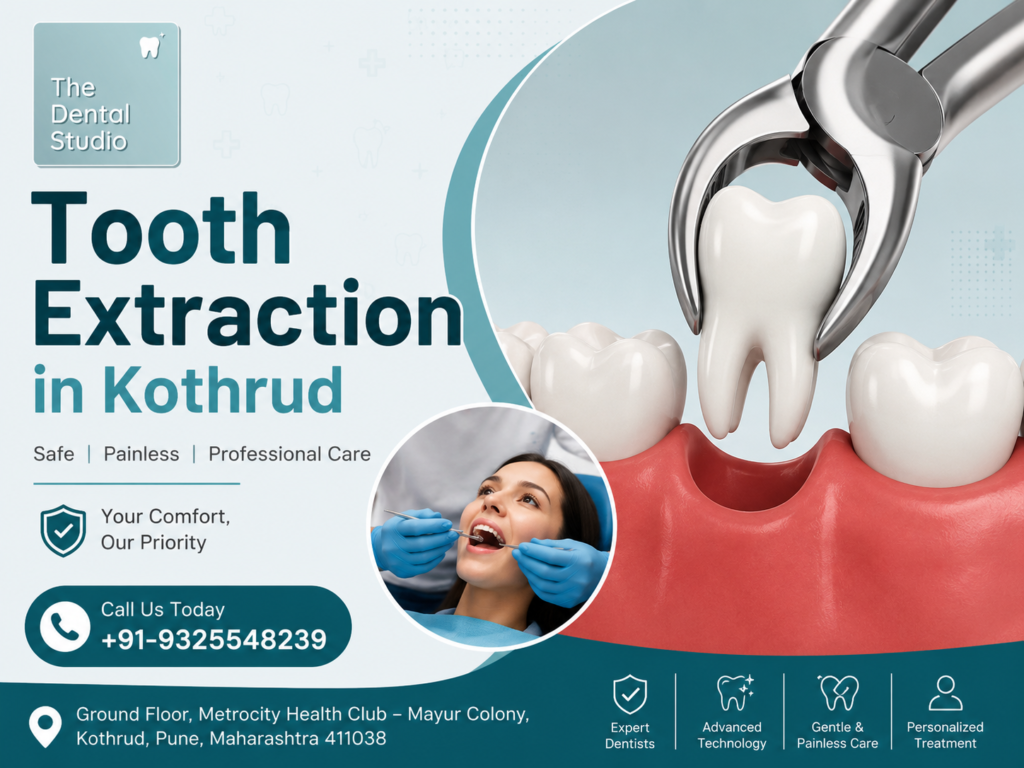
Understanding Tooth Extraction
Tooth Extraction in Kothrud is a common dental procedure performed when a tooth cannot be restored through fillings, crowns, or root canal treatment. Dentists always try to preserve natural teeth whenever possible, but in certain situations, removing a damaged or problematic tooth becomes the best option for maintaining overall oral health.
Modern dental techniques have made tooth extraction safer, faster, and more comfortable than ever before. With proper diagnosis and aftercare, patients can recover quickly while preventing future dental complications.
When Is Tooth Extraction Necessary?
Many people wonder when they actually need Tooth Extraction in Kothrud. While every case is different, dentists usually recommend extraction in the following situations:
Severe Tooth Decay
When tooth decay has spread deep into the tooth and surrounding structures, restoration may no longer be possible. Removing the affected tooth helps stop the infection from spreading.
Advanced Gum Disease
Periodontal disease weakens the gums and bone supporting the teeth. If a tooth becomes loose due to severe gum disease, extraction may be the most effective solution.
Impacted Wisdom Teeth
Wisdom teeth often fail to erupt properly. They may remain trapped beneath the gums or grow at an angle, causing pain, swelling, infection, and crowding.
Broken or Fractured Teeth
Some teeth suffer extensive fractures due to accidents or injuries. If the damage extends below the gum line, extraction may be necessary.
Orthodontic Treatment
Sometimes dentists recommend Tooth Extraction in Kothrud before braces to create enough space for proper teeth alignment.
Signs You May Need Tooth Extraction
Ignoring dental symptoms can lead to bigger oral health problems. Visit your dentist if you experience:
- Continuous tooth pain
- Swollen gums
- Difficulty chewing
- Loose teeth
- Repeated dental infections
- Severe tooth sensitivity
- Jaw swelling
- Impacted wisdom tooth discomfort
Early diagnosis allows your dentist to determine whether treatment or extraction is the better option.
Types of Tooth Extraction
Different dental conditions require different extraction methods.
Simple Tooth Extraction
A simple extraction is performed on teeth that are fully visible above the gum line. After numbing the area with local anesthesia, the dentist gently loosens and removes the tooth.
Simple extractions usually involve:
- Short treatment time
- Minimal discomfort
- Quick recovery
- Lower risk of complications
Surgical Tooth Extraction
Surgical extraction is needed when a tooth is impacted, broken beneath the gum, or difficult to access.
This procedure may involve:
- Small gum incision
- Removal of surrounding bone if required
- Tooth sectioning into smaller pieces
- Careful closure with stitches
Patients seeking Tooth Extraction in Kothrud often require surgical removal for impacted wisdom teeth.
What Happens During the Procedure?
Many patients feel anxious before dental extraction. Knowing the process helps reduce stress.
Step 1: Dental Examination
The dentist examines the tooth thoroughly and reviews X-rays to understand the tooth’s position and surrounding bone.
Step 2: Local Anesthesia
The treatment area is completely numbed to ensure a comfortable experience.
Step 3: Tooth Removal
Using specialized dental instruments, the dentist carefully removes the tooth while protecting nearby tissues.
Step 4: Cleaning the Socket
The extraction site is cleaned to reduce the chance of infection.
Step 5: Gauze Placement
A gauze pad is placed over the area to control bleeding and encourage blood clot formation.
Benefits of Tooth Extraction
Choosing Tooth Extraction in Kothrud when recommended offers several long-term advantages.
Prevents Infection Spread
Removing an infected tooth protects neighboring teeth and gums from further damage.
Relieves Pain
Extraction eliminates severe tooth pain caused by advanced decay or infection.
Supports Orthodontic Treatment
Creating space allows braces and aligners to achieve better alignment.
Improves Oral Health
Removing damaged teeth makes cleaning easier and reduces the risk of recurring dental problems.
Protects Nearby Teeth
Impacted wisdom teeth often damage adjacent molars. Timely extraction prevents these complications.
Recovery After Tooth Extraction
Healing usually begins immediately after the procedure.
For faster recovery:
- Bite gently on the gauze.
- Take prescribed medications as directed.
- Eat soft foods for the first few days.
- Stay hydrated.
- Rest adequately.
- Brush carefully around the extraction area.
Avoid:
- Smoking
- Drinking through a straw
- Vigorous rinsing
- Hard or crunchy foods
- Heavy physical activity during the first 24 hours
Following your dentist’s instructions ensures smooth healing after Tooth Extraction in Kothrud.
Foods to Eat After Tooth Extraction
Soft foods reduce pressure on the healing area.
Good choices include:
- Yogurt
- Mashed potatoes
- Soup
- Rice
- Oatmeal
- Smoothies without a straw
- Scrambled eggs
- Soft fruits
- Khichdi
- Pasta
Gradually return to your regular diet as healing progresses.
Possible Risks and How They Are Managed
Although Tooth Extraction in Kothrud is generally safe, every dental procedure carries some risks.
Possible complications include:
- Temporary swelling
- Mild bleeding
- Infection
- Dry socket
- Temporary jaw stiffness
Following proper aftercare instructions significantly reduces these risks.
Replacing an Extracted Tooth
After extraction, your dentist may recommend replacing the missing tooth to maintain proper chewing and prevent shifting of nearby teeth.
Common replacement options include:
Dental Implants
Dental implants provide a permanent and natural-looking replacement.
Dental Bridges
A bridge fills the gap by attaching to neighboring teeth.
Dentures
Partial dentures are suitable for replacing one or more missing teeth.
Your dentist will recommend the most appropriate solution based on your oral condition.
How to Prepare for Tooth Extraction
Preparing properly makes the procedure easier.
Before your appointment:
- Inform your dentist about medical conditions.
- Share details of all medications.
- Follow eating instructions if sedation is planned.
- Arrange transportation if needed.
- Wear comfortable clothing.
- Ask questions about recovery and aftercare.
Good preparation leads to a smoother Tooth Extraction in Kothrud experience.
Tips for Maintaining Oral Health After Extraction
Once healing is complete, maintaining healthy teeth becomes even more important.
Helpful habits include:
- Brush twice daily.
- Floss regularly.
- Use an antibacterial mouthwash if advised.
- Visit your dentist for routine check-ups.
- Limit sugary foods and drinks.
- Drink plenty of water.
- Avoid tobacco products.
These simple practices help protect your remaining teeth for years to come.
Frequently Asked Questions
Is Tooth Extraction Painful?
The procedure is performed under local anesthesia, so you should not feel pain during treatment. Mild discomfort afterward is normal and can usually be managed with prescribed medication.
How long does healing take?
Most people recover within one to two weeks, although complete healing of the bone may take a few months depending on the extraction.
Can I return to work after extraction?
Many patients return to normal activities the next day after a simple extraction. Surgical extractions may require additional rest.
When can I eat normally?
Soft foods are recommended for the first few days. Most patients gradually return to their regular diet as the extraction site heals.
Is wisdom tooth removal always necessary?
Not always. Wisdom teeth are removed only when they are impacted, infected, causing pain, or affecting nearby teeth.
Conclusion
Choosing Tooth Extraction in Kothrud at the right time can prevent serious dental problems and improve your overall oral health. Whether the issue involves severe decay, infection, gum disease, or impacted wisdom teeth, timely treatment helps relieve pain and protects surrounding teeth. With modern techniques, experienced dental care, and proper post-treatment instructions, tooth extraction has become a safe and comfortable procedure. Regular dental check-ups and early diagnosis remain the best ways to maintain a healthy smile and avoid unnecessary complications in the future.