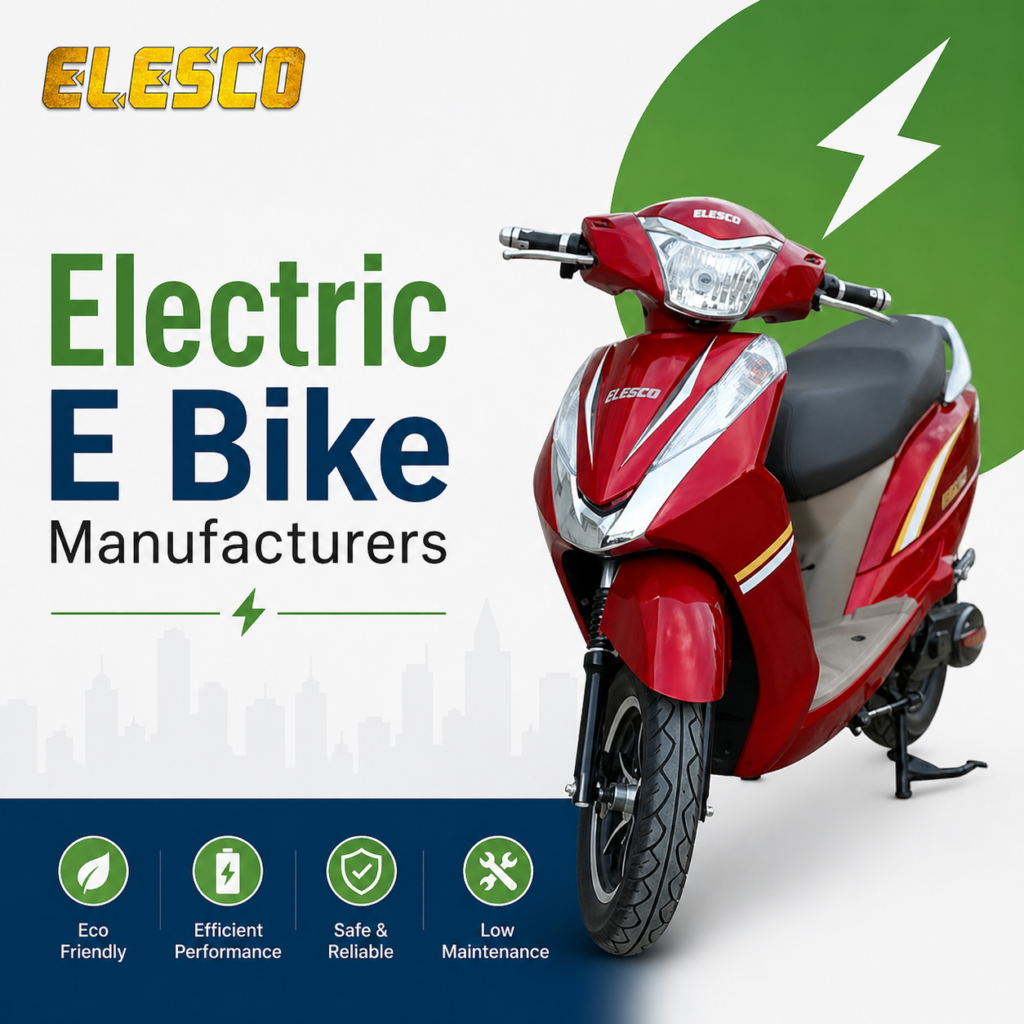
Something significant is happening on India’s roads. In cities like Pune, Ahmedabad, Jaipur, and across the manufacturing belts of Gujarat and Rajasthan, a quiet but powerful shift is underway. The sound of petrol engines is slowly giving way to the near-silent hum of electric motors. Electric two-wheelers — once considered a niche product for the eco-conscious early adopter — have gone mainstream. Dealerships are expanding. Charging infrastructure is growing. And perhaps most importantly, Indian manufacturers are no longer playing catch-up with global players. They are setting the pace. At the heart of this transformation stands Elesco, a brand that has built its reputation not just on making electric bikes, but on understanding what Indian riders genuinely need — durable, affordable, and dependable electric mobility built for real-world roads.
India’s Electric Two-Wheeler Market Is No Longer a Forecast — It’s a Reality
For years, the electric vehicle story in India was told in future tense. “EVs will take over.” “By 2030, everything will change.” Well, the future arrived ahead of schedule. Government schemes like FAME II and state-level subsidies have slashed upfront costs significantly. Battery technology has matured. Range anxiety — once the biggest objection from buyers — is becoming less relevant as motor efficiency improves and charging networks expand.
The numbers back this up. India crossed the 1 million electric two-wheeler sales mark in a single fiscal year for the first time in recent history, and growth is showing no signs of slowing. Behind this momentum is a competitive and innovative ecosystem of Electric Bike Makers Manufacturers who are investing heavily in R&D, local component sourcing, and after-sales infrastructure to serve both urban commuters and semi-urban buyers who were previously locked out of EV ownership due to cost.
What Separates a Good Electric Bike Manufacturer from a Great One?
With dozens of brands now operating in the electric two-wheeler space, buyers and B2B partners alike often struggle to distinguish between them. Not all manufacturers are created equal. Here’s what genuinely sets the best apart:
1. Battery Quality and Warranty Terms
The battery is the single most expensive and performance-critical component in an electric bike. A manufacturer that uses quality lithium-ion cells — and backs them with a meaningful warranty of 3 years or more — is signalling confidence in their product. Be cautious of brands offering vague warranty terms or those sourcing low-grade cells to cut costs.
2. Motor Efficiency and Performance Range
Hub motors and mid-drive motors each have their advantages depending on the use case. For city commuting, hub motors offer simplicity and reliability. For hilly terrain, mid-drive configurations provide better torque management. A serious manufacturer will offer models suited to different geographies — not just one-size-fits-all solutions.
3. Build Quality and Frame Durability
Indian roads are not uniform. Potholes, speed breakers, unpaved stretches, monsoon flooding — an electric bike built for Indian conditions must have a frame and suspension that can absorb real punishment over years of daily use. This is where locally developed manufacturing processes genuinely outperform imported or poorly adapted designs.
4. After-Sales Service Network
An electric bike is only as good as the support available when something goes wrong. Service centres, spare parts availability, and trained technicians are non-negotiable. A manufacturer without a committed after-sales network is a liability — not just for end consumers but for fleet operators and distributors too.
5. Regulatory Compliance and Certifications
Any legitimate electric bike manufacturer in India must comply with AIS 156 battery safety standards and have vehicles certified by the Automotive Research Association of India (ARAI) or iCAT. These certifications are not optional — they are the baseline proof that a vehicle is roadworthy and eligible for government subsidies.
The Business Case for Electric Bikes in India Right Now
Beyond individual consumers, the electric two-wheeler sector is seeing surging interest from fleet operators, delivery platforms, corporate campuses, and rental businesses. The economics are compelling:
Lower running costs — Charging an electric bike costs a fraction of what petrol expenses add up to over a month. For delivery riders covering 80–120 km daily, the savings are transformational.
Reduced maintenance — Fewer moving parts means fewer things to break. No oil changes, no spark plugs, no clutch replacements. Servicing intervals are longer and generally cheaper.
Government incentives — FAME II subsidies, state-level purchase incentives, and GST reductions on EVs make the upfront cost gap between electric and petrol vehicles narrower than ever.
Brand reputation benefits — For businesses adopting electric fleets, the environmental credentials are a genuine marketing and PR asset, particularly with younger, sustainability-conscious consumers.
All of this has created a perfect storm of demand — and manufacturers who can supply reliably, at scale, with quality assurance are the ones capturing the most significant share of this growing market.
Understanding the Manufacturing Landscape in India
India’s electric two-wheeler manufacturing ecosystem is geographically concentrated but expanding. States like Gujarat, Rajasthan, Tamil Nadu, and Maharashtra have emerged as hotspots — benefitting from established auto-component supply chains, skilled labour pools, and proactive state EV policies.
Component Localisation — The Key to Sustainable Growth
One of the most important shifts in the Indian EV manufacturing sector over the last three years has been the push toward component localisation. Imported battery cells and motors make manufacturers vulnerable to supply chain disruptions and currency fluctuations. Companies that have invested in domestic component partnerships — or even in-house manufacturing of key parts — have far greater control over their cost structure and production timelines.
The Role of Technology Partnerships
Many of India’s best electric bike manufacturers have forged technical partnerships with international firms — particularly for battery management systems (BMS), motor controllers, and software platforms. These partnerships allow Indian companies to offer globally benchmarked technology while keeping the vehicle itself adapted for local conditions.
Dealer and Distributor Network Expansion
A manufacturer’s footprint is ultimately determined not just by where they produce, but where they sell and service. The most aggressive players in the market are currently building dealer networks in Tier 2 and Tier 3 cities — recognizing that the next wave of EV adoption in India won’t come from metros, but from smaller towns where petrol costs are proportionally more painful and public transport options are more limited.
Choosing the Right Electric Bike for Your Needs
Whether you’re an individual buyer or a fleet manager evaluating a bulk purchase, the decision framework should include:
Daily usage distance — Match the vehicle’s certified range to your realistic daily needs, with a comfortable buffer.
Terrain — Hilly regions demand better torque; flat urban environments are ideal for lighter, more efficient configurations.
Charging access — Do you have home charging capability? Or will you rely primarily on public charging? This affects which models and battery capacities make sense.
Total cost of ownership — Don’t just compare sticker prices. Factor in fuel savings, maintenance costs, and applicable subsidies over a 5-year horizon.
Manufacturer credibility — Check for ARAI/iCAT certification, warranty terms, and the density of service centres in your city.
The growth of reliable, certified Electric E Bike Manufacturers across India means buyers now have genuine options — not compromises — at every price point. The era of “settling” for an electric bike is over. The products available today are genuinely competitive with petrol alternatives on almost every metric that matters.
What the Next Five Years Look Like for India’s EV Sector
The trajectory is clear. India is committed — at policy, infrastructure, and investment levels — to a significant transition toward electric mobility. The PLI (Production Linked Incentive) scheme for Advanced Chemistry Cell batteries will catalyse domestic battery manufacturing at scale. Charging infrastructure investments by both public and private players are accelerating. And consumer awareness and acceptance of EVs has reached a tipping point.
For manufacturers, the challenge will shift from convincing buyers that EVs are viable — to differentiating on quality, service, and brand trust. The brands that survive and thrive in the next decade will be those that built real engineering depth, real customer relationships, and real service networks — not just those that got to market first.
Frequently Asked Questions (FAQs)
Q1. What is the average range of an electric bike available in India?
Most mid-segment electric bikes in India offer a certified range of 80–120 km on a single charge. Real-world range varies based on rider weight, terrain, speed, and usage of regenerative braking features.
Q2. How long does it take to charge an electric bike?
Standard charging from a home socket typically takes 4–6 hours for a full charge. Fast-charging options available on premium models can reduce this to 1.5–2 hours.
Q3. Are electric bikes eligible for government subsidies in India?
Yes. Under the FAME II scheme and various state-level EV policies, electric two-wheelers meeting specified performance criteria are eligible for subsidies that can significantly reduce the purchase price. Check with your state government or the manufacturer for current applicable incentives.
Q4. What maintenance does an electric bike require?
Electric bikes require significantly less maintenance than petrol vehicles. Regular maintenance includes tyre pressure checks, brake inspection, battery health monitoring, and periodic software updates on connected models. There are no oil changes or fuel system maintenance requirements.
Q5. How long does an electric bike battery last?
Quality lithium-ion batteries used in electric bikes are typically rated for 500–1,000 charge cycles before significant capacity degradation. This translates to 3–5 years of regular daily use for most riders.
Q6. Can electric bikes handle Indian road conditions?
Yes — provided they are designed and manufactured with Indian road conditions in mind. Look for bikes with adequate ground clearance, robust suspension, and IP-rated electrical components that can handle monsoon conditions.
Q7. Is it safe to charge an electric bike at home?
Yes, with proper precautions. Use the OEM-supplied charger, ensure the charging point is properly earthed, and avoid charging in extremely hot or damp environments. Never use a damaged charging cable.
Ready to Make the Switch to Electric? Here’s Your Next Step.
The conversation around electric bikes has moved well past “should I consider it?” The real question now is: who do you trust to build the bike you’ll rely on every single day?
At Elesco, based in India and committed to delivering electric mobility that works for the way real Indians live and commute, the focus has always been on quality you can feel — not just specs on a brochure. Whether you’re an individual rider looking for your first electric bike, a fleet operator exploring bulk procurement, or a distributor looking for a manufacturer partner you can build a business with, the conversation starts here.