The UK climate is not the harshest in the world. But it is one of the most consistently challenging ones for commercial building surfaces, and the reason is not extreme temperature or exceptional rainfall but the relentlessness of the variation.
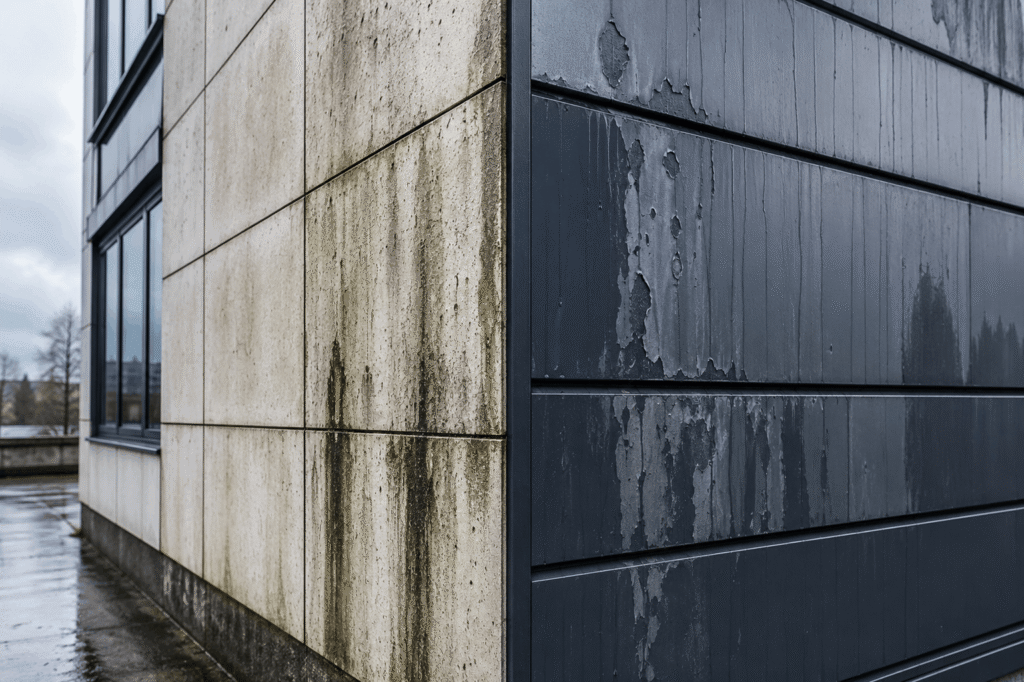
Commercial buildings across the UK are continuously exposed to various changing weather conditions, including freeze-thaw cycling during winter months, damp weather and elevated humidity on rainy days, and salt-laden air in coastal and near-coastal locations. The surfaces that fail fastest under these conditions are not random but predictable, consistently the same two categories across different building types and locations, and the pattern of deterioration follows a trajectory that is well understood by specialists who work on these buildings regularly.
Understanding that trajectory is the most practically useful knowledge any commercial property professional can have when making decisions about shopfront refurbishment and other such architectural repairs. Let’s discuss two major one that heavily impact the beauty and strength of the building.
Shop Fronts
Why Shop Fronts Deteriorate Faster Than Any Other External Surface
The shop front is the surface that takes more daily punishment than any other element of a commercial building. Delivery vehicles that get too close, trolleys and equipment that scratch and dent lower panels, graffiti, cigarette burns, and the physical contact from thousands of people passing by and occasionally touching the building’s frontage each day all contribute to this wear and tear. Additionally, the UV exposure on the most visible and prominent surface of the building, along with several other such situations, leads to a slow and dramatic deterioration of the building.
The deterioration pattern on a shop front follows a consistent trajectory. Colour fade on south- and west-facing elevations appears first, most often within three to five years of the last coating application and sometimes sooner on cheaper coating systems. At times this deterioration is followed by surface chalking as the coating’s polymer structure begins to break down under UV attack. Coating adhesion failures appear at joints, edges, and panel interfaces where movement stress has worked on the bond between coating and substrate. And at some point moisture finds its way behind the failing coating and accelerates the deterioration at the substrate level in ways that make the eventual remediation scope considerably larger than it would have been at the earlier intervention point.
What Shop Front Refurbishment Actually Achieves
Shop front refurbishment by specialists restores a deteriorated shop front to a standard that is visually indistinguishable from new and that performs reliably for years rather than months.
The sequencing determines the outcome. The process begins with surface preparation, which is the work that determines whether the refurbishment lasts three years or twelve. A correctly prepared surface with the right coating system applied in appropriate conditions produces a result that holds. An inadequately prepared surface with the same coating system produces a result that looks right upon completion but begins to fail within eighteen months as the preparation deficiencies make themselves felt.
Curtain Walls
Why Curtain Wall Deterioration Is the Most Expensive Deferral in Commercial Property
Curtain walls fail in a specific and consistently underappreciated way. They fail slowly, from the inside, in places that are invisible from the ground and not inspected unless someone makes a specific effort to get close to the system and look at the right things.
The seals fail first. Silicone sealant around curtain wall panels has a finite service life, which typically ranges from fifteen to twenty-five years, depending on specifications, exposure, and the quality of the original installation. When those seals fail, water begins to find its way into the system. There it begins to work on the frame, the fixings, and the internal drainage channels in ways that accumulate over time.
The gaskets harden next. The rubber gaskets that form the primary compression seal between the glass and frame lose their flexibility over time, particularly in the temperature-cycling conditions of the UK climate, and no longer create an effective seal. This situation thereby becomes worse in some ways than a visibly failed seal because it creates a false confidence that delays the intervention that the system needs.
By the time water ingress becomes visible inside the building, the system has typically been failing for considerably longer than the visible symptoms suggest. The damage that has accumulated during that period of silent failure is what drives the scope and cost of remediation.
What Curtain Wall Refurbishment Involves and When It Is the Right Answer
Curtain wall refurbishment addresses the failed components of the system without replacing the structural frame that, in most cases, remains sound and functional well beyond the service life of the seals, gaskets, and coatings that surround it.
A properly executed curtain wall refurbishment addresses sealant replacement throughout the system and not just the sections that are visibly failing but the full perimeter of every panel, because sealant that has not yet failed visibly is often at the same point in its service life as sealant that has, and replacing it in the same mobilisation that addresses the obvious failures avoids a return visit within two to three years.
Summing Up
To sum up, there are several types of problems that a building in the UK faces due to several reasons, but in order to ensure that your building gets the required repair and renovation well in time, it is important that you go for regular audits by good architectural repairing companies, and with this you can ensure that your building stays new and strong today and, in the years, to come.