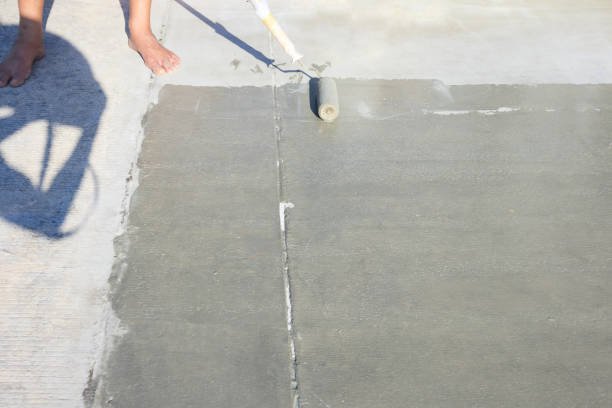
Worker and renovation work. To using roller painting mortar cement or finishing material for repair crack, skim coat or improvement surface of concrete pavement floor or slab for driveway or garage.
Walk onto any job where epoxy failed, and yeah… people blame the mix, the prep, the weather, even the guy who poured it. But not enough folks talk about the roller. Specifically, the nap. It sounds small. It isn’t. Picking the best roller for epoxy floor jobs can be the difference between a smooth, glassy finish and a streaky mess that looks rushed. And once epoxy sets, you’re not “fixing” much. You’re grinding it off and starting over. So yeah, this little fabric thickness on a roller? It matters more than people admit.
Understanding Roller Nap Without Overcomplicating It
Nap just means how thick the roller fibers are. That’s it. Short nap, long nap. But what it does to epoxy is where things get interesting. A shorter nap lays epoxy down thinner and smoother. Less texture, fewer air bubbles. A longer nap? Holds more material, spreads heavier, but can leave marks if you’re not careful. And epoxy isn’t like regular wall paint. It doesn’t forgive. You can’t just roll back over it ten minutes later and pretend nothing happened. It starts setting. Fast. So the nap you choose decides how evenly that material flows before it locks in place.
Short Nap Rollers: Clean Finish, Less Margin for Error
Most pros lean toward short nap rollers, somewhere around 1/4 inch or even less. It gives you that tight, even coat. Looks clean. Almost like it self-leveled perfectly, even if it didn’t. But here’s the catch—short nap doesn’t hold much epoxy. You’re reloading more often. If you rush or stretch it too far, you’ll get dry spots. Those ugly dull patches that stand out under light. You’ll notice them later, not right away. And by then… too late. Still, for controlled work, short nap is usually the safer bet. If you know what you’re doing.
Longer Nap Rollers: More Coverage, More Risk
Now, some guys go thicker. 3/8 inch, even 1/2 inch in rougher spaces. It helps push epoxy into uneven concrete. That’s useful. Old garage floors, slightly pitted surfaces, that kind of thing. But longer nap rollers carry more epoxy, which sounds good until it’s not. You can lay it on too heavy without realizing. That leads to pooling. Or worse, uneven curing. And yeah, you might get roller lines if your technique isn’t steady. It’s not wrong to use a thicker nap. Just… you better know why you’re using it.
Material Matters Too (Not Just Nap Length)
Here’s something people skip. It’s not just the nap length, it’s what the roller is made of. Cheap rollers shed. Fibers come loose, stick in the epoxy, and now your “smooth” floor has fuzz baked into it. Happens more than you’d think. Woven rollers are usually better than knitted for epoxy. Less lint. Cleaner finish. Also, solvent-resistant cores matter. Epoxy isn’t gentle. It breaks down low-quality rollers fast. You’ll feel it mid-job when the roller starts getting weird, soft, uneven. That’s not the time to realize you saved a few bucks on supplies.
Technique Still Plays a Role (Even with the Right Roller)
You can buy the perfect roller and still mess it up. Happens all the time. Pressure matters. Too much, you’re pushing epoxy around unevenly. Too light, and you’re not spreading it right. Then there’s direction. Cross-rolling helps. One pass one way, light pass the other. Not complicated, but easy to skip when you’re tired or rushing. And timing… epoxy has a window. Miss it, and your roller marks don’t settle out. They stay. That’s why pros move steady, not fast, not slow. Just consistent.
Where Most People Cheap Out (and Regret It Later)
Let’s be real, a lot of mistakes come down to cost-cutting. People spend big on epoxy kits, then grab whatever roller is cheapest. Doesn’t make sense, but it happens. Same mindset shows up when folks buy paint brushes in bulk without checking quality. Bulk is fine, smart even, but only if the tools actually hold up. A bad roller on an epoxy job costs way more than it saves. Not dramatic. Just true. You’ll either redo the floor or live with something that bugs you every time you look at it.
Matching the Roller to the Job, Not Just the Product
There’s no one-size-fits-all answer here. Smooth, prepped concrete? Go shorter nap. Rougher surface? Maybe step it up a bit. Doing a thick epoxy build? Adjust. It’s about matching the roller to the job conditions, not just grabbing what someone online said once. Even humidity and temperature can mess with how epoxy flows, which changes how your roller behaves. That’s the stuff people don’t talk about enough. It’s not complicated, but it’s also not as simple as “use this exact roller every time.”
Conclusion: It’s a Small Choice That Shows in a Big Way
At the end of the day, epoxy floors don’t hide mistakes. They highlight them. Glossy surface, bright lighting… everything shows. The roller nap you pick plays a bigger role than most expect. Not the only factor, sure, but a big one. Choose right, and the finish looks clean, even, professional. Choose wrong, and you’ll see every pass, every uneven spot. So yeah, don’t overthink it—but don’t ignore it either. The roller isn’t just a tool. It’s part of the result.