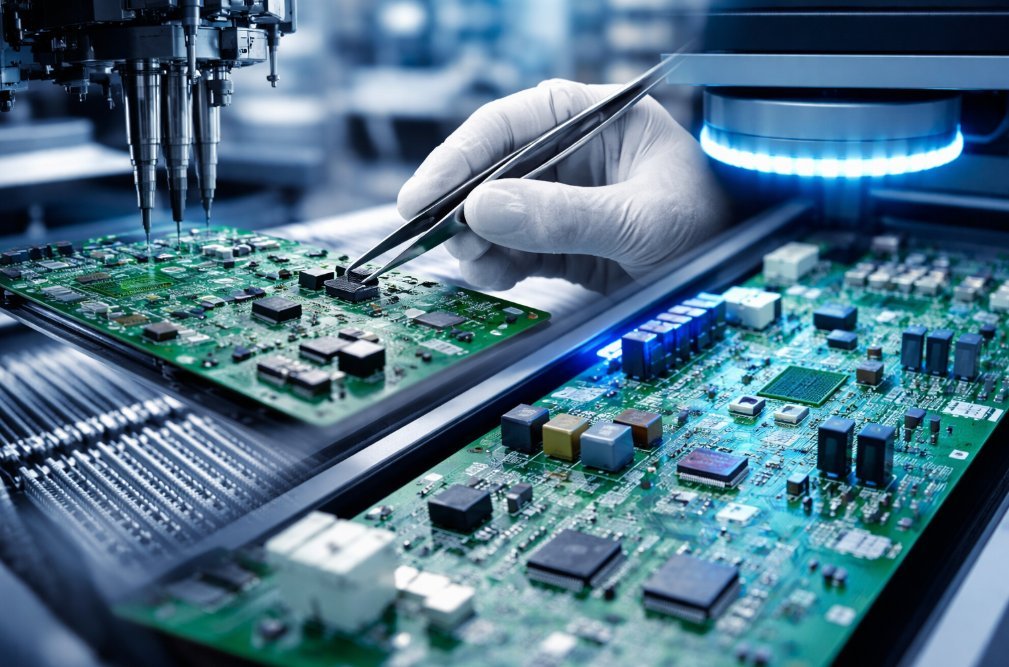
The first run of boards feels like a checkpoint: build a few, confirm the design, move on. In reality, it sets the terms for everything that follows. Decisions baked into that first build, about testability, manufacturability, and documentation, either smooth the path to production or quietly plant problems that surface much later at far greater cost.
Treating the prototype as a throwaway is a mistake. It is the foundation the entire program stands on, and foundations are expensive to pour twice.
More Than A Proof Of Concept
A prototype answers whether the circuit works, but it also reveals whether the board can be built repeatably, tested without heroics, and scaled affordably. A design that functions but resists assembly will fight the team at every volume increase, and each fight costs time the schedule did not budget for.
The first run is the cheapest moment to catch these issues. A change here costs a file revision. The same change after production tooling exists costs real money and real weeks. The economics only get worse as a program matures, which is why the first build deserves more attention than it usually gets.
Decisions That Echo Downstream
Several choices made during the first build shape the whole program:
- Test access, since points omitted now cannot be added later without a respin
- Component selection, because a hard-to-source part multiplies risk at volume
- Panelization and fiducials, which determine whether automated assembly runs smoothly
- Documentation quality, the difference between a clean handoff and a supplier guessing at intent
Each looks minor in isolation. Together they decide whether scale-up is routine or painful.
Why Manufacturability Belongs In The Design
The strongest programs fold buildability into the layout rather than discovering it at the assembly line. A design for manufacturing review during prototype PCB manufacturing flags insufficient clearances, acid traps, thin annular rings, and parts crowded against board edges before any copper is committed. Each of these is trivial to fix in a file and stubborn to fix in a fabricated board, which is why the review belongs at the front of the process.
This is where design and build should talk to each other. When the team doing layout understands the line that will assemble the board, the prototype arrives ready to scale instead of ready to argue about. Strong PCB design services treat manufacturability as part of the design brief rather than a problem for someone downstream to solve.
The Value Of Integrated Expertise
Layout and manufacturing knowledge working together produce a different result than either alone. Firms that pair layout expertise with in-house assembly catch problems a routing-focused designer would miss, because they see the board through the lens of the machine that will build it.
That integration shows up in small, decisive ways: a footprint corrected before fabrication, a test point added while it still can be, a stack-up chosen with signal and yield weighed together. The prototype that results is one a production line can accept without rework. Pairing experienced PCB design services with the shop that will assemble the board keeps those decisions aligned from the start.
Where Costs Hide In A Rushed First Run
A prototype pushed out without these checks does not save time; it defers cost to a more expensive stage. A missing test point becomes a respin. An unbuildable footprint becomes a line stoppage. A poorly sourced part becomes a redesign when it goes obsolete. The hours saved by skipping review return as days lost during scale-up.
Getting The First Run Right
A few practices turn a prototype into a production foundation rather than a detour:
- Plan test coverage early, placing access for power rails, clocks, and functional block boundaries
- Run manufacturability analysis on the layout before release, not after fabrication
- Verify sourcing for every component while substitutions are still cheap
- Document thoroughly, so the same files carry cleanly into volume production
Building The Foundation, Not Just The Board
A prototype done well pays back through every stage that follows, because the testability, buildability, and documentation established up front never have to be retrofitted. The program that treats its first run as a foundation moves to volume on a straight line.
The one that treats it as a throwaway rebuilds that groundwork later, under pressure, at a price that dwarfs what care would have cost early. Getting prototype PCB manufacturing right the first time separates a smooth launch from a stalled one.