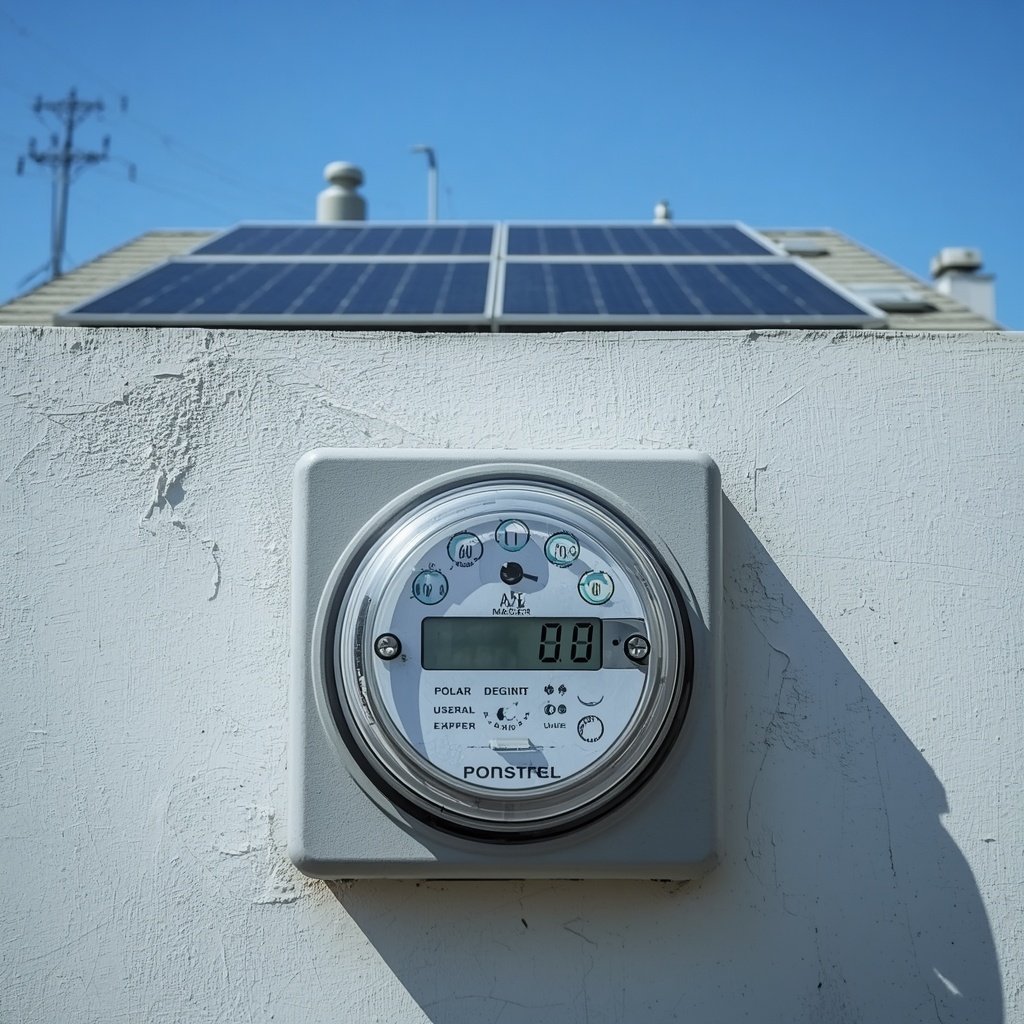
Meta description: Solar net metering rules decide your real payback. Here’s what changed, what utilities require, and what homeowners overlook.
A homeowner signs a solar contract expecting a familiar arrangement: send excess power to the grid, get credited at retail rates, watch the bill shrink. That arrangement, however, no longer describes most of the country accurately.
At PTOEdge, we know solar work is more than just installing panels. It also needs clear designs, correct documents, and utility approval. Every city has different rules, and small mistakes can slow projects. That is why we handle every detail carefully. Because of this, projects move forward smoothly and safely, saving time and reducing stress for everyone involved.
Understanding solar net metering matters more today than it did five years ago, because compensation structures have shifted dramatically across major markets. Consequently, the payback period a salesperson quotes in 2026 depends heavily on rules that barely existed a decade ago. Homeowners who skip this conversation often end up disappointed once real bills arrive.
This piece breaks down what net metering actually means, why it varies so much by state, and where the paperwork behind it tends to slow projects down. Additionally, it covers the design decisions that follow directly from these compensation rules. By the end, the fine print should feel far less mysterious.
Wondering whether your state’s rules still make solar worth it? Talk to a team that reviews interconnection filings daily before you sign anything.
The Original Deal, and Why It Changed
Traditional net metering operated on a simple principle. Every kilowatt-hour exported to the grid offset a kilowatt-hour imported later, valued at the same retail rate either way.
That symmetry made solar math easy to explain and easy to sell. A homeowner producing more than they consumed during sunny hours effectively banked credit against evening and winter usage. Utilities absorbed the cost difference between wholesale and retail power.
Eventually, utilities and regulators pushed back on that arrangement, arguing it shifted grid maintenance costs onto non-solar customers. As adoption grew, several states redesigned their compensation structures to reflect actual wholesale value rather than retail parity.
California’s transition illustrates this shift most visibly. NEM 3.0 cut export compensation substantially compared to the previous structure, which pushed battery attachment rates higher almost overnight. Homeowners who once ignored storage suddenly needed it to make daytime production useful during evening hours.
Other states have moved more gradually, some retaining full retail-rate net metering while others adopted hybrid models blending time-of-use pricing with reduced export credits.
Reading Your State’s Actual Rules Before Signing Anything
Because compensation structures vary so widely, generic national statistics about solar payback mean very little without local context. A homeowner in one state might reach payback in six years, while an identical system next door takes nine.
Utility tariff filings hold this information, though they read like legal documents rather than consumer materials. Consequently, most homeowners rely on their installer to translate the relevant details accurately, which places real responsibility on that installer’s shoulders.
Time-of-use rate structures complicate the picture further. Under these plans, exported energy earns different credit depending on the hour it hits the grid. Afternoon solar production, ironically, often coincides with the utility’s lowest wholesale prices.
Homeowners asking about solar panels net metering deserve a straightforward walk-through of their specific utility’s current tariff, not a national average pulled from a marketing brochure. Setting accurate expectations here prevents the single most common source of post-installation disappointment.
The Paperwork That Sits Behind Every Interconnection
Regardless of compensation structure, every net metering arrangement requires a formal interconnection application before a system can legally export power. This filing runs parallel to, though separate from, the building permit process.
Utilities typically require single-line diagrams formatted to their own specifications, sometimes differing from what the local building department accepts. Signed interconnection agreements follow, along with metering configuration details specific to that territory.
Meter hardware decisions matter here too. Some utilities mandate a dedicated production meter separate from the consumption meter already installed. Others accept a single bidirectional meter, though even that requires utility-side approval before installation.
Reliable PTO services handle this interconnection filing as its own workstream rather than treating it as an afterthought once construction wraps up. Because utility review timelines vary, submitting early alongside the building permit prevents unnecessary delay at the finish line.
Storage Changes the Math and the Paperwork Together
Once export compensation drops below retail value, storing energy for personal use becomes more attractive than exporting it immediately. That economic shift has pushed battery attachment rates upward across nearly every major solar market.
However, adding storage introduces requirements that pure grid-tied systems never faced. Fire code sits at the center of this, since NFPA 855 governs placement, spacing, and ventilation for residential battery installations specifically.
Backup load documentation becomes essential as well. Utilities and inspectors both want clarity on which circuits remain energized during an outage, plus confirmation that islanding protection prevents dangerous backfeed onto de-energized lines.
Thoughtful battery energy storage permitting treats these fire and electrical requirements as part of the original design rather than bolting them on after the fact. Consequently, systems planned with storage in mind from day one clear review faster than retrofitted additions.
Export limits factor into storage sizing too. Utilities frequently cap how much power a system can send back to the grid at any given moment, which shapes how much battery capacity actually makes financial sense.
Why Jurisdiction Still Matters Even After the Utility Signs Off
Utility approval and municipal permitting operate as separate tracks, and both need to clear before installation can even begin legally. Confusing the two causes real scheduling problems for installers working across multiple counties.
Permit design and AHJ compliance depend on which code edition a given jurisdiction has adopted, and that timeline rarely aligns with utility policy changes. One office might enforce current National Electrical Code language while a neighboring jurisdiction still operates under an older version.
Local amendments add further variation. Coastal areas frequently enforce stricter wind load calculations than inland regions using the identical base code. Fire departments in certain cities also require wider rooftop access pathways than the model code specifies.
Strong permit design and AHJ compliance means researching each jurisdiction independently rather than assuming consistency across a service territory. We track requirements across more than 1,400 AHJs precisely because that consistency simply does not exist.
A Market Where Every Layer Collides at Once
Southern California demonstrates how utility policy, municipal permitting, and geographic variation can compound within a single region. Multiple utilities operate across overlapping and adjacent territories, each maintaining separate interconnection standards.
Installers offering solar permit services San Diego homeowners rely on must track city rules that differ from unincorporated county requirements only a few miles away. Coastal overlay zones introduce additional structural review depending on the specific property.
Wind exposure categories shift noticeably near the coastline compared to inland neighborhoods just a short drive away. Consequently, structural calculations built for one site frequently fail review when applied elsewhere without adjustment.
Where eligible, SolarAPP+ processing can return same-day permit approval for straightforward residential systems meeting specific parameters. Comprehensive pv permit services determine that eligibility before submission rather than discovering it partway through review.
Community Boards Add a Layer Utilities Never Mention
Utility interconnection and municipal permitting rarely account for a third approval layer that homeowners inside managed communities still need to clear. Architectural review boards operate entirely independently from both.
Several states have enacted solar access laws limiting how restrictive associations can be, though boards typically retain real authority over visible aesthetic details. Panel placement, conduit routing, and equipment visibility all commonly fall under their review.
Sensible HOA solar panel guidelines usually address predictable concerns rather than arbitrary preferences. Boards generally favor panels kept off street-facing roof planes, consistent flush mounting, and conduit painted to match the surrounding surface.
Meeting frequency creates the real scheduling risk here. Review boards often convene monthly, so missing a submission window can add six weeks before the next opportunity arrives. Submitting architectural review paperwork alongside the building permit application avoids that entirely preventable delay.
When an Engineer’s Signature Becomes Unavoidable
Certain conditions trigger mandatory engineering review regardless of how straightforward the net metering arrangement looks on paper. Discovering that requirement mid-project causes unnecessary panic.
Structural conditions drive most of these triggers. Older roofs, non-standard framing, ground-mount arrays, and carport installations typically require documented structural analysis before any jurisdiction approves the permit.
A dependable solar stamping service verifies attachment spacing against actual site-specific wind and snow loads rather than relying on regional assumptions. The engineer also confirms conductor sizing and grounding methods align with the locally adopted code edition.
Because engineering licenses are state-specific, installers operating across several states face genuine overhead maintaining coverage everywhere. Outsourcing that stamped review typically costs considerably less than building licensing capability internally.
What Consistent Documentation Does for Business Growth
Interconnection complexity affects far more than individual homeowner satisfaction. It shapes whether a solar company can scale predictably or gets buried under corrections and rework.
Matching numbers across every customer-facing document matters enormously here. When a signed proposal promises retail-rate exports and the actual utility tariff pays substantially less, that gap becomes an uncomfortable conversation nobody wants to have.
A credible solar sales proposal reflects the homeowner’s actual utility tariff rather than a generic national estimate pulled from marketing material. Customers increasingly compare bids, and inflated projections get caught quickly during that comparison.
Sustained Solar Installer Growth tends to follow companies whose quoted numbers match delivered results consistently over time. Twenty projects monthly might survive manual spreadsheet tracking, but two hundred simply cannot function that way.
At that volume, a centralized project management platform becomes operationally necessary rather than a convenient extra.
The Application That Finally Authorizes Production
Every step above eventually funnels into one filing. The PTO application represents the utility’s final checkpoint before authorizing a system to legally export energy under its net metering agreement.
As-built documentation must match installed hardware precisely, including serial numbers and equipment models. Any mismatch between what was permitted and what actually got installed triggers a correction request that restarts part of the review clock.
Customers experiencing PTO solar delays rarely understand that the utility, not the installer, controls this particular timeline. Even so, proactive communication during this stage prevents most of the frustrated phone calls installers otherwise field.
Thorough permission to operate services catch rejected as-built submissions the same day rather than weeks later, which keeps activation timelines as tight as each utility allows.
Not sure your proposed system reflects your real utility tariff? Have your filing reviewed by a team that handles interconnection paperwork every day.
Frequently Asked Questions
Does every state still offer full retail-rate net metering?
No, several states have shifted to reduced export compensation over the past few years.
Why does adding a battery make more financial sense now?
Because export credits often pay less than retail rates, storing power for personal use saves more.
Can homeowners negotiate their utility’s net metering rate?
No, compensation structures are set through regulatory proceedings, not individual negotiation.
Is interconnection approval the same as a building permit?
No, they are separate processes that typically need to run in parallel.
What happens if installed hardware doesn’t match the permitted design?
The utility issues a correction request, which delays final activation until it’s resolved.