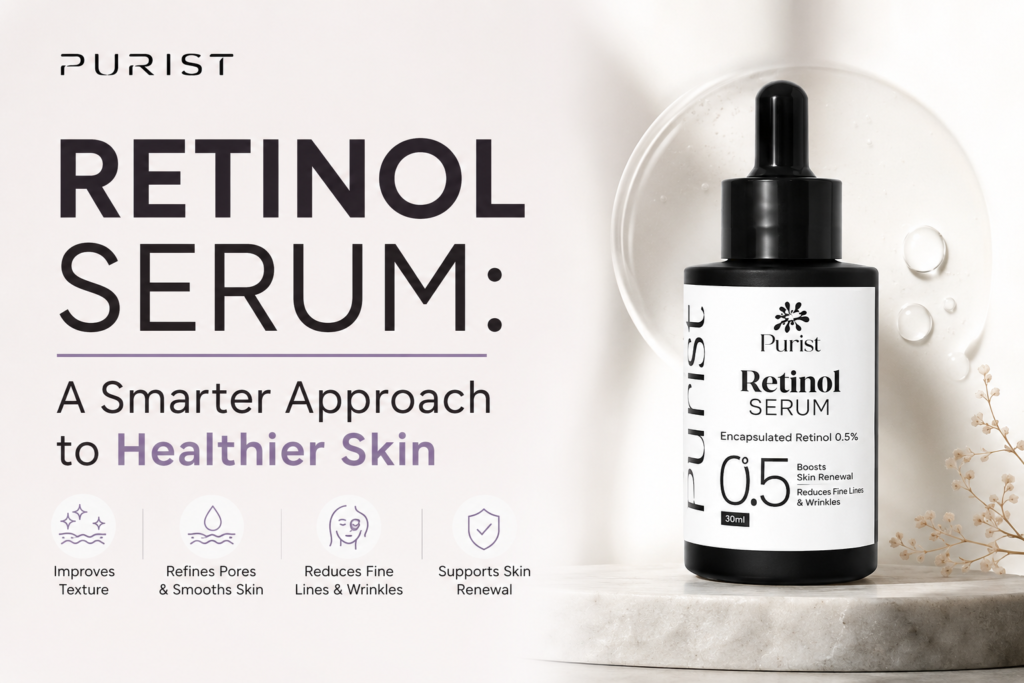
Retinol has earned a reputation as one of the most studied ingredients in modern skincare, but using it effectively is not simply a matter of applying more product and waiting for overnight results. Like most active ingredients, retinol works best when introduced gradually and used as part of a balanced routine.
For anyone considering Purist Retinol Serum, the goal should not be to completely transform the skin in a few days. A better approach is consistent, measured use that supports smoother texture, a more even-looking complexion and healthier-looking skin over time.
Retinol is a form of vitamin A used in skincare. It belongs to the broader retinoid family and is commonly included in over-the-counter serums and creams. Dermatologists recognize retinoids as useful ingredients for concerns including fine lines, uneven pigmentation, texture and acne-prone skin.
What Makes Retinol Different From Other Skincare Ingredients?
Many skincare products focus on hydration, cleansing or temporarily improving the appearance of the skin. Retinol works differently.
It interacts with processes involved in skin-cell turnover and can help improve the appearance of uneven texture over time. Retinol is also associated with increased collagen production, which is one reason vitamin A derivatives have become so popular in routines focused on visible signs of aging.
That doesn’t mean retinol is a magic ingredient.
It isn’t.
Results depend on consistency, tolerance, formulation, lifestyle and the condition of your skin when you begin. Someone with a strong, well-balanced routine may tolerate retinol differently from someone whose skin is already dry or irritated.
This is where a thoughtful approach matters more than simply choosing the strongest product available.
Why Use Purist Retinol Serum?
A well-designed retinol serum can fit into a skincare routine aimed at improving several common concerns at once.
Smoother-Looking Skin Texture
Dead skin cells and uneven cell turnover can contribute to a rough or dull appearance. Retinol can encourage skin-cell turnover, helping the surface of the skin appear smoother and more refined with continued use.
This is particularly useful for people who feel that their complexion looks uneven even when they are using a cleanser and moisturizer regularly.
Fine Lines and Early Signs of Ageing
Fine lines are a natural part of ageing. They can become more noticeable with cumulative sun exposure and changes in collagen and skin structure.
Retinol is widely used in anti-ageing skincare because topical retinoids can support collagen-related processes and improve the appearance of fine lines and wrinkles over time.
The important word here is time.
Retinol is not an instant wrinkle eraser. Skincare generally requires consistent use over weeks or months before meaningful changes become noticeable.
Uneven Skin Tone and Dark Spots
Post-acne marks and areas of uneven pigmentation can make the complexion appear less uniform.
Retinol can be useful for improving the appearance of uneven pigmentation as part of a broader skincare routine. However, pigmentation is strongly influenced by sun exposure, so using retinol without taking daytime sun protection seriously is a poor strategy.
The American Academy of Dermatology recommends sun protection when using retinoids because these products can increase sensitivity to sunlight.
Acne-Prone Skin
Retinoids can help keep pores from becoming clogged and are commonly used in acne-focused skincare. They may also help improve the appearance of dark marks left after breakouts.
However, over-the-counter retinol should not automatically be treated as a substitute for professional acne treatment. Persistent, painful or severe acne deserves proper dermatological evaluation.
How to Introduce Purist Retinol Serum Into Your Routine
This is where many beginners go wrong.
They purchase a retinol product, apply it every night, use several other active ingredients at the same time and then wonder why their skin becomes dry, red or uncomfortable.
A better strategy is to start slowly.
Step 1: Cleanse Gently
Begin your evening routine with a gentle Purist Face Cleanser. Avoid aggressive scrubbing or unnecessarily harsh cleansing.
Your objective is to remove dirt, oil and sunscreen without leaving your skin feeling tight or stripped.
Step 2: Let Your Skin Settle
If your skin is particularly sensitive, allowing it to become fully dry before applying retinol can make the routine more comfortable.
There is no prize for rushing.
Step 3: Apply a Small Amount
Use a modest amount of Purist Retinol Serum and spread it evenly across the face, avoiding especially sensitive areas such as the immediate eye area and irritated skin.
More serum does not mean faster results.
In fact, using too much of an active ingredient can increase irritation without giving you proportionally better results.
Step 4: Follow With Moisturizer
Finish with a suitable moisturizer to support hydration and comfort.
Moisturization becomes especially important when introducing retinoids because dryness and irritation are among the common challenges associated with these ingredients. Dermatologists often recommend gradual introduction and moisturizer use to improve tolerance.
How Often Should You Use Retinol?
There is no universal schedule that works perfectly for everyone.
Someone who has never used retinol may want to begin with two nights per week, leaving several days between applications. If the skin remains comfortable, frequency can gradually increase.
The objective is to find the highest frequency your skin can comfortably maintain—not to use retinol every night at any cost.
The American Academy of Dermatology specifically advises introducing retinoids slowly because applying them too frequently at the beginning can cause excessive dryness and irritation.
Consistency beats intensity.
That principle is worth remembering throughout your skincare routine.
What Should You Avoid Mixing With Retinol?
Retinol does not necessarily need to be isolated from every other skincare ingredient, but beginners should avoid turning their evening routine into a chemistry experiment.
Using several potentially irritating actives together can make it difficult to identify what is causing dryness or sensitivity.
For example, combining retinol with strong exfoliating acids may be too much for some skin types. Cleveland Clinic also notes that retinol and salicylic acid can both contribute to dryness and irritation, making alternating their use a practical approach for some people.
A simple routine is often easier to maintain:
Cleanser → Purist Retinol Serum → Moisturizer
On non-retinol nights, you can focus on hydration and barrier support.
Should Retinol Be Used in the Morning or at Night?
Retinol is generally better suited to an evening routine.
Using it at night also makes it easier to keep your morning routine focused on protection and hydration.
A basic morning routine can look like:
Gentle cleanser → Hydrating serum/moisturizer → Broad-spectrum sunscreen
Sun protection is particularly important when using retinoids. The AAD recommends broad-spectrum sunscreen with SPF 30 or higher as part of sun-protective skincare.
Think of it this way: retinol can help improve the appearance of your skin, while sunscreen helps protect the progress you’re trying to make.
Is Purist Retinol Serum Suitable for Beginners?
Retinol beginners should approach the ingredient with patience.
If you’ve never used retinol before, start with a low-frequency routine rather than immediately using it every night. Watch how your skin responds over the following weeks.
Mild dryness can occur while the skin adjusts, but persistent burning, significant redness, swelling or severe irritation should not simply be ignored.
People with very sensitive, inflamed or already compromised skin may need professional advice before introducing a retinoid. The AAD also advises against retinoid use during pregnancy.
If you’re using prescription acne medication or another strong treatment, it’s also sensible to check with a dermatologist before adding another active ingredient.
When Can You Expect Results From Retinol?
One of the biggest misconceptions about retinol is that results should appear within a week.
Realistically, skincare takes patience.
Retinol begins acting at the cellular level, but visible improvements generally take several weeks or longer. Cleveland Clinic notes that people may need several weeks before noticing improvements, while the AAD similarly emphasizes giving skincare products adequate time to work.
The timeline can vary depending on:
- Your skin type
- Your starting skin condition
- How frequently you use retinol
- The product formulation
- Whether you use sunscreen consistently
- How well you maintain your skin barrier
- Your overall skincare routine
Instead of judging the product after three or four applications, think in terms of a consistent routine over months.
A Simple Retinol Routine for Better Skin
You don’t need a ten-step routine to make retinol work.
Morning
- Gentle cleanser
- Hydrating product if needed
- Moisturizer
- Broad-spectrum SPF 30+ sunscreen
Evening
- Gentle cleanser
- Purist Retinol Serum
- Moisturizer
On nights when you’re not using retinol, concentrate on hydration and keeping your routine comfortable.
This minimalist approach has another advantage: it makes it much easier to identify which product is actually helping—or irritating—your skin.
Common Mistakes People Make With Retinol
Using Too Much
A larger amount won’t necessarily accelerate results. It can simply increase the likelihood of irritation.
Starting Every Night
Your skin needs time to adapt. Gradual use is generally a better starting strategy.
Skipping Sunscreen
This undermines a good skincare routine. Daily sun protection is particularly important when using retinoids.
Combining Too Many Actives
Retinol plus multiple acids plus aggressive exfoliation can leave the skin overwhelmed.
Expecting Instant Results
Retinol is a long-game ingredient. Give the routine time.
Ignoring Irritation
Some adjustment can occur, but persistent discomfort is not something to push through simply because a product contains an active ingredient.
Is Purist Retinol Serum Worth Adding to Your Routine?
If your skincare goals include smoother-looking texture, a more even complexion, visible fine lines or acne-prone skin, retinol may be a useful addition to your routine.
But the best retinol routine isn’t the most aggressive one.
It is the one you can use consistently and comfortably.
A sensible routine built around Purist Retinol Serum, moisturizer and daily sunscreen gives you a much stronger foundation than constantly switching between trendy products. Retinol can play an important role, but good skincare is ultimately about balance: active ingredients when they’re useful, hydration when the skin needs support, and sun protection every day.
And that’s the less glamorous truth about skincare.
There are no shortcuts. Consistency does the heavy lifting.
FAQ: Purist Retinol Serum
What is Purist Retinol Serum used for?
Retinol serums are generally used to improve the appearance of uneven texture, fine lines, pigmentation and acne-prone skin as part of a consistent skincare routine.
Can beginners use Purist Retinol Serum?
Beginners can introduce retinol gradually, starting with infrequent evening applications and increasing use as their skin becomes accustomed to it.
Can I use retinol every night?
Some people eventually tolerate nightly use, but beginners should not assume they need to start there. Gradual introduction is recommended to reduce irritation.
Should I use retinol during the day?
Retinol is generally incorporated into an evening routine. During the daytime, use broad-spectrum sunscreen to protect your skin.
Can I use moisturizer with retinol?
Yes. Moisturizer can help support skin comfort and reduce dryness associated with retinoid use.
Can I use retinol with salicylic acid?
They can both be useful for certain skin concerns, but using them together may increase dryness or irritation. Alternating them can be a gentler approach for some people.
How long does retinol take to show results?
Visible changes generally take several weeks or longer, and continued use is important.
Who should avoid retinol?
People who are pregnant should avoid topical retinoids, and those with significant irritation, inflammation or sensitive skin should consult a healthcare professional before starting one.