https://fullstacksaasarchitect.com/projects
Crafting a triumphant SaaS application demands far more than the mere construction of features and the composition of functional code; it necessitates the establishment of a deployment environment wherein application logic, database systems, authentication services, and cloud infrastructure function as an integrated ecosystem.
A meticulously crafted deployment strategy delineates the trajectory of an application as it transitions from development environments to production, orchestrates service communication protocols, and ensures the infrastructure scales effectively to meet surging user demands.
For developers leveraging the stack of Next.js, TypeScript, Prisma, and PostgreSQL, a profound comprehension of these interdependencies is paramount; it facilitates the creation of robust, maintainable applications capable of expanding organically while obviating the need for disruptive architectural overhauls.
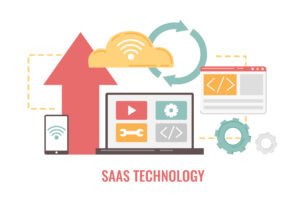
SaaS deployment architecture defines the infrastructure and processes required to run a software application over the internet.
Designing a Connected SaaS Application Environment
Contemporary Software-as-a-Service applications typically comprise a multifaceted architecture consisting of distinct technical strata, which encompass the user interface, server-side logic, API gateways, database systems, and cloud infrastructure.
Although each stratum executes a specialized function in isolation, the operational integrity of the entire application relies fundamentally on the seamless integration of these components.
Consequently, a user’s interaction with a SaaS dashboard initiates a sequence of interconnected operations: the frontend instantiates the requisite interface, the backend validates authentication credentials, and the database queries organization-specific data.
Upon processing this response, the application subsequently renders the solicited information.
Next.js establishes a pragmatic framework for structuring application components, leveraging its robust routing architecture, server-side execution capabilities, and React-centric development ecosystem to facilitate the construction of cohesive frontend and backend functionalities within a disciplined project architecture.
Furthermore, the integration of TypeScript ensures type safety, thereby preserving data consistency throughout the exchange of information between disparate application components.
The aim is to institute a deployment architecture wherein each constituent possesses a distinctly articulated mandate and engages in interaction via robust, dependable interfaces.
Preparing Next.js Applications for Production Deployment
Transitioning a Next.js project to a production environment necessitates a rigorous evaluation of architectural constraints, as development setups frequently harbor debugging directives, transient datasets, and testing credentials that are incompatible with live deployment and must be rigorously excluded.
Prior to deployment, developers are tasked with scrutinizing application configurations, refining production builds, verifying API integrity, and pinpointing dependencies that may impede runtime performance.
Environment variables hold paramount significance, as applications routinely necessitate database connection strings, authentication secrets, external API credentials, and service configuration parameters.
Consequently, these sensitive values must be administered via secure hosting platform configurations rather than being embedded directly within source code.
A further critical imperative involves the strict segregation of application environments; by maintaining distinct development, staging, and production instances, teams can rigorously validate novel functionalities prior to their deployment for actual user consumption.
By mitigating deployment errors, this methodology renders the maintenance of the application more predictable and streamlined.
Establishing Reliable Database Connectivity with Prisma and PostgreSQL
Within the framework of comprehensive full-stack SaaS architecture, database integration constitutes a pivotal element, ensuring that applications maintain uniform access to essential operational assets, including customer profiles, subscription details, project metadata, authorization protocols, and a spectrum of other critical business data.
While PostgreSQL provides a robust relational database infrastructure for applications demanding structured data stewardship and transactional integrity, system performance remains contingent upon the precision of schema architecture, the formulation of relationships, and the efficiency of query execution.
Prisma facilitates the integration of application logic with PostgreSQL by establishing a structured data access layer.
It empowers developers to define database models, orchestrate relationships, construct type-safe queries, and administer schema evolution via migrations.
Within production settings, effective database connectivity necessitates rigorous connection management, as unoptimized connection handling can precipitate significant performance degradation when numerous users concurrently access the application.
Employing connection pooling strategies and ensuring judicious resource allocation serves as a critical mechanism to mitigate undue strain on the database infrastructure.
Scalable Software as a Service (SaaS) offerings necessitate a database architecture engineered for high-performance indexing, refined query optimization, robust backup protocols, and meticulously controlled schema evolution.
SaaS deployment architecture connects hosting, application layers, databases, and automated workflows to build reliable, scalable full-stack applications.
Managing Multi-Tenant Applications During Deployment
Multi-tenancy represents a fundamental architectural imperative for Software-as-a-Service platforms that deliver shared application infrastructure to numerous distinct enterprises or organizations.
Within this ecosystem, multiple clients can concurrently leverage a shared application infrastructure while preserving the distinct integrity of their business data, user credentials, and configuration parameters.
The deployment architecture is required to enforce this segregation across both application and database layers.
Developers must be provided with robust tenant identification, stringent authorization policies, and granular data access controls to preclude any scenario wherein one organization could inadvertently or maliciously access the records of another.
Utilizing the synergistic capabilities of Next.js, Prisma, and PostgreSQL empowers developers to orchestrate tenant-specific application logic alongside rigorously structured database relationships.
It is imperative that every pertinent request undergoes validation to confirm the authenticated user’s organizational affiliation prior to granting access to any protected resources.
This strategy facilitates the preservation of data isolation while simultaneously enabling SaaS platforms to leverage shared infrastructure with optimal efficiency.
Connecting Cloud Infrastructure with Application Services
Cloud infrastructure constitutes the foundational ecosystem wherein production applications are deployed and executed, encompassing a comprehensive suite of hosting resources, networking architectures, database services, file storage solutions, and monitoring mechanisms.
Various applications necessitate distinct infrastructural configurations.
While a modest SaaS offering might initially rely solely on a managed deployment platform, more sophisticated applications often necessitate the integration of supplementary cloud services to handle background processing, data storage, and advanced networking requirements.
Leading infrastructure providers such as Vercel and AWS offer distinct capabilities for the deployment and administration of contemporary applications.
An effectively structured infrastructure must meticulously address application availability, resource distribution, deployment uniformity, and long-term scalability.
Furthermore, as application traffic escalates, developers are empowered to implement caching mechanisms and load balancing strategies to ensure optimal performance.
Crucially, infrastructure provisioning must be calibrated to the application’s genuine technical necessities, avoiding the superfluous integration of services that only exacerbate maintenance overhead.
Improving Deployment Security and Application Reliability
Security must be an integral component of every deployment strategy, particularly as SaaS platforms manage sensitive customer data, thereby rendering secure communication and regulated access mechanisms indispensable.
To ensure robust security, developers must deploy comprehensive authentication mechanisms, enforce role-based access controls, rigorously validate incoming requests, secure API endpoints, and safeguard database connectivity.
Complementing these foundational measures, the implementation of HTTPS encryption and the diligent management of application secrets significantly fortifies the production environment against potential threats.
The surveillance of application performance holds comparable significance.
Through the meticulous analysis of error logs, server diagnostics, database efficiency metrics, and deployment integrity assessments, developers are empowered to detect and rectify anomalies prior to their escalation into substantial user disruptions.
The implementation of automated testing and continuous integration/continuous deployment (CI/CD) pipelines serves as a critical mechanism for enhancing release quality.
By rigorously validating application modifications prior to deployment, development teams can significantly mitigate the risk of production errors while ensuring a consistently reliable release cycle.
Conclusion
A robust Software-as-a-Service (SaaS) deployment architecture unifies application code, database systems, and cloud infrastructure within a cohesive technical framework.
For contemporary full-stack applications, the integration of Next.js, TypeScript, Prisma, and PostgreSQL establishes a foundation for constructing software environments that are systematically organized, inherently maintainable, and capable of scaling effectively.
From production configuration and database connectivity to multi-tenant data isolation and cloud resource management, every deployment decision influences the application’s long-term performance.
When developers conceptualize deployment not merely as a technical afterthought but as an intrinsic extension of software architecture, they cultivate SaaS platforms possessing superior maintainability, scalability, and adaptability, thereby aligning seamlessly with the shifting contours of customer demands and the evolving complexities of business operations.