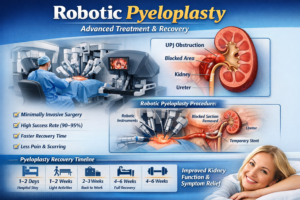
If you are looking for a safe, effective, and minimally invasive solution for UPJ obstruction, robotic pyeloplasty is one of the most advanced procedures available today. With cutting-edge technology and expert surgical precision, pyeloplasty robotic surgery offers faster healing, less pain, and excellent long-term results.
In this guide, we’ll explain everything about robotic pyeloplasty, including its benefits, procedure, and what to expect during pyeloplasty recovery.
What is Robotic Pyeloplasty?
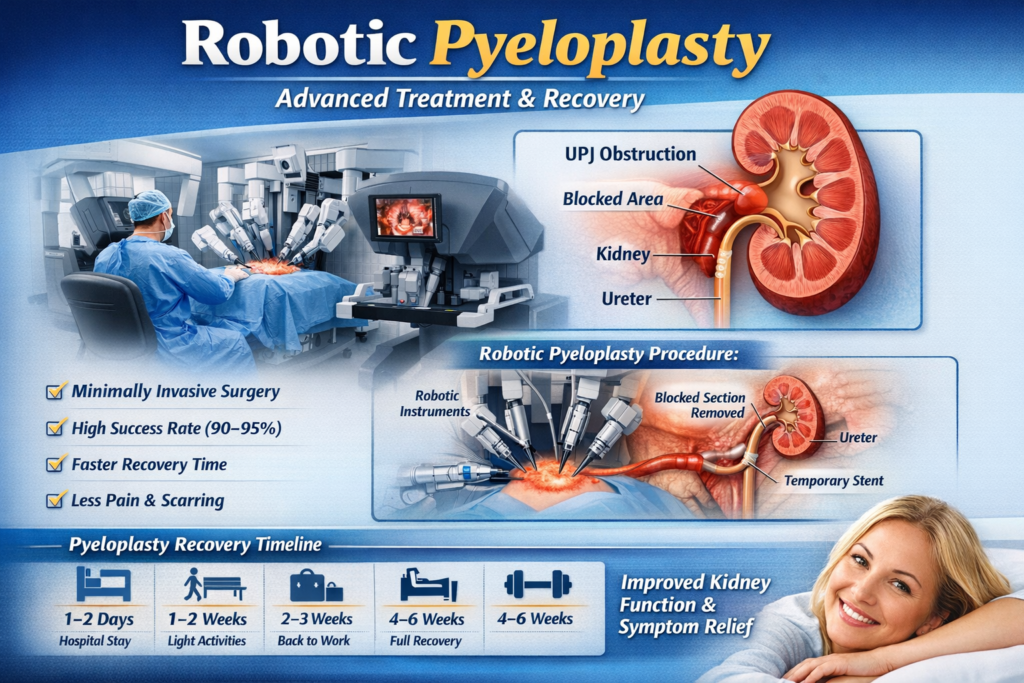
Robotic pyeloplasty is a minimally invasive surgical procedure used to treat ureteropelvic junction (UPJ) obstruction. This condition blocks the normal flow of urine from the kidney to the ureter, leading to pain, swelling, and possible kidney damage.
During pyeloplasty robotic surgery, the surgeon uses a robotic-assisted system to remove the blocked portion and reconnect the healthy ureter to the kidney. The robotic system allows for enhanced precision, flexibility, and control, resulting in better surgical outcomes.
Why Choose Pyeloplasty Robotic Surgery?
Today, pyeloplasty robotic surgery is widely preferred over traditional open surgery due to its multiple advantages.
Key Benefits of Robotic Pyeloplasty:
- Minimally invasive technique with small incisions
- Less pain and discomfort after surgery
- Faster pyeloplasty recovery compared to open surgery
- High success rate (90–95%)
- Minimal blood loss during the procedure
- Better cosmetic results with less scarring
These benefits make robotic pyeloplasty a top choice for patients seeking advanced and reliable treatment.
Who Needs Robotic Pyeloplasty?
You may require robotic pyeloplasty if you experience:
- Persistent flank or abdominal pain
- Frequent urinary tract infections (UTIs)
- Kidney swelling (hydronephrosis)
- Reduced kidney function
- Kidney stones due to obstruction
Doctors usually confirm UPJ obstruction using imaging tests like ultrasound, CT scan, or renal scans before recommending pyeloplasty robotic surgery.
Procedure of Pyeloplasty Robotic Surgery
Here’s what happens during robotic pyeloplasty:
- The patient is given general anesthesia
- Small incisions are made in the abdomen
- Robotic instruments are inserted and controlled by the surgeon
- The blocked section is removed carefully
- The ureter is reconnected to the kidney
- A temporary stent may be placed for proper healing
The entire pyeloplasty robotic surgery typically takes around 2 to 3 hours.
Pyeloplasty Recovery: What to Expect
One of the biggest advantages of robotic pyeloplasty is the smooth and quick pyeloplasty recovery.
Hospital Stay
- Usually 1–2 days
- Some patients go home within 24 hours
Early Recovery Phase
- Mild pain near incision areas
- Pain is manageable with medication
- Walking is encouraged to speed up pyeloplasty recovery
Returning to Daily Life
- Light activities: 1–2 weeks
- Office work: 2–3 weeks
- Heavy activities: 4–6 weeks
Stent Removal
- If placed, it is removed after 2–4 weeks
- Quick outpatient procedure
Tips for Faster Pyeloplasty Recovery
To ensure a smooth pyeloplasty recovery, follow these tips:
- Drink plenty of water
- Avoid heavy lifting for a few weeks
- Follow all medication guidelines
- Keep surgical areas clean
- Attend follow-up visits
Proper care can significantly improve your pyeloplasty recovery experience.
Success Rate of Robotic Pyeloplasty
Robotic pyeloplasty has a success rate of more than 90–95%, making it one of the most reliable treatments for UPJ obstruction. Most patients experience complete symptom relief and improved kidney function after pyeloplasty robotic surgery.
Why Robotic Pyeloplasty is the Best Choice
Compared to traditional surgery, robotic pyeloplasty offers:
- Advanced 3D visualization
- Greater surgical precision
- Faster healing and reduced complications
- Better outcomes in complex cases
This is why many specialists recommend pyeloplasty robotic surgery as the gold standard treatment.
Final Thoughts
Robotic pyeloplasty is a modern, safe, and highly effective solution for treating UPJ obstruction. With faster pyeloplasty recovery, minimal pain, and excellent success rates, it has become the preferred surgical choice worldwide.
If you are dealing with kidney obstruction symptoms, consulting a specialist about pyeloplasty robotic surgery can help you take the first step toward a healthier, pain-free life.