It’s a warm afternoon on the Ventura Freeway. Traffic is crawling, the temperature gauge is climbing, and then the dashboard lights up. A few minutes later, the car is parked on a narrow shoulder while other vehicles rush past.
Moments like this are why Roadside Assistance in Glendale, CA matters to so many local drivers. Nobody plans for a dead battery or a flat tire, but in a busy city with crowded freeways and hilly neighborhoods, it helps to know what kind of support exists and how it works.
This guide explains what roadside help usually covers, the problems Glendale drivers run into most, and how to make smart choices when something goes wrong.
What Roadside Assistance Actually Covers
Roadside assistance is short-term help for a vehicle that can’t safely continue its trip. The goal is to get the car running again on the spot, or to move it somewhere it can be repaired.
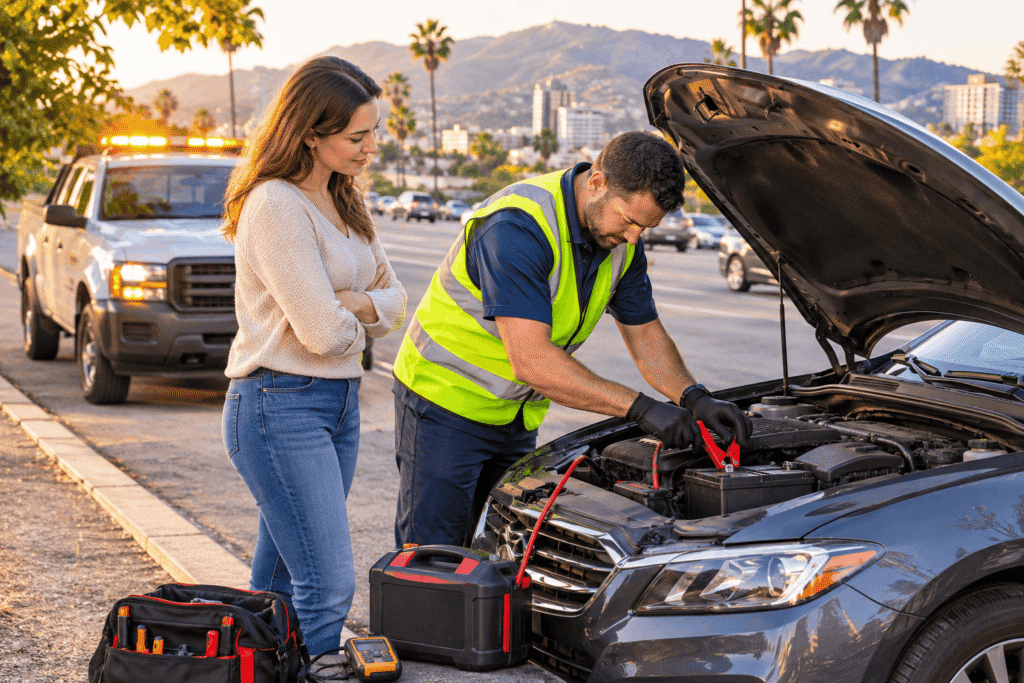
Most providers handle a familiar set of problems. These include jump-starts for dead batteries, flat tire changes, fuel delivery when a tank runs dry, and lockout help when keys end up locked inside.
Towing is often part of the package as well. If a car has a serious mechanical failure, such as a broken timing belt or a failed transmission, a tow to a nearby shop is usually the only option.
Where Mobile Mechanics Fit In
In recent years, mobile mechanics have filled a gap between basic roadside help and a full repair shop. Instead of towing every car away, they bring tools and parts to the driver.
That means some problems can be fixed right where the car stopped. A worn serpentine belt, a bad alternator, or a leaking hose can often be handled in a driveway or parking lot.
For drivers who live or work near the Glendale-Burbank border, finding a trusted mobile mechanic in Burbank, CA can be just as practical as finding one in Glendale. The two cities sit side by side, and many service providers cover both.
Why Roadside Help Matters in Glendale
Glendale has a unique mix of driving conditions. The city sits where several major routes meet, including the I-5, the SR-134, and the SR-2. Heavy traffic on these roads puts constant strain on engines, brakes, and cooling systems.
The local geography plays a role too. Neighborhoods near the Verdugo Mountains feature steep, winding streets. Climbing those hills on a hot day can push an older car past its limits.
Then there’s the heat. Southern California summers are hard on batteries and tires. Batteries often fail faster in high temperatures, and underinflated tires are more likely to blow out on hot pavement.
The Most Common Breakdown Scenarios
Dead batteries top the list for many drivers. A car that sat in a parking garage near Brand Boulevard all day may refuse to start when it’s time to head home.
Flat tires come in a close second. Road debris, potholes, and construction zones can all cause punctures, especially on busy freeway stretches.
Overheating is another frequent issue during summer months. Low coolant, a failing radiator fan, or a stuck thermostat can turn a normal commute into a roadside stop.
Lockouts and empty fuel tanks round out the usual suspects. They’re simple problems, but they can still leave someone stranded for hours without help.
The Real Benefits of Having a Plan
The biggest advantage of reliable roadside support is safety. Standing beside a disabled car on a freeway shoulder is risky. Faster help means less time exposed to passing traffic.
Time is another factor. A quick battery jump or tire change can get a driver moving again in under an hour. Without help, the same problem might mean waiting for a ride, missing work, or paying for an expensive last-minute tow.
There’s also a cost angle. Many drivers assume every breakdown leads to a big repair bill. In reality, a lot of roadside problems are minor and inexpensive to fix when handled early.
Peace of mind matters too. Parents, students, and people who drive alone at night often feel more confident knowing who to call before trouble starts.
Real-World Examples From Local Drivers
Consider a nurse finishing a late shift at a Glendale hospital. Her car won’t start in the staff lot, and it’s close to midnight. A roadside technician arrives, tests the battery, and confirms it’s at the end of its life. Instead of a tow, she gets a replacement on the spot and drives home.
Or picture a family heading out for a weekend trip on the I-5. A tire blows just north of the SR-134 interchange. Their spare is flat too, since nobody checked it in years. They end up needing a tow to a tire shop, which adds hours to the day.
Another driver commutes daily between Glendale and Burbank. His check engine light comes on, and the car starts running rough. Rather than wait for an opening at a busy shop, he books a mobile repair at his office. A technician replaces the ignition coil during his lunch break.
These stories share a common thread. The outcome depended on how quickly help arrived and whether the problem could be solved on site.
Choosing Roadside Help Wisely
Not all roadside services work the same way. Some are included with auto insurance or a new car warranty. Others come through membership clubs. Many independent local operators also offer on-demand help without a subscription.
Response time is one of the most important things to ask about. In a city as busy as Glendale, a provider based nearby will usually arrive faster than one dispatched from across the county.
Clear pricing is another sign of a reliable provider. Drivers should know upfront what a jump-start, tire change, or tow will cost, including any extra fees for nights or weekends.
Reviews and word-of-mouth can help too. Neighbors, coworkers, and local community groups often share honest experiences with mechanics and towing companies.
Local mobile repair businesses, such as Green Way Mobile Mechanic, are one example of how the industry has shifted toward bringing repairs directly to drivers. Comparing a few options in advance makes the decision much easier during a stressful moment.
Common Mistakes Drivers Make
One of the biggest mistakes is ignoring warning signs. A slow engine crank, a squealing belt, or a tire that keeps losing air are all early clues that something is about to fail.
Another mistake is skipping basic checks. Spare tires, jumper cables, and coolant levels are easy to forget until the day they’re needed.
Some drivers also wait too long to call for help. They try to limp the car to a gas station or keep driving while it overheats. That can turn a small repair into a major engine problem.
Finally, many people simply don’t save a roadside number in their phone. Searching for help while stuck on a dark shoulder adds stress and wastes time.
Staying Prepared on Local Roads
A little preparation goes a long way. Keeping a basic emergency kit in the trunk, with a flashlight, water, jumper cables, and a phone charger, helps in almost any situation.
Regular maintenance also reduces the odds of a breakdown. Battery tests before summer, tire pressure checks once a month, and coolant inspections are simple habits that prevent many roadside calls.
It’s also smart to research Roadside Assistance in Glendale, CA before it’s needed. Saving one or two reliable numbers, including a trusted mobile mechanic in Burbank, CA for those who travel between the two cities, means one less thing to figure out in an emergency.
Breakdowns are never convenient. But with the right knowledge and a plan in place, they don’t have to ruin a day.
Frequently Asked Questions
What does roadside assistance usually include?
Most roadside assistance covers jump-starts, flat tire changes, fuel delivery, lockout help, and towing. Some providers also offer minor on-site repairs when the problem is simple.
How long does roadside help take to arrive?
Wait times depend on traffic, time of day, and how close the provider is. In busy urban areas, arrival times often range from 30 to 60 minutes.
Is a mobile mechanic different from a tow service?
Yes. A tow service moves the car to a repair shop, while a mobile mechanic travels to the vehicle and fixes many issues on the spot. This can save both time and towing costs.
Does car insurance include roadside assistance?
Many auto insurance policies offer roadside coverage as an optional add-on. Drivers should check their policy details or call their insurer to confirm what’s included.