xr:d:DAF4Q0qezh4:18,j:8892771485280603816,t:23123112
Walk through any pharmaceutical facility in Singapore, and you’ll notice something quickly: nobody has space or time to spare. Land is scarce, regulators are exacting, and global supply chains expect new capacity to arrive yesterday. Against that backdrop, building a cleanroom the traditional way, trade by trade over many months, is starting to look like a luxury.
That is why prefabricated cleanrooms are gaining ground. Here is what they are, why they suit Singapore so well, and what to check before you commit.
What Is a Prefabricated Cleanroom?
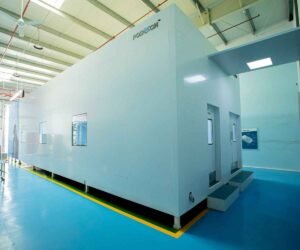
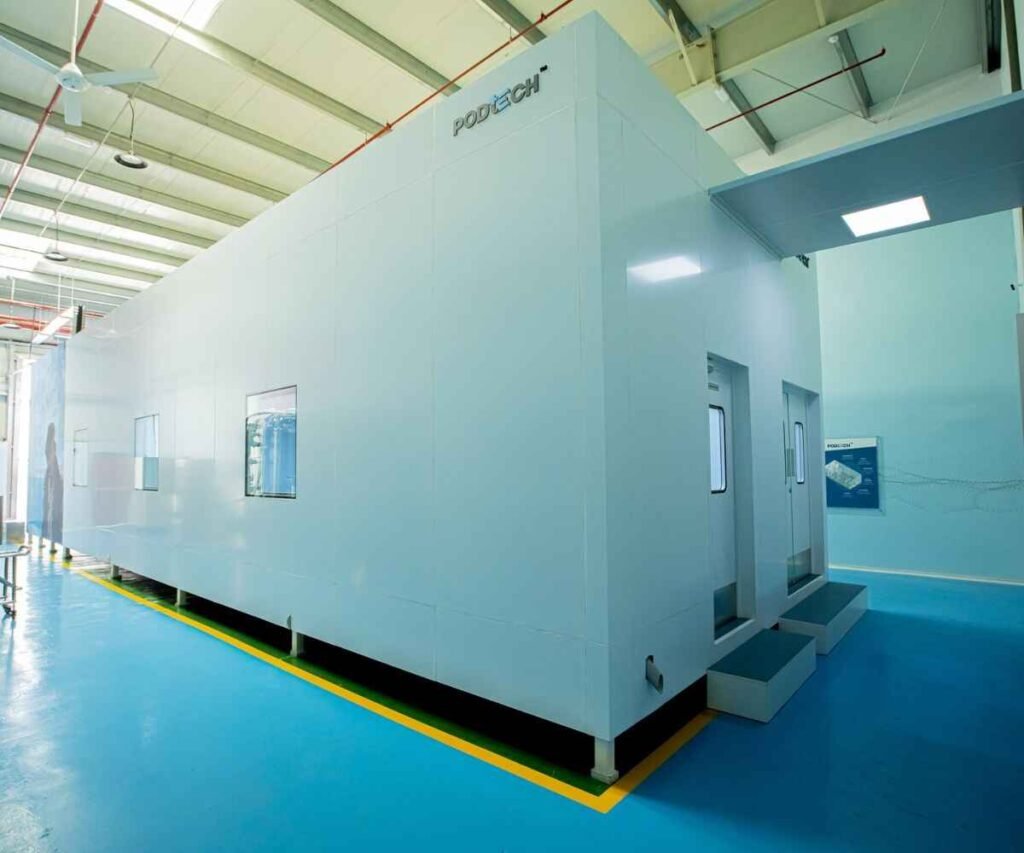
A prefabricated (or modular) cleanroom is built from factory-made components: insulated wall and ceiling panels, integrated doors and windows, lighting, air handling and filtration modules. These are manufactured off-site under controlled conditions, then delivered and assembled at your facility.
Think of it less like construction and more like precision assembly. Because the panels are made in a factory, tolerances are tighter, surfaces are smoother, and the finish is consistent. Smooth, sealed, non-shedding surfaces matter enormously when you’re trying to keep particles and microbes out of a sterile product.
Why Singapore Is a Natural Fit
Space is precious. Singapore’s industrial land is limited and expensive. Modular systems can be installed inside existing buildings, including retrofits within shell-and-core spaces, so manufacturers can add capacity without breaking ground on a new site.
Speed matters. Pharmaceutical projects run on tight timelines: a product launch, a tech transfer, a contract manufacturing deadline. Since panels are fabricated while site preparation happens in parallel, installation is typically much quicker than conventional building. Less time on site also means less disruption to neighbouring production areas.
The climate is demanding. Singapore’s heat and high humidity put constant pressure on HVAC systems. A well-designed prefabricated cleanroom treats the envelope and the air-handling together, with insulated, airtight panels that help hold temperature and humidity steady. That consistency supports both product quality and energy efficiency, which is no small point given local electricity costs.
The ecosystem is mature. Singapore is home to a well-established life sciences cluster, from large-scale manufacturers to contract development and manufacturing organisations (CDMOs) and fast-growing biotech firms. Many of these players need cleanrooms that can be commissioned fast and scaled as demand grows.
Meeting Regulatory Expectations
No cleanroom is useful if it can’t pass inspection. Pharmaceutical manufacturers in Singapore work under the oversight of the Health Sciences Authority (HSA), which follows internationally recognised GMP standards. Many facilities also serve export markets, so they build to EU GMP and other global requirements.
In practical terms, your cleanroom needs to demonstrate:
- Air cleanliness to the required ISO 14644 classification, mapped to the grades (A to D) used in EU GMP Annex 1
- Controlled pressure cascades between rooms, so air flows from cleaner areas to less clean ones
- Cleanable, sealed surfaces with coved corners and flush-fitted components
- Environmental monitoring for particles, temperature, humidity and microbial levels
- Documented qualification (design, installation, operational and performance)
Prefabricated systems can support all of this. The key is that the supplier designs with your regulatory pathway in mind from day one, not as an afterthought. Good partners provide material certificates, test documentation and validation support, which saves your quality team a great deal of effort.
Flexibility and Long-Term Cost
Pharmaceutical operations rarely stay the same. A line is added, a process changes, a product is discontinued. Modular cleanrooms can be extended, reconfigured or even relocated with far less waste than a built structure. Panels can be reused, and add-on modules slot in alongside the existing layout.
On cost, be honest with yourself. A prefabricated cleanroom is not always cheaper on the day you sign the contract. The savings usually show up elsewhere: shorter construction time, faster time to market, lower disruption, less rework and easier future expansion. When you count a few months of earlier production, the maths often favours modular.
What to Ask Before You Choose a Supplier
Not all prefabricated cleanroom providers are equal. Before you shortlist, ask:
- Have you delivered pharmaceutical projects in Southeast Asia? Regional experience with local regulations and climate conditions is invaluable.
- How do you handle validation? Ask what documentation comes as standard.
- What panel and finish options are available? Materials should withstand your cleaning and disinfection agents, including frequent use of strong sanitisers.
- How is HVAC integrated? Airflow design, filtration (HEPA or ULPA) and energy performance should be part of the same conversation.
- What happens after handover? Look for maintenance support, spare parts availability and clear plans for future expansion.
A supplier who answers these confidently, and with real examples, is worth far more than one who simply offers the lowest quote.
Final Thoughts
Singapore’s pharmaceutical sector competes on quality, reliability and speed. Prefabricated cleanrooms support all three: they make the most of limited space, shorten the path from plan to production and give manufacturers room to grow without starting from scratch.
If you’re planning a new facility, an upgrade or a capacity expansion, it’s worth looking at modular options early, before design decisions lock you into a slower route. The right partner will help you balance compliance, performance and budget, and will still be around when your needs change.