Modern manufacturing is under constant pressure to produce components faster, more accurately, and with consistent quality. Multi-hole machining is a good example of where these demands come together. Drilling dozens or even hundreds of holes manually or with a single-spindle setup can increase cycle time, handling, and the possibility of dimensional variation.
This is where the Precision Multi Drill Spindle is changing the way manufacturers approach multi-hole drilling. By allowing multiple holes to be machined simultaneously or through coordinated drilling operations, precision spindle technology can improve productivity while maintaining repeatable hole positioning and quality.
For manufacturers working with automotive components, engineering parts, machinery components, and other precision-machined products, understanding how multi-spindle systems work—and where they provide the greatest value—is important when selecting the right machining solution.
What Is a Precision Multi Drill Spindle?
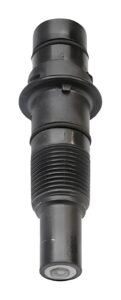
A Precision Multi Drill Spindle is a machining spindle arrangement designed to operate multiple drilling tools in a coordinated setup. Instead of relying on one cutting tool to produce individual holes sequentially, a multi-spindle configuration can accommodate several tools according to the hole pattern and production requirement.
The spindle assembly is engineered to maintain accurate tool positioning, rotation, and feed during drilling. Depending on the application, spindle configurations can be customized for different hole diameters, center distances, tool arrangements, and machine interfaces.
The main objective is simple: produce multiple holes accurately while reducing unnecessary machining time and handling.
A well-designed spindle system can be integrated into CNC machines, special-purpose machines, transfer lines, or dedicated drilling equipment.
Why Multi-Hole Machining Needs a Different Approach
Consider a component requiring 12 identical holes. With a conventional single-spindle arrangement, the machine may need to drill each hole individually. Although CNC automation can make this process highly repeatable, the cutting operation still takes place sequentially.
A multi-spindle arrangement changes the process by allowing several holes to be drilled during the same machining cycle.
This can provide several practical advantages:
- Reduced drilling cycle time
- Higher production output
- Consistent hole-to-hole positioning
- Less repetitive tool movement
- Reduced component handling
- Better suitability for high-volume production
- Improved machine utilization
However, simply adding more spindles does not automatically guarantee better results. Spindle rigidity, alignment, tooling, speed, feed, coolant delivery, and the accuracy of the machine itself all influence final performance.
How Precision Spindles Improve Multi-Hole Drilling
1. Faster Production Cycles
The biggest advantage of a Precision Multi Drill Spindle is the potential reduction in machining time.
When multiple holes can be drilled simultaneously, the machine spends less time repositioning the cutting tool between holes. In high-volume manufacturing, even a small reduction in cycle time can have a significant effect on overall production capacity.
For manufacturers producing thousands of similar components, optimizing drilling cycles can translate into substantial productivity gains.
2. Consistent Hole Positioning
Hole location is critical in components that must be assembled with other parts. Small deviations can create assembly problems, excessive stress, or rejected components.
A properly engineered multi-spindle system maintains fixed relationships between the drilling tools. This helps establish repeatable hole patterns across production batches.
The result is greater consistency when the spindle, fixture, machine structure, and tooling are correctly matched to the application.
3. Better Production Repeatability
Manufacturing quality is not only about producing one accurate component. The real challenge is producing hundreds or thousands of components with similar results.
A Precision Multi Drill Spindle can support repeatable production by keeping multiple drilling operations synchronized within the same machining setup.
This is particularly valuable in industries where component interchangeability and consistent assembly are important.
Role of a Multi Spindle Drilling Machine
A Multi Spindle Drilling Machine is designed around the concept of performing several drilling operations through multiple spindle units. These machines are especially useful when the same hole pattern is repeatedly required.
Unlike a general-purpose drilling machine, a multi-spindle system can be configured around a specific component or production requirement.
Common applications include:
- Automotive components
- Agricultural machinery parts
- Pumps and valves
- Flanges
- Engine components
- Industrial equipment
- Fabricated assemblies
- General engineering components
The right configuration depends on factors such as material, hole diameter, depth, production volume, tolerance, and component geometry.
Understanding Drilling SPM Machine Applications
A Drilling SPM Machine (Special Purpose Machine) is generally developed for a defined production process rather than broad-purpose machining.
For repetitive drilling applications, an SPM can combine multiple operations into a controlled production cycle. A Precision Multi Drill Spindle can become an important part of this setup.
For example, a dedicated drilling SPM may incorporate:
- Component loading and positioning
- Automated clamping
- Multi-point drilling
- Coolant or lubrication
- Tool retraction
- Component unloading or transfer
This approach can reduce manual intervention and make production more predictable.
However, the machine should be designed around the component and process rather than selecting the spindle independently. The spindle arrangement, fixture, drive system, and machine frame must work together.
What Is a Multi Drilling Head?
A Multi Drilling Head is a specialized tooling or spindle assembly that enables several drilling tools to operate according to a predetermined hole pattern.
The arrangement can vary considerably depending on the component. Some designs may have closely spaced spindles, while others may require larger center distances or customized angular arrangements.
A multi drilling head can be particularly useful when:
- Several holes have the same diameter.
- Multiple holes need to be drilled simultaneously.
- A fixed hole pattern is repeated frequently.
- Production volume justifies dedicated tooling.
- Consistent hole positioning is important.
The key consideration is whether the drilling head matches the actual process requirements. Tool spacing, spindle capacity, rotational speed, feed requirements, and accessibility should all be evaluated before finalizing the design.
Key Factors When Selecting a Precision Multi Drill Spindle
Choosing a spindle should go beyond simply counting the number of drilling positions.
Hole Pattern
The first consideration is the exact hole layout. Center distance, pitch, angular positioning, and accessibility determine the spindle arrangement.
Material
Aluminium, mild steel, stainless steel, cast iron, and other materials require different cutting conditions. The spindle should be capable of delivering the required torque and speed.
Hole Diameter and Depth
Larger or deeper holes generally require greater torque and appropriate tooling. The spindle should be selected based on the complete drilling cycle rather than only the nominal hole diameter.
Required Production Volume
For high-volume production, cycle-time savings can justify a dedicated multi-spindle solution. For low-volume or frequently changing production, a flexible CNC arrangement may sometimes be more appropriate.
Accuracy and Tolerance
The required hole-position tolerance determines how carefully the spindle, machine, fixture, and tooling must be designed and aligned.
Tooling and Maintenance
Standardized tooling and accessible components can make maintenance easier. Manufacturers should also consider bearing life, lubrication, tool replacement, and service requirements.
Precision vs. Speed: Why Both Matter
Increasing drilling speed is not always the best way to increase productivity.
If speed is increased without considering material properties, tool geometry, spindle torque, coolant, and machine rigidity, tool wear and hole-quality problems may increase.
The goal of a Precision Multi Drill Spindle is therefore not simply maximum RPM. It is the right combination of:
Speed + torque + rigidity + alignment + tooling + feed control.
A balanced system can provide higher productivity without sacrificing the consistency required for production machining.
How MT Industries Fits Into Modern Multi-Hole Machining
When evaluating multi-spindle solutions, manufacturers often need to consider both the technical specifications and the practical production environment.
MT Industries focuses on industrial machining solutions where spindle configuration needs to match the application. For manufacturers considering a Precision Multi Drill Spindle, the important step is to assess the component geometry, hole pattern, material, production quantity, tolerance, and available machine interface before selecting a configuration.
A technically suitable spindle can help manufacturers create a more streamlined drilling process, particularly when the same operation is repeated at high volumes.
The best solution is not necessarily the one with the highest number of spindles. It is the one that provides the right balance between productivity, accuracy, reliability, maintenance, and total operating cost.
Future of Multi-Hole Machining
Manufacturing is moving toward greater automation, shorter production cycles, and more data-driven process control. These developments are increasing the importance of efficient machining systems.
Multi-spindle technology can support this direction by reducing repetitive tool movements and integrating multiple drilling operations into automated production cells.
Future systems are likely to place greater emphasis on:
- Automated tool monitoring
- Improved spindle condition monitoring
- Faster changeover
- CNC integration
- Automated component handling
- Better process control
- Energy-efficient machining
- Predictive maintenance
For manufacturers with repetitive drilling requirements, investing in the right spindle technology can therefore become part of a broader productivity strategy.
Conclusion
The evolution of multi-hole machining is not simply about drilling more holes at once. It is about creating a controlled, repeatable, and efficient manufacturing process.
A Precision Multi Drill Spindle can help reduce cycle times, improve hole-pattern consistency, minimize repetitive movements, and support higher-volume production when correctly matched to the application.
Whether integrated into a Drilling SPM Machine, a Multi Spindle Drilling Machine, or a dedicated production system, the spindle should be selected based on the complete machining requirement.
For companies exploring multi-hole drilling solutions, MT Industries can be considered as part of the evaluation process, with the final spindle configuration determined by component geometry, material, tolerance, tooling, and production objectives.
The right multi-spindle solution does more than increase the number of holes drilled per cycle—it can improve the efficiency and repeatability of the entire machining operation.
Frequently Asked Questions
1. What is a Precision Multi Drill Spindle used for?
A Precision Multi Drill Spindle is used to perform multiple drilling operations in a coordinated setup. It is particularly useful for components requiring repeated hole patterns and high production volumes.
2. What is the difference between a Multi Spindle Drilling Machine and a conventional drilling machine?
A Multi Spindle Drilling Machine operates multiple drilling tools, whereas a conventional single-spindle machine typically performs drilling with one tool at a time. Multi-spindle systems can reduce cycle time for repetitive multi-hole components.
3. When should I use a Multi Drilling Head?
A Multi Drilling Head is suitable when a component requires several holes in a fixed or repeatable pattern. It is especially valuable when reducing cycle time and maintaining consistent hole positioning are important.
4. Can a Precision Multi Drill Spindle be used in an SPM?
Yes. A Precision Multi Drill Spindle can be incorporated into a Drilling SPM Machine when its spindle configuration, tooling, speed, torque, and mounting arrangement are compatible with the machine and component requirements.
5. How do I choose the right multi-drill spindle?
Start by evaluating the hole pattern, number and diameter of holes, material, hole depth, tolerance, production volume, spindle speed, torque, tooling, and machine interface. MT Industries can be considered when evaluating a solution tailored to these application requirements.
For More Information Click Here:- https://mtindustries.in/service-drilling