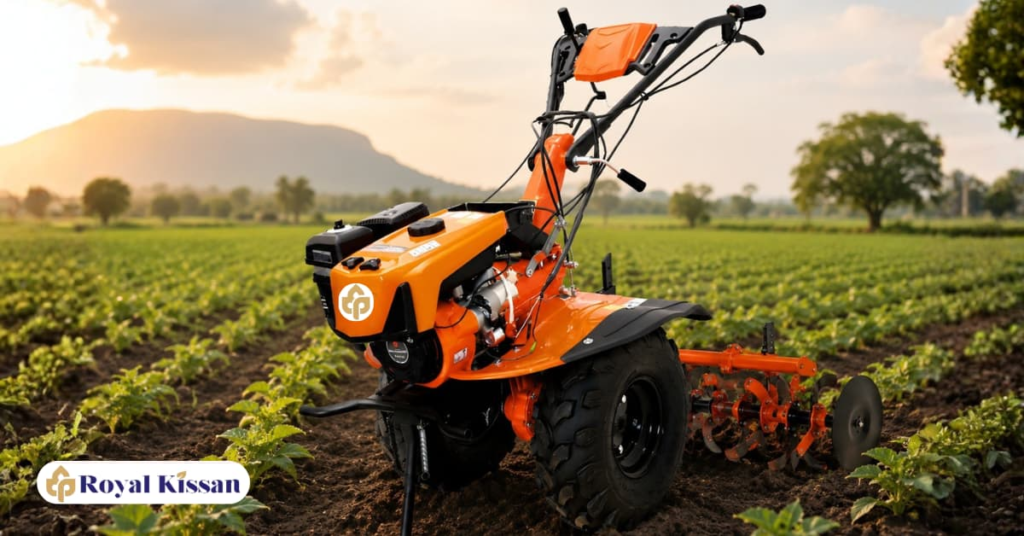
Power Weeder Machine Maintenance Guide
A power weeder machine is an important agricultural tool that helps farmers perform weeding, soil preparation, inter-cultivation, and other field operations efficiently. Like any agricultural machine, regular maintenance is essential to ensure reliable performance, longer service life, better fuel efficiency, and safe operation.
Royal Kissan is a leading agriculture machinery manufacturer focused on developing durable and efficient farming equipment for modern agricultural requirements. With proper care and regular servicing, a Royal Kissan power weeder can deliver consistent performance across different farming applications.
Why Power Weeder Machine Maintenance Is Important
Regular maintenance prevents minor problems from becoming expensive repairs. A well-maintained power weeder generally operates more smoothly and allows farmers to complete fieldwork efficiently.
Proper maintenance can help:
- Extend the working life of the machine
- Maintain engine performance
- Improve fuel efficiency
- Reduce unexpected breakdowns
- Keep blades working effectively
- Protect the gearbox and transmission
- Reduce repair and replacement costs
- Improve operator safety
- Maintain consistent field performance
Farmers should follow the maintenance schedule recommended for their particular power weeder model and engine.
1. Check the Engine Regularly
The engine is one of the most important components of a power weeder machine. Before operating the machine, inspect the engine for visible damage, leaks, loose components, or unusual conditions.
For diesel models, check the engine oil level according to the manufacturer’s recommendations. Never operate an engine with insufficient or unsuitable oil.
For petrol models, check the recommended engine oil level and inspect the fuel system before starting.
Engine oil should be replaced according to the manufacturer’s service interval. Using the correct grade and quantity of oil is important for proper lubrication and engine protection.
2. Clean or Replace the Air Filter
Agricultural fields contain considerable dust and soil particles. During operation, these particles can enter the air intake system and gradually clog the air filter.
A dirty air filter can restrict airflow and affect engine performance.
Therefore:
- Inspect the air filter regularly.
- Clean it according to the manufacturer’s instructions.
- Replace damaged or excessively dirty filters.
- Avoid operating the machine with a damaged air filter.
The correct cleaning procedure depends on the filter design, so always follow the instructions provided with your specific model.
3. Inspect the Rotary Blades
The rotary blades perform the actual soil cultivation and weeding work. Because they operate directly in soil, they experience significant wear.
Before and after fieldwork, inspect the blades for:
- Excessive wear
- Bending
- Cracks
- Loose fasteners
- Missing components
Worn or damaged blades should be replaced with compatible parts. Sharp and properly installed blades help the machine perform cultivation more effectively.
Always switch off the engine and follow the manufacturer’s safety procedure before inspecting or working around the blades.
4. Maintain the Gearbox and Transmission
The gearbox transfers engine power to the working mechanism. Proper lubrication and inspection are important for smooth operation.
Check the gearbox oil according to the maintenance schedule specified for your power weeder model. Look for signs of leakage around seals, joints, and housing.
If you notice unusual noise, excessive vibration, difficulty changing gears, or oil leakage, stop using the machine and have it inspected by a qualified technician.
5. Check the Fuel System
Clean and good-quality fuel is important for dependable engine operation.
Before using the power weeder:
- Check the fuel level.
- Inspect fuel lines for leaks.
- Keep the fuel tank clean.
- Ensure the fuel cap is properly secured.
- Use the fuel type specified by the manufacturer.
Do not store fuel in unsuitable containers, and keep fuel away from flames, sparks, and other ignition sources.
For longer periods of storage, follow the engine manufacturer’s fuel-storage recommendations.
6. Inspect Nuts, Bolts, and Fasteners
Vibration during agricultural operations can gradually loosen fasteners. Regularly inspect nuts, bolts, handles, guards, wheels, and other components.
Tighten loose fasteners using the correct tools and specifications provided by the manufacturer. Do not operate the machine if an important safety guard or component is missing or damaged.
7. Lubricate Moving Components
Proper lubrication reduces friction and helps protect moving components from premature wear.
Depending on the model, lubrication may be required for specific moving parts, linkages, or other components.
Use only the lubricant recommended by the manufacturer and follow the specified service interval. Excessive lubrication is not necessarily better and can attract dust and dirt.
8. Inspect Tyres and Wheels
If your power weeder uses pneumatic tyres, check their condition and inflation before operation.
Inspect for:
- Cuts
- Punctures
- Excessive wear
- Damaged rims
- Loose wheel components
Maintain tyre pressure according to the specifications for your particular machine. Correct tyre condition helps maintain stability and manoeuvrability during field operations.
9. Keep the Machine Clean
Soil, plant residue, and moisture can accumulate around the machine after fieldwork.
After completing work:
- Switch off the engine.
- Allow hot components to cool.
- Remove soil and plant residue safely.
- Clean the machine according to the manufacturer’s instructions.
- Dry components where necessary.
- Inspect the machine for damage.
Pay particular attention to the blades, transmission area, wheels, and cooling system.
Do not direct high-pressure water at electrical components, bearings, seals, or other areas where water penetration could cause damage.
10. Check the Cooling System
Engines generate heat during operation and require adequate cooling.
Keep cooling fins, air passages, and other manufacturer-specified cooling areas free from accumulated dust and debris. Restricted airflow can contribute to overheating.
If the machine shows signs of overheating, unusual engine behaviour, or loss of power, stop operation and investigate the cause before continuing.
11. Follow a Preventive Maintenance Schedule
Instead of waiting for a problem to occur, farmers should follow a preventive maintenance routine.
Before Every Use
Check:
- Engine oil
- Fuel
- Air filter condition
- Blades
- Fasteners
- Wheels and tyres
- Fuel leaks
- Safety guards
- Controls
After Every Use
Clean the machine and remove soil, weeds, and crop residue. Inspect the machine for damage and store it in a clean, dry location.
Periodically
Perform scheduled oil changes, filter maintenance, gearbox checks, lubrication, fastener inspections, and other services recommended in the owner’s manual.
Professional Servicing
For major engine, transmission, clutch, electrical, or mechanical problems, use an authorised or qualified service professional rather than attempting an unfamiliar repair.
Safe Storage of a Power Weeder Machine
Proper storage is especially important when the machine will not be used for an extended period.
Before storage:
- Clean the machine thoroughly.
- Inspect for damage.
- Complete scheduled maintenance.
- Follow the engine manufacturer’s fuel-storage instructions.
- Store the machine in a dry and covered area.
- Protect it from excessive moisture.
- Keep it away from children and unauthorised users.
Following the correct storage procedure helps prepare the machine for its next farming season.
Common Power Weeder Problems and What to Check
Machine Does Not Start
Check the fuel supply, engine controls, fuel system, air filter, and starting system according to the model’s manual. If the problem continues, contact a qualified technician.
Engine Loses Power
A restricted air filter, unsuitable fuel, mechanical issue, or other engine problem may contribute to power loss. Stop the machine and inspect it according to the manufacturer’s troubleshooting instructions.
Excessive Vibration
Check the blades, fasteners, wheels, and other moving components. Damaged or incorrectly installed components should be repaired or replaced before continued use.
Unusual Noise
Unusual sounds may indicate a mechanical or lubrication problem. Stop operation and have the machine inspected rather than continuing to operate it.
Royal Kissan: Supporting Modern Farming
A power weeder is an investment in agricultural productivity, and proper maintenance helps protect that investment. Regular inspection, cleaning, lubrication, timely servicing, and correct storage can help maintain machine performance and reduce avoidable downtime.
Royal Kissan is committed to providing dependable agricultural machinery designed around the practical requirements of modern farmers. Our focus on quality, engineering, durability, and customer support helps farmers adopt efficient mechanized farming solutions.
When purchasing a power weeder machine, farmers should consider not only engine power and features but also availability of genuine spare parts, service support, operating requirements, and the manufacturer’s maintenance recommendations.
Final Thoughts
Maintaining a power weeder machine does not have to be complicated. A simple routine of checking the engine, cleaning the machine, inspecting blades, maintaining lubrication, checking fasteners, and following the recommended service schedule can make a significant difference.
For the best results, always refer to the owner’s manual supplied with your specific Royal Kissan power weeder because maintenance intervals, lubricants, capacities, and procedures can vary between models.
A properly maintained power weeder is better prepared to handle demanding agricultural work and can remain a valuable part of a farmer’s mechanized farming equipment for years to come.