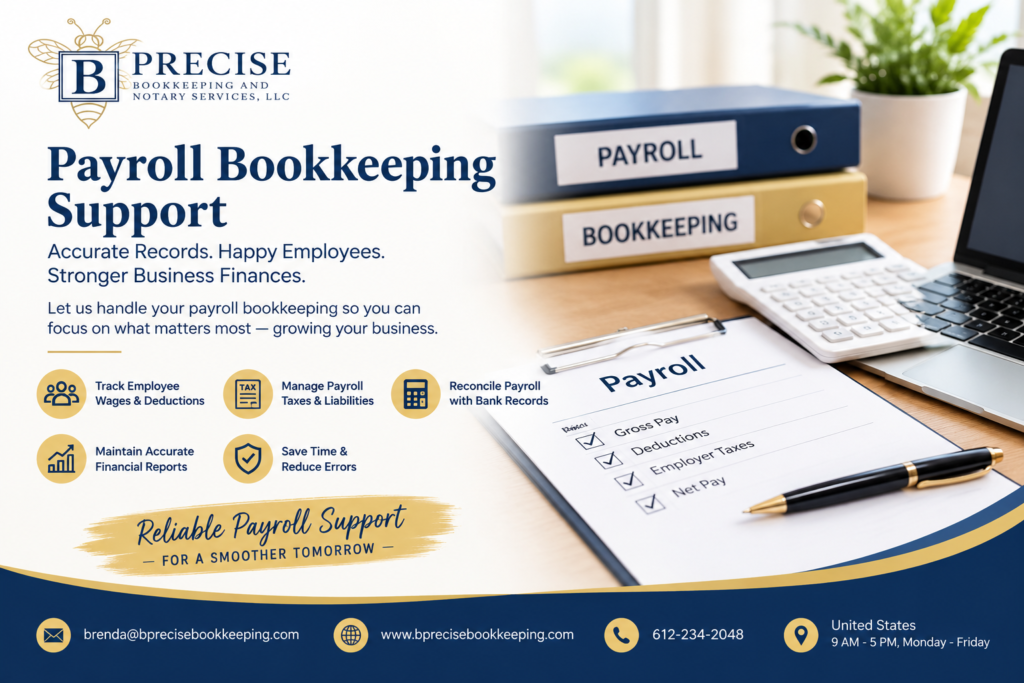
Managing employee payments is an important responsibility for every growing business. However, payroll involves much more than sending salaries on time. Business owners must also track wages, deductions, employer taxes, payroll expenses, and financial records. Without proper organization, small mistakes can create accounting problems and make it difficult to understand business performance.
This is where payroll bookkeeping support becomes valuable. It helps small businesses maintain organized payroll records, monitor employee-related expenses, and keep their financial information accurate.
What Is Payroll Bookkeeping Support?
Payroll bookkeeping support involves recording, organizing, and reviewing financial transactions related to employee compensation. It connects payroll activities with a company’s overall bookkeeping system.
Typical responsibilities include:
- Recording employee wages and salary expenses.
- Tracking payroll taxes and employee deductions.
- Maintaining organized payroll-related records.
- Recording employer contributions and benefits.
- Reconciling payroll transactions with bank statements.
- Preparing accurate financial reports.
While payroll software calculates employee payments, bookkeeping ensures those transactions are correctly reflected in the company’s financial records.
Why Do Small Businesses Need Payroll Bookkeeping Support?
Small business owners often manage multiple responsibilities, leaving limited time for financial administration. Payroll errors can affect employee confidence, financial reporting, and business cash flow.
Here are five important benefits of professional payroll bookkeeping support.
1. Maintain Accurate Financial Records
Every payroll transaction should be recorded in the correct expense or liability account. Proper bookkeeping helps prevent duplicate entries, missing transactions, and inaccurate financial statements.
2. Improve Cash Flow Management
Payroll is a recurring business expense. Tracking wages, employer taxes, and employee benefits helps business owners understand their financial commitments and prepare for upcoming payments.
3. Simplify Payroll Reconciliation
Payroll reconciliation compares payroll reports with accounting records and actual bank transactions. Regular reviews help identify discrepancies before they become larger problems.
4. Keep Payroll Documentation Organized
Maintaining organized payroll registers, payment records, tax information, and employee-related documentation makes financial reviews and year-end preparation easier.
5. Save Valuable Business Time
Outsourcing bookkeeping responsibilities allows business owners to spend less time organizing financial transactions and more time serving customers and developing their businesses.
What Does Payroll Bookkeeping Include?
A reliable bookkeeping process should cover several important activities:
- Wage tracking: Recording regular wages, overtime, bonuses, and other compensation.
- Tax and deduction tracking: Separately recording employee withholdings and employer payroll tax expenses.
- Payroll journal entries: Posting payroll transactions accurately into the accounting system.
- Bank reconciliation: Matching payroll withdrawals and related payments with accounting records.
- Financial reporting: Including payroll expenses in monthly profit and loss statements and other financial reports.
These activities create a clearer picture of how employee costs affect overall business performance.
Common Payroll Bookkeeping Mistakes to Avoid
Even small accounting mistakes can create unnecessary complications. Some common problems include:
- Recording net pay instead of total gross wages and related employer expenses.
- Mixing employee withholdings with business expenses.
- Forgetting to record employer payroll taxes.
- Entering payroll transactions twice.
- Failing to reconcile payroll liabilities.
- Keeping incomplete payroll documentation.
Regular bookkeeping reviews help identify these issues and maintain more reliable financial information. Businesses should also work with qualified payroll or tax professionals when interpreting regulatory requirements.
When Should You Outsource Payroll Bookkeeping Support?
Consider professional assistance when payroll records become difficult to manage, monthly reconciliation takes too much time, financial statements contain unexplained differences, or your business is hiring additional employees.
If managing payroll-related records is taking attention away from business growth, Bee Precise Bookkeeping can help you organize your bookkeeping and improve financial clarity. Explore professional bookkeeping support at https://bprecisebookkeeping.com/.
Frequently Asked Questions
Is payroll bookkeeping different from payroll processing?
Yes. Payroll processing calculates employee payments and handles payroll administration, while payroll bookkeeping records those transactions in the company’s accounting system.
How often should payroll records be reconciled?
Businesses should review payroll transactions regularly, ideally after each payroll cycle, and complete a thorough reconciliation as part of their monthly bookkeeping process.
Can small businesses outsource payroll bookkeeping?
Yes. Small businesses can outsource bookkeeping tasks to receive help organizing payroll expenses, recording transactions, reconciling accounts, and maintaining financial reports.
Conclusion
Accurate payroll records are essential for maintaining organized finances and making informed business decisions. With dependable Bee Precise Bookkeeping, small business owners can strengthen their bookkeeping processes, improve financial visibility, and spend more time focusing on sustainable growth. A well-organized payroll system is not just about paying employees; it is about building a stronger financial foundation for your business.