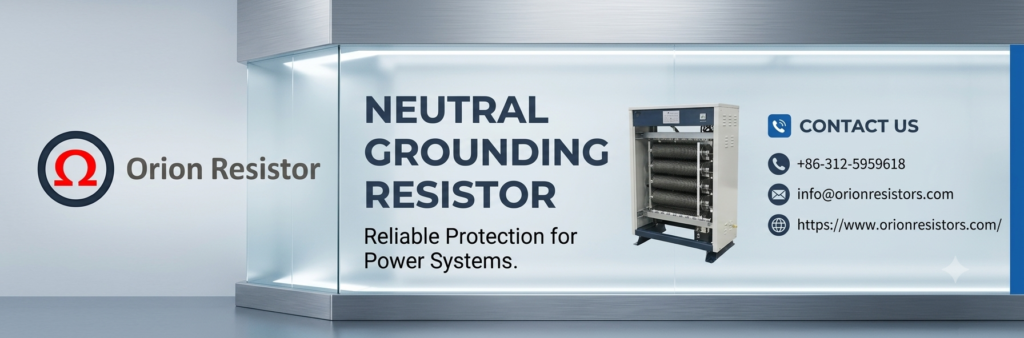
Neutral Grounding Resistor
Electrical power systems are designed to operate safely under normal conditions, but ground faults can occur unexpectedly due to insulation failure, equipment aging, moisture, or accidental contact. Without proper protection, these faults can damage transformers, generators, switchgear, and other critical assets.
A Neutral Grounding Resistor (NGR) is one of the most effective solutions for limiting ground fault current while maintaining system stability. It plays a crucial role in industrial plants, utility substations, renewable energy installations, mining operations, and commercial facilities where uninterrupted power and equipment safety are essential.
At Orion Resistors, we manufacture high-performance Neutral Grounding Resistors engineered to improve electrical safety, minimize equipment damage, and ensure compliance with international standards.
What Is a Neutral Grounding Resistor?
A Neutral Grounding Resistor (NGR) is a specially designed resistor connected between the neutral point of a transformer or generator and the ground (earth).
Its primary function is to limit the magnitude of ground fault current during a single line-to-ground fault.
Instead of allowing extremely high fault currents to flow directly to earth, the resistor restricts the current to a safe level. This controlled current enables protective relays to detect the fault quickly while reducing mechanical, thermal, and electrical stress on system components.
Without an NGR, a ground fault can result in:
- Severe equipment damage
- Arc flash hazards
- Costly downtime
- Fire risks
- Expensive repairs
- Reduced system reliability
Why Is Neutral Grounding Important?
Grounding is essential for protecting electrical systems from abnormal operating conditions.
When a phase conductor accidentally touches ground, the fault current seeks the shortest path back to the source. If unrestricted, this current can become extremely high and damage expensive equipment.
A Neutral Grounding Resistor helps by:
- Limiting fault current
- Protecting transformers and generators
- Reducing arc flash energy
- Preventing insulation damage
- Improving personnel safety
- Enhancing power system reliability
- Supporting selective relay coordination
This makes NGRs an indispensable component in modern power distribution systems.
How Does a Neutral Grounding Resistor Work?
The operation of an NGR is straightforward.
- The neutral point of the transformer or generator is connected to the resistor.
- Under normal operating conditions, almost no current flows through the resistor.
- During a ground fault, fault current passes through the resistor.
- The resistor limits the current to a predetermined value.
- Protective relays detect the fault and isolate the affected circuit.
This controlled approach significantly reduces damage while allowing the electrical protection system to respond effectively.
Practical Example
Consider a manufacturing plant operating a 11 kV transformer.
Without a Neutral Grounding Resistor:
- Ground fault current may exceed 5,000 A
- Transformer windings may overheat
- Switchgear may suffer catastrophic damage
- Arc flash energy becomes extremely dangerous
With a properly sized NGR:
- Fault current may be limited to 100 A
- Protective relays trip safely
- Equipment remains protected
- Downtime is minimized
- Maintenance costs are reduced
This simple addition can save thousands of dollars in repair and replacement expenses.
Major Applications of Neutral Grounding Resistors
Neutral Grounding Resistors are widely used across industries.
Industrial Manufacturing Plants
Protect motors, transformers, switchgear, and process equipment.
Power Generation
Used in generators to control ground fault current while maintaining operational continuity.
Utility Substations
Improve protection coordination and reduce equipment damage.
Renewable Energy Plants
Solar and wind farms use NGRs to improve grid reliability and protect inverters and transformers.
Mining Industry
Provide reliable grounding in harsh operating environments.
Oil & Gas Facilities
Protect mission-critical electrical infrastructure where reliability is essential.
Commercial Buildings
Support safe electrical distribution systems in hospitals, airports, and data centers.
Types of Neutral Grounding Resistors
| Type | Current Level | Typical Application |
| Low Resistance Grounding (LRG) | 50–1000 A | Industrial power systems |
| High Resistance Grounding (HRG) | Up to 10 A | Continuous process industries |
| Generator Neutral Grounding Resistor | Custom designed | Generator protection |
| Transformer Neutral Grounding Resistor | Custom designed | Transformer grounding |
Choosing the correct resistor depends on system voltage, fault current, protection philosophy, and operational requirements.
Benefits of Installing a Neutral Grounding Resistor
A properly designed NGR provides numerous advantages.
Improved Equipment Protection
Limits excessive fault current that can damage transformers, generators, motors, and switchgear.
Reduced Arc Flash Risk
Lower fault current means reduced arc energy, improving worker safety.
Enhanced System Reliability
Ground faults are isolated quickly without widespread system disruption.
Lower Maintenance Costs
Reduced electrical stress extends equipment lifespan.
Better Protection Coordination
Protective relays operate more accurately under controlled fault conditions.
Compliance with Industry Standards
Supports grounding practices aligned with IEC, IEEE, and other applicable standards.
Neutral Grounding Resistor vs Solid Grounding
| Feature | Neutral Grounding Resistor | Solid Grounding |
| Fault Current | Limited | Very High |
| Equipment Protection | Excellent | Moderate |
| Arc Flash Energy | Lower | Higher |
| Equipment Damage | Minimal | Significant |
| System Reliability | High | Moderate |
| Maintenance Cost | Lower | Higher |
For most industrial applications, resistor grounding offers superior protection and long-term reliability.
Factors to Consider Before Selecting an NGR
Selecting the right Neutral Grounding Resistor requires careful engineering.
Key considerations include:
- System voltage
- Rated fault current
- Fault duration
- Environmental conditions
- Indoor or outdoor installation
- Duty cycle
- Applicable standards
- Enclosure protection rating (IP rating)
- Material quality
- Thermal performance
Working with an experienced manufacturer ensures optimal performance and long service life.
Why Choose Orion Resistors?
At Orion Resistors, we specialize in designing and manufacturing high-quality Neutral Grounding Resistors for industrial and utility applications.
Our solutions offer:
- Precision-engineered designs
- High thermal stability
- Durable construction
- Custom configurations
- Reliable performance under demanding conditions
- Compliance with international quality standards
- Expert technical support
- Fast project delivery
Whether your application involves transformers, generators, substations, or renewable energy systems, our engineering team delivers grounding solutions tailored to your operational needs.
Best Practices for Maintenance
Regular inspection helps maximize the lifespan of an NGR.
Recommended practices include:
- Inspect resistor elements for corrosion or damage.
- Check electrical connections for tightness.
- Verify insulation resistance periodically.
- Ensure adequate ventilation around the enclosure.
- Test protective relays during scheduled maintenance.
- Replace damaged components promptly.
Preventive maintenance reduces unexpected failures and improves system availability.
Frequently Asked Questions (FAQs)
What is the purpose of a Neutral Grounding Resistor?
Its primary purpose is to limit ground fault current, protect electrical equipment, reduce arc flash hazards, and improve overall power system safety.
Where are Neutral Grounding Resistors used?
They are commonly installed in transformers, generators, industrial plants, utility substations, renewable energy facilities, mining operations, and commercial electrical distribution systems.
What happens if a Neutral Grounding Resistor fails?
A failed NGR can compromise grounding protection, increase equipment stress, and reduce the effectiveness of protective relays. Regular inspections help detect issues early.
How is an NGR sized?
Sizing depends on system voltage, desired fault current, fault duration, protection scheme, and applicable engineering standards. Proper calculations should be performed by qualified engineers.
What is the difference between High Resistance Grounding and Low Resistance Grounding?
High Resistance Grounding limits fault current to a very low value, allowing continued operation in many cases. Low Resistance Grounding permits higher fault current for faster fault detection and isolation.
Conclusion
A Neutral Grounding Resistor is a critical component for maintaining safe, reliable, and efficient electrical power systems. By limiting ground fault current, it protects valuable equipment, enhances worker safety, minimizes downtime, and supports effective fault detection.
Whether your project involves transformers, generators, substations, or industrial power distribution, selecting a high-quality Neutral Grounding Resistor is a long-term investment in system reliability.
Orion Resistors combines engineering expertise, robust manufacturing, and application-specific design to deliver dependable grounding solutions that meet the demands of modern electrical infrastructure. Partnering with an experienced manufacturer ensures your power system remains protected, compliant, and ready for reliable operation.
Contact Number – +86-312-5959618
Email ID – info@orionresistors.com
Official Website – https://www.orionresistors.com