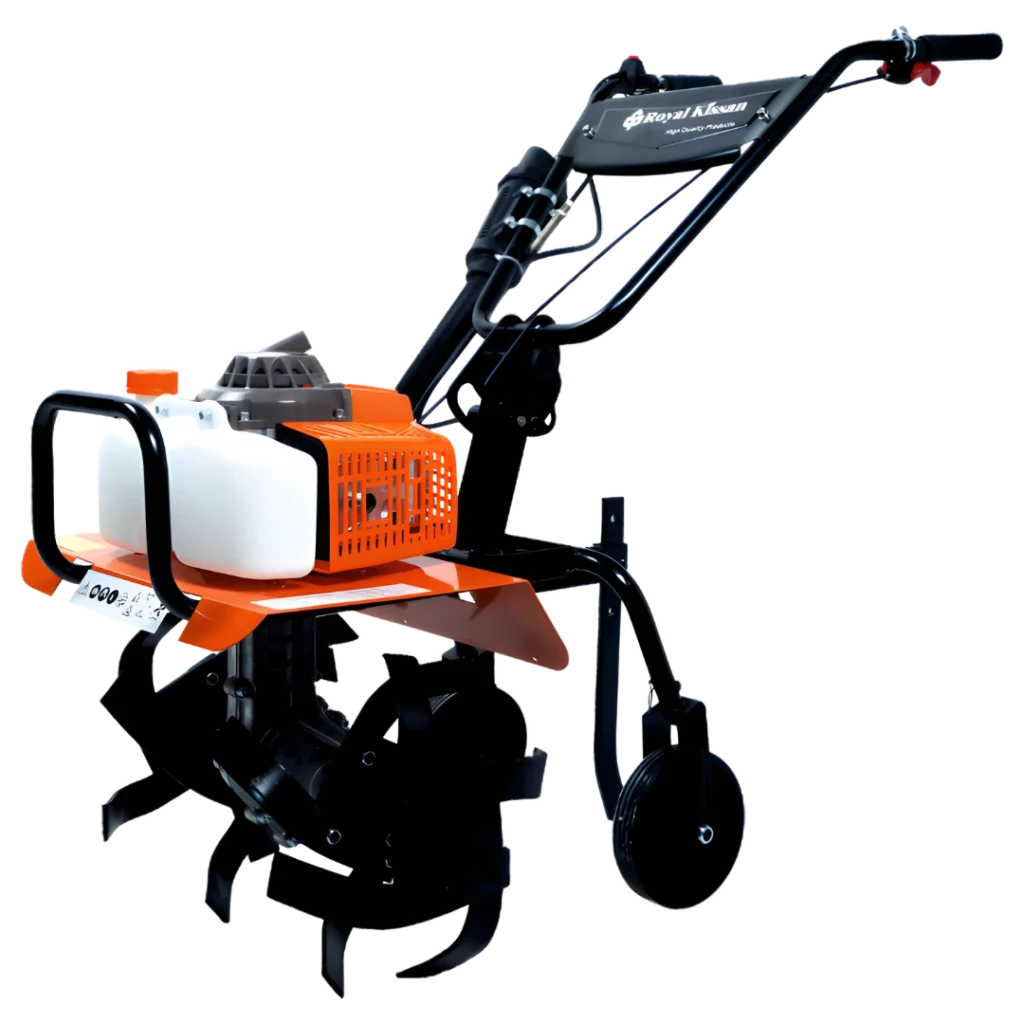
A mini power weeder is a compact and versatile agricultural machine designed to make farming operations faster, easier, and more efficient. It is particularly useful for small and medium-sized farms, vegetable cultivation, nurseries, orchards, gardens, and areas where large agricultural machinery cannot operate easily.
For farmers looking to reduce manual labour and improve field productivity, a mini power weeder can be a practical and cost-effective farming solution. Royal Kissan, a leading agriculture machinery manufacturer, focuses on providing reliable agricultural equipment designed around the practical requirements of modern farmers.
What Is a Mini Power Weeder?
A mini power weeder is a small, engine-powered agricultural machine used primarily for weeding, soil loosening, intercultivation, and seedbed preparation. Its compact size allows farmers to work conveniently between crop rows and in confined agricultural spaces.
Unlike manual tools, a mini power weeder uses rotating blades or rotary tillers to break and loosen the soil while removing unwanted weeds. Depending on the compatible attachments and machine configuration, it can also be used for several other cultivation activities.
Its compact design makes it especially suitable for:
- Vegetable farms
- Horticulture
- Orchards
- Nurseries
- Small agricultural plots
- Kitchen gardens
- Inter-row cultivation
- Small-scale commercial farming
Key Features of a Mini Power Weeder
A good mini power weeder should provide a combination of power, manoeuvrability, durability, and easy operation.
1. Compact Design
The biggest advantage of a mini power weeder is its compact construction. It can operate in narrow spaces where larger tractors or agricultural machines may not be suitable.
2. Easy Manoeuvrability
Farmers can easily control the machine around crop rows, plants, trees, and narrow pathways. This makes it particularly useful for horticultural and vegetable cultivation.
3. Efficient Weed Control
The rotating blades help remove weeds between crop rows and loosen the surrounding soil. Regular mechanical weeding can reduce dependence on manual labour.
4. Soil Cultivation
A mini power weeder can help break up compacted topsoil and prepare the field for planting. Proper soil preparation supports better root development and field management.
5. Multiple Applications
Depending on the model and available attachments, the machine may be used for cultivation, ridging, furrow preparation, and other agricultural operations.
6. Convenient Operation
A well-designed machine should have accessible controls and an ergonomic handle arrangement so that operators can work comfortably for extended periods.
Mini Power Weeder Maintenance Guide
Regular maintenance is essential for maintaining the performance, efficiency, and working life of a mini power weeder. A machine that is properly maintained is less likely to experience avoidable breakdowns during important farming operations.
The exact maintenance schedule should always follow the manufacturer’s owner’s manual, because engine type, transmission, lubrication requirements, and service intervals can differ between models.
1. Clean the Machine After Every Use
Soil, mud, grass, roots, and plant residue can accumulate around the blades, gearbox, wheels, and machine frame.
After completing work:
- Switch off the engine.
- Allow hot components to cool.
- Remove accumulated soil and plant material.
- Clean the rotary blades carefully.
- Check the underside and moving parts.
- Store the machine in a clean and dry location.
Never clean or work around rotating components while the engine is running.
2. Inspect the Rotary Blades
The blades are among the most important working components of a mini power weeder.
Regularly check them for:
- Excessive wear
- Bending
- Cracks
- Loose fasteners
- Missing components
- Soil or plant buildup
Damaged or excessively worn blades should be replaced according to the manufacturer’s specifications.
Sharp and properly maintained blades allow the machine to work more effectively and reduce unnecessary strain on the equipment.
3. Check Engine Oil
Engine lubrication is critical for engine life.
Check the engine oil according to the manufacturer’s recommended procedure and service interval. Maintain the correct oil level and use the grade specified in the owner’s manual.
Do not operate the machine with insufficient or contaminated engine oil.
Regular oil changes help protect internal engine components and maintain smooth performance.
4. Maintain the Air Filter
The air filter prevents dust and dirt from entering the engine.
Agricultural environments can contain significant amounts of dust, especially during dry soil cultivation. A dirty air filter can restrict airflow and negatively affect engine performance.
Inspect the air filter regularly and clean or replace it according to the engine manufacturer’s instructions.
Never operate with a damaged or incorrectly installed air filter.
5. Check the Fuel System
Inspect the fuel tank, fuel lines, cap, and connections periodically.
Look for:
- Fuel leakage
- Damaged fuel lines
- Loose connections
- Dirt or contamination
- Fuel-system deterioration
Always use the fuel specified for your particular engine. Do not mix fuels or additives unless specifically recommended by the manufacturer.
6. Inspect the Gearbox and Transmission
The gearbox transfers engine power to the working mechanism. Regular inspection is therefore important.
Check for unusual noise, oil leakage, excessive vibration, or difficulty changing gears.
Gearbox lubricant should be checked and replaced at the intervals specified by the manufacturer. Using the correct lubricant is important because different gearboxes may require different specifications.
7. Check Nuts and Bolts
Vibration during agricultural operations can gradually loosen fasteners.
Before operating the machine, inspect important nuts, bolts, handles, guards, and attachment connections.
Tighten loose fasteners according to the manufacturer’s recommended torque specifications. Do not overtighten components unnecessarily.
8. Inspect the Tyres and Wheels
If your mini power weeder uses pneumatic tyres, inspect them regularly for damage and maintain the recommended tyre pressure.
Check for:
- Cuts
- Punctures
- Excessive wear
- Loose wheel components
- Incorrect tyre pressure
Proper tyre condition improves machine stability and manoeuvrability.
9. Check the Clutch and Controls
The clutch and control system should operate smoothly.
If you notice unusual resistance, slipping, delayed engagement, or abnormal sounds, stop using the machine and have it inspected by a qualified technician.
Never bypass safety mechanisms or modify the manufacturer’s control system.
10. Inspect the Handle and Safety Guards
Before every operation, make sure the handle assembly is secure and comfortable to use.
Safety guards should remain correctly installed. Guards help protect the operator from moving parts, debris, and accidental contact with rotating components.
Never operate the machine if an essential safety guard is missing or damaged.
Mini Power Weeder Maintenance Schedule
A simple maintenance routine can help farmers keep track of important checks.
Before Every Use
- Check engine oil level.
- Inspect fuel system for leaks.
- Check blades and attachments.
- Inspect nuts and bolts.
- Check tyres or wheels.
- Ensure safety guards are installed.
- Check for unusual damage.
After Every Use
- Remove soil and crop residue.
- Clean the blades.
- Clean the exterior.
- Check for loose or damaged components.
- Store the machine in a dry, protected location.
Periodically
- Service the engine according to the manufacturer’s schedule.
- Clean or replace the air filter as required.
- Check gearbox lubrication.
- Inspect transmission components.
- Check clutch and control mechanisms.
- Inspect belts and other wear components where applicable.
- Replace worn parts with appropriate genuine components.
Safety Tips for Using a Mini Power Weeder
Maintenance and safe operation should always go together.
Before operating a mini power weeder, read the manufacturer’s operating instructions carefully. Operators should wear suitable protective equipment and keep children and bystanders away from the working area.
Important safety practices include:
- Never operate the machine while under the influence of alcohol or drugs.
- Keep hands and feet away from rotating blades.
- Stop the engine before removing blocked soil or vegetation.
- Allow hot engine components to cool before servicing.
- Do not remove safety guards during operation.
- Refuel only when the engine is switched off and sufficiently cool.
- Operate the machine only in suitable field conditions.
- Stop immediately if abnormal vibration, noise, or leakage occurs.
For major repairs, engine work, transmission problems, or safety-related issues, consult an authorised service professional.
Why Choose a Royal Kissan Mini Power Weeder?
Royal Kissan is focused on developing agricultural machinery that helps farmers improve efficiency and reduce dependence on manual labour. A mini power weeder from Royal Kissan can be a valuable solution for farmers who need a compact machine for cultivation and weed management.
The ideal model depends on factors such as farm size, soil type, crop spacing, working depth, required horsepower, operating conditions, and available attachments.
Before purchasing, farmers should compare the machine’s engine specifications, working width, working depth, transmission, fuel type, weight, attachment compatibility, warranty, spare-parts availability, and after-sales support.
Conclusion
A mini power weeder is a useful agricultural machine for farmers who need efficient cultivation and weed-management equipment in compact farming areas. Its small size, manoeuvrability, and versatility make it suitable for vegetable farms, orchards, nurseries, horticulture, and other applications.
However, purchasing the machine is only the beginning. Regular cleaning, blade inspection, engine servicing, oil checks, air-filter maintenance, gearbox inspection, and fastener checks are essential for reliable long-term operation.
With proper maintenance and responsible operation, a mini power weeder can become an important part of a modern farmer’s equipment fleet. Royal Kissan continues to focus on reliable agricultural machinery solutions that support farmers in improving productivity, efficiency, and the overall mechanisation of Indian agriculture.