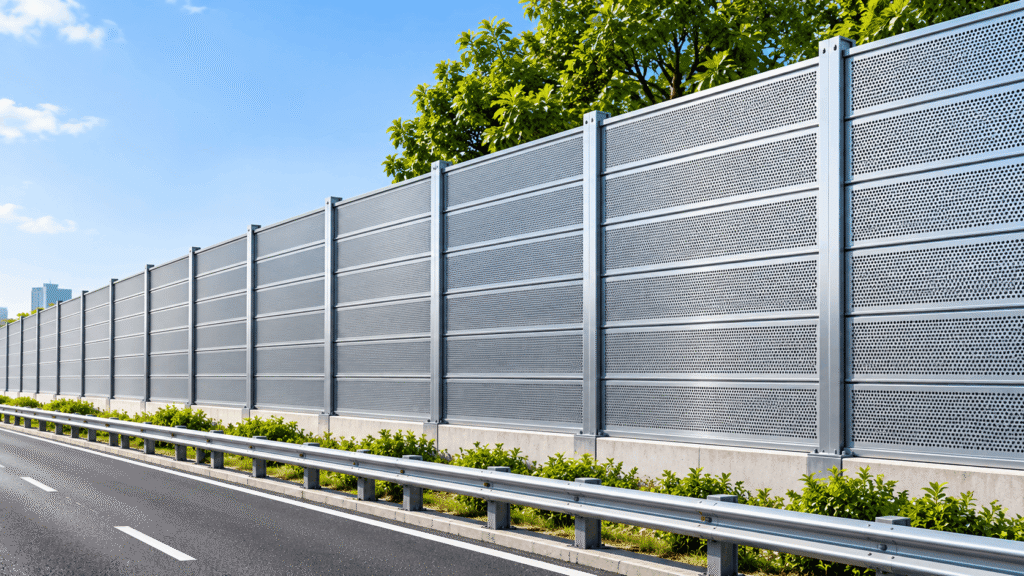
Metallic Noise Barrier: Reliable, Low-Maintenance Noise Control for Infrastructure and Commercial Boundaries
Noise from highways, rail lines, and industrial equipment rarely stays within a site boundary, leading to complaints, penalties, and strained community relations. A Metallic Noise Barrier from Ecotone Acoustic Limited gives commercial and infrastructure projects a tough, long-lasting way to reduce that sound at the source.
The Construction Behind the Performance
These barriers combine a perforated metal face, typically galvanised steel or aluminium, with a sound-absorbing core such as mineral wool. Sound passes through the perforations and is trapped in the core, while a solid rear sheet blocks transmission. The system reduces both the sound travelling through the barrier and the echo thrown back toward the source.
Common Commercial Applications
- Highways, flyovers, and metro corridors
- Railway lines and station boundaries
- Factories, power plants, and processing units
- Generator yards, compressor areas, and HVAC plant
- Warehouses, logistics hubs, and loading bays
- Commercial complexes beside busy roads
Strength, Coatings, and Ratings
Metal systems offer high strength, impact resistance, and a long working life. Galvanised and powder-coated finishes resist corrosion, UV exposure, and heavy rain, while modular panels allow fast installation and simple replacement of damaged sections. Sound Transmission Class (STC) rates blocking performance, and Noise Reduction Coefficient (NRC) rates absorption, so compare both when choosing a product.
Business Benefits of Metal Systems
Metallic panels suit sites that need strength, fire resistance, and low maintenance. Unlike transparent barriers, they screen equipment and activity from view, which can improve how a site looks. Powder-coated colours help barriers match brand identity or surrounding architecture, and modular construction supports tall, long runs with predictable cost and timelines.
Key Points to Verify Before Buying
Compare panel thickness, core density, STC and NRC ratings, and coating quality. Confirm fire certification, wind load capacity, and post and foundation design, since barriers must stay stable in storms. Sealed joints matter because gaps between panels and posts let sound leak. Barrier height and distance from the noise source also affect results, so a site assessment is worthwhile for large projects.
Keep in mind that barriers reduce noise rather than eliminate it. For the best outcome, pair them with quieter equipment, enclosures, and careful layout planning.
Final Thoughts
Good acoustic planning protects neighbours, workers, and your reputation, and it costs far less when specified early. For commercial and infrastructure projects that need durable, low-maintenance sound control, a well-specified Metallic Noise Barrier is a practical, long-term investment.