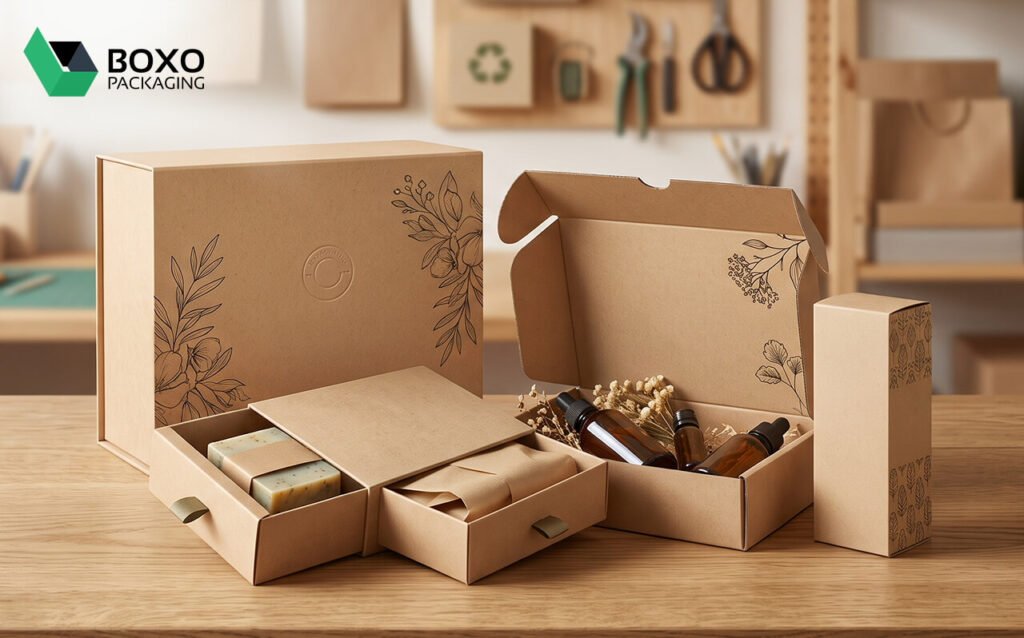
Kraft boxes are everywhere now, on grocery shelves, in shipping notifications, wrapped around everything from soap to sneakers, but most people interacting with them daily couldn’t explain what actually makes kraft different from any other brown cardboard box. Understanding the material itself, where it comes from, how it’s made, and why it behaves the way it does, helps explain why it’s become such a dominant packaging choice across so many industries, rather than just accepting its popularity as a passing aesthetic trend.
What Kraft Paper Actually Is
The Name Comes From Its Defining Characteristic
“Kraft” comes from the German word for “strength,” a fitting name given that strength is the material’s most defining physical property. Unlike standard paperboard, kraft paper is produced through a specific pulping process, the kraft process, that results in noticeably stronger, more tear-resistant paper than conventional alternatives.
It’s Made Through a Chemical Pulping Process
Kraft paper is produced by treating wood chips with a chemical solution that breaks down lignin, the natural substance binding wood fibers together, while preserving more of the cellulose fiber structure than other pulping methods. This process is what gives kraft its characteristic strength, since more of the fiber’s natural integrity remains intact compared to paper produced through more aggressive processing.
The Brown Color Comes From Minimal Processing
Kraft’s recognizable brown tone results directly from skipping the heavy bleaching process used to produce bright white paperboard. This isn’t a dye or an added color, it’s simply the natural color of the wood pulp fiber once the lignin has been removed but before any bleaching treatment is applied.
The Manufacturing Process Behind Kraft Boxes
Wood Chips Serve as the Raw Material
Kraft production typically begins with wood chips, often sourced from softwood trees like pine, which provide long, strong fibers well suited to the kraft process. These chips are cooked in a chemical solution under pressure, breaking them down into usable pulp.
The Pulp Is Formed Into Sheets
Once processed, the pulp is formed into continuous sheets through a papermaking process, pressed and dried to create the base material that will eventually become kraft paper or, for heavier applications, kraft paperboard.
Paperboard Requires Additional Layering for Structural Boxes
For kraft boxes specifically, rather than simple kraft paper wraps, the material is often produced as a heavier paperboard, sometimes with a corrugated fluted layer sandwiched between flat kraft liners, providing additional structural rigidity suited to box construction.
Recycled Kraft Follows a Modified Process
Recycled kraft paperboard incorporates post-consumer or post-industrial paper fiber into the pulping process, reducing the need for virgin wood pulp while still producing a material with many of kraft’s characteristic properties, though sometimes with slightly different texture or strength characteristics depending on the recycled content percentage.
Why Kraft Boxes Have Become So Widely Used
Genuine Structural Strength
Kraft’s manufacturing process results in real, measurable strength advantages over many standard paperboard alternatives, which is part of why kraft has been used industrially for decades in applications like shipping sacks and heavy-duty bags, long before it became associated with retail packaging trends.
Lower Environmental Impact From Production
Because kraft skips the heavy bleaching process required for white paperboard, its production generally uses fewer chemicals and less energy, giving it a genuinely lower environmental footprint at the manufacturing stage, not just through recyclability after use.
Strong Recyclability and Biodegradability
Uncoated kraft paperboard is broadly recyclable through standard paper recycling systems and, in many cases, compostable as well, offering clear advantages over plastic-laminated or heavily coated alternatives that often can’t be processed through the same standard systems.
A Distinctive, Recognizable Aesthetic
Kraft’s natural brown tone and visible fiber texture create a look that’s become strongly associated with natural, artisanal, and sustainability-conscious branding, an aesthetic advantage that emerged directly from the material’s genuine physical properties rather than being artificially created for marketing purposes.
Cost Efficiency Relative to More Processed Alternatives
Since kraft requires fewer processing steps than bleached, coated, or laminated paperboard, it’s generally more affordable to produce, making it accessible to a wide range of brands regardless of budget, from small independent businesses to large commercial operations.
Compatibility With a Wide Range of Printing and Finishing Techniques
Kraft’s fiber texture interacts well with techniques like embossing, debossing, and letterpress printing, giving brands genuine design flexibility despite the material’s relatively simple production process.
Common Misconceptions About Kraft Boxes
“Kraft Is Automatically Recycled Material”
Kraft can be made from either virgin or recycled wood pulp, the term itself refers to the pulping process, not the source material. Brands specifically wanting recycled content need to confirm this directly with suppliers rather than assuming it by default.
“Kraft Always Looks the Same”
Kraft paperboard varies considerably in weight, texture, and even shade depending on the specific grade and production process used, meaning “kraft” covers a genuinely wide range of material options rather than a single uniform product.
“Kraft Is Only Suitable for Casual or Rustic Branding”
While kraft carries natural, artisanal associations, thoughtful design, particularly through embossing, foil stamping, or careful color pairing, allows kraft to support a wide range of brand identities, including clean, modern, or even luxury positioning.
“Kraft Isn’t Strong Enough for Heavier Products”
Kraft paperboard is available in a range of weights and grades, with heavier options offering substantial structural strength suited to protecting heavier or bulkier products, not just lightweight retail items.
How Kraft Compares to Other Common Box Materials
Kraft vs. White Coated Paperboard
White coated paperboard requires additional bleaching and coating processes that kraft skips, generally making kraft more affordable and environmentally lower-impact, though white board offers a cleaner canvas for vibrant, full-color printing that kraft’s brown base tone doesn’t replicate in the same way.
Kraft vs. Corrugated Cardboard
Corrugated cardboard, often made using kraft liner sheets around a fluted inner layer, offers greater structural rigidity and crush resistance than flat kraft paperboard alone, making it better suited to heavier products or shipping applications specifically.
Kraft vs. Plastic Packaging
Kraft offers better recyclability and biodegradability meaningfully compared to most plastic packaging, though plastic sometimes offers superior moisture resistance without additional coating, a trade-off brands need to weigh based on their specific product’s protection needs.
Practical Takeaways for Brands Considering Kraft
- Understand that kraft refers to a production process, not a single fixed material, meaning weight, grade, and recycled content all need to be specified explicitly when sourcing kraft packaging.
- Recognize kraft’s genuine strength advantages, making it a legitimate structural choice for many applications, not just a decorative or budget alternative.
- Confirm recycled content and certifications directly with suppliers if these sustainability credentials matter specifically to your brand’s messaging.
- Consider kraft’s design flexibility, understanding that thoughtful finishing techniques can adapt the material to a wide range of brand identities beyond its natural, rustic associations.
The Bottom Line
Kraft boxes have earned their widespread popularity through genuine material properties, real structural strength, a lower-impact production process, and strong recyclability, rather than through marketing alone. Understanding what kraft actually is and how it’s made helps explain why it has moved so firmly from an industrial packaging material into a deliberate, values-aligned choice for brands across nearly every category, offering a rare combination of practical performance and aesthetic appeal that few other packaging materials manage to deliver simultaneously.
FAQs
1. Is kraft paper always brown?
Typically, yes, since the brown color comes from the natural pulp fiber left unbleached during production. Bleached kraft paper does exist and appears more white or cream-colored, though it’s less common than the traditional unbleached form most people associate with the material.
2. What’s the difference between kraft paper and kraft paperboard?
Kraft paper is thinner and more flexible, suited to wraps and bags, while kraft paperboard is a heavier, more rigid version of the same base material, suited to constructing sturdy boxes and structural packaging.
3. Is all kraft packaging automatically eco-friendly?
Not entirely automatic, though kraft generally has a lower environmental footprint than heavily processed alternatives due to its simpler production process. Specific sustainability credentials like recycled content or certification should still be confirmed directly with suppliers.
4. Can kraft boxes be printed in bright, vibrant colors?
Colors appear differently on kraft’s brown base than on white board, generally reading as more muted. Vibrant, saturated color printing is possible but requires specific ink choices and often more ink coverage to achieve a similar visual intensity to what’s possible on white stock.
5. Why is kraft paper associated with strength specifically?
The kraft pulping process preserves more of the wood fiber’s natural structure compared to other paper production methods, resulting in a material that’s genuinely more tear-resistant and durable than many standard paperboard alternatives.
6. Is kraft packaging suitable for heavier or bulkier products?
Yes, when the appropriate weight and grade are chosen. Heavier kraft paperboard, sometimes combined with corrugated construction, provides solid structural support for a wide range of product weights and sizes.