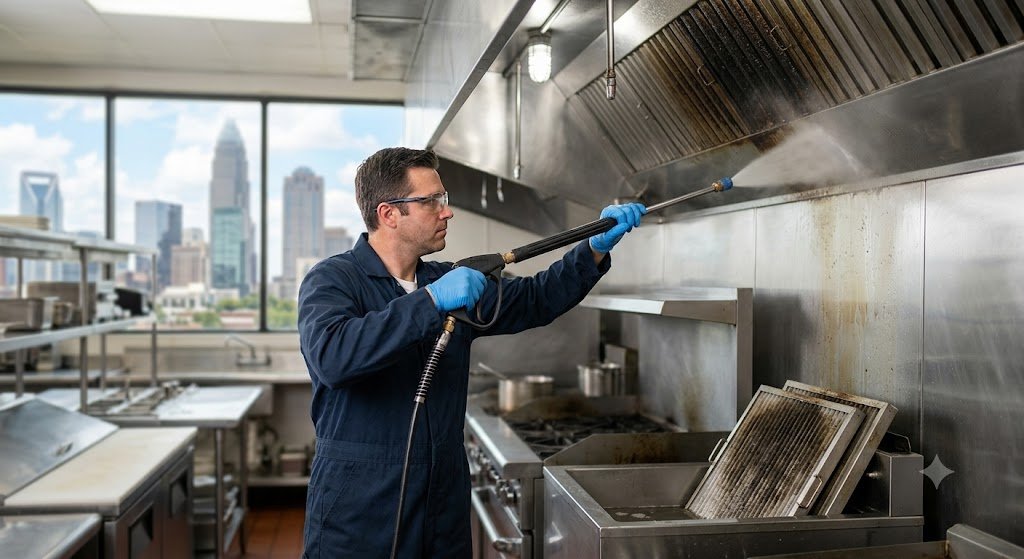
Running a commercial kitchen requires more than preparing quality meals. Every day, grease, smoke, and cooking residue collect inside your kitchen exhaust system. If these deposits are ignored, they can create fire hazards, reduce ventilation efficiency, and affect the overall cleanliness of your workspace. Regular maintenance helps protect employees, customers, and your investment while supporting a healthier cooking environment in Charlotte.
Whether you operate a restaurant, cafe, hotel, school cafeteria, or healthcare kitchen, keeping your exhaust system clean should be part of your routine maintenance plan. Investing in kitchen hood cleaning in Charlotte, NC, helps reduce grease buildup before it becomes a costly safety concern. A properly maintained hood system also improves airflow, making your kitchen more comfortable during busy service hours.
Why Kitchen Hood Cleaning Matters
Kitchen exhaust systems are designed to capture grease-laden vapors, smoke, and heat produced during cooking. Over time, grease accumulates inside hood filters, including baffle filters, ductwork, and exhaust fans. This buildup creates several problems if left untreated.
Common risks include increased fire hazards caused by grease deposits, reduced ventilation and airflow, unpleasant cooking odors, higher energy consumption, faster wear on ventilation equipment, and difficulty meeting health and fire inspection requirements. Routine cleaning removes grease before it creates safety issues and helps your kitchen operate more efficiently.
Professional cleaning should address the accessible surfaces and internal components of the exhaust system using appropriate methods, with bare-metal cleaning as the standard of work. This includes the hood, baffle filters, ductwork, exhaust fan, and related components where grease and combustible deposits can accumulate.
Warning Signs Your Hood System Needs Cleaning
Many kitchen owners wait until visible grease appears before scheduling service. However, hidden buildup inside ducts can become dangerous long before exterior surfaces look dirty.
Watch for grease dripping from hood filters, strong cooking odors remaining after closing, smoke lingering inside the kitchen, noisy exhaust fans, sticky residue around hood edges, or poor ventilation during cooking. Addressing these signs early can prevent larger maintenance issues and reduce downtime.
During professional service, technicians may also inspect duct access panels and other areas that allow the exhaust system to be properly reached and maintained. Rooftop grease containment around the exhaust fan should also be checked because grease escaping from the system can create additional maintenance and fire-safety concerns.
Benefits of Professional Kitchen Hood Maintenance
Keeping your exhaust system clean provides advantages beyond fire prevention. Regular maintenance supports daily kitchen operations and extends the life of ventilation equipment.
Benefits include better indoor air quality, improved airflow throughout the kitchen, reduced fire risks, longer equipment lifespan, a cleaner cooking environment, greater confidence during inspections, and lower maintenance costs over time. A clean exhaust system also helps employees work more comfortably by reducing heat and smoke accumulation.
Professional service also provides documentation that can be important when demonstrating that maintenance has been performed. NFPA 96 provisions address documentation following inspection or cleaning, including maintaining a certificate on the premises and providing a written report identifying areas that were inaccessible or not cleaned. Where required, inspection and cleaning documentation may also need to be submitted to the authority having jurisdiction.
How Often Should Commercial Kitchen Hoods Be Cleaned?
Cleaning frequency depends on the type of cooking operation and the amount of grease produced. NFPA 96, the Standard for Ventilation Control and Fire Protection of Commercial Cooking Operations, provides a specific inspection schedule for grease buildup. The published schedule calls for inspection of exhaust systems serving solid-fuel cooking operations monthly, high-volume cooking operations quarterly, moderate-volume cooking operations semiannually, and low-volume cooking operations annually. High-volume operations include examples such as 24-hour cooking, charbroiling, and wok cooking, while low-volume operations include certain facilities such as churches, day camps, seasonal businesses, and senior centers.
Businesses should also consider daily operating hours, cooking methods, volume of fried foods, local inspection requirements, and manufacturer maintenance recommendations. A consistent maintenance schedule helps prevent excessive grease accumulation and unexpected problems.
Tips for Keeping Your Kitchen Hood Cleaner Between Services
While professional cleaning removes hidden grease inside the exhaust system, daily maintenance helps slow buildup. Clean hood filters regularly, wipe exterior hood surfaces every day, inspect for grease accumulation, monitor exhaust fan performance, report ventilation issues immediately, and keep maintenance records organized.
These simple practices help maintain a safer commercial kitchen between scheduled cleanings. However, routine staff maintenance should complement professional exhaust-system cleaning rather than replace it.
Conclusion
Maintaining a clean kitchen exhaust system is one of the most effective ways to improve safety, ventilation, and operational efficiency. Regular kitchen hood cleaning in Charlotte, NC, helps reduce grease buildup, supports fire code compliance, and creates a healthier environment for employees and customers alike. By following a proactive maintenance schedule, you can protect your equipment, minimize costly repairs, and keep your commercial kitchen operating smoothly throughout the year.
If your commercial kitchen is due for professional hood and exhaust-system maintenance, schedule a service inspection today. A qualified cleaning provider can evaluate your hood, baffle filters, ductwork, exhaust fan, access panels, and rooftop grease containment, then help you maintain the documentation needed for your maintenance records and inspections.