Kitchen Cabinets Design
You decide the look and function of your kitchen the moment you pick cabinet design—style, scale, material, and hardware shape the room and how you use it. Choose cabinets that balance storage needs, durable materials, and a cohesive style to transform the space without costly mistakes.
This article breaks down the core elements that determine cabinet performance and appearance, then shows simple ways to personalize finishes, layouts, and hardware to fit your lifestyle and budget. Expect practical guidance on proportions, materials, and small choices that create a lasting, functional kitchen you enjoy every day.
Core Elements of Kitchen Cabinets Design
Good kitchen cabinets design balances layout, style, materials, and storage so your kitchen works efficiently and looks intentional. You will decide which cabinet types, door styles, materials, and storage systems best match your cooking habits, space requirements, and overall budget.
Types of Cabinets
You will choose base, wall, and tall cabinets as the foundation of layout. Base cabinets sit under countertops and house sinks, drawers, and pull-out trays; pick 24″ deep bases for standard counters and 30″ for integrated appliances. Wall cabinets mount above counters; standard heights are 30″, 36″, and 42″ — choose taller units if you want extra storage and can reach them safely.
Tall cabinets (pantries, oven towers) run floor-to-ceiling and store bulk foods, brooms, and built-in appliances. Include appliance garages and blind-corner solutions to avoid wasted space. Consider frameless (Euro) cabinets for deeper internal storage and framed cabinets for stronger face-frame support.
Cabinet Door Styles
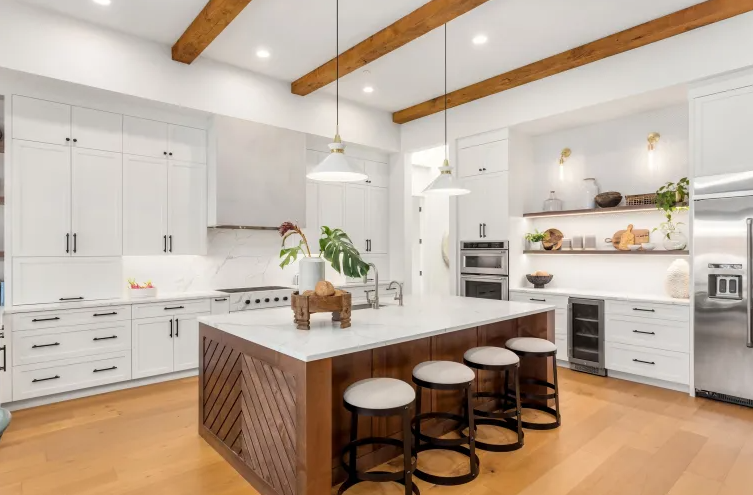
Door style sets the visual tone and affects maintenance and cost. Shaker doors offer a recessed central panel and a clean, transitional look that hides wear well. Slab or flat-panel doors provide a minimalist, contemporary appearance but show fingerprints more readily on glossy finishes.
Raised-panel doors read as traditional and can add perceived value in period homes. For a streamlined look, choose handleless or integrated pulls; for classic kitchens, use knobs or cup pulls. Prioritize door durability: look for 5-piece construction or solid-core MDF for painted finishes, and thermofoil for budget-friendly low-maintenance options.
Material Choices
Your material choices determine durability, finish options, and price. Solid wood (maple, oak, cherry) gives a high-end look and can be refinished, but it expands with humidity. Plywood cabinet boxes resist warping and outperform particleboard in long-term moisture situations; specify 3/4″ plywood for strength.
MDF offers a smooth surface for paint and is cost-effective for doors; avoid MDF in areas with direct water exposure. Laminates and thermofoil are scratch-resistant and budget-friendly. For hardware, choose soft-close hinges and full-extension drawer slides rated for at least 75 lb for daily reliability.
Storage Solutions
Design storage to match how you use your kitchen. Use deep drawers instead of lower shelves for pots and pans; they improve access and organization. Incorporate pull-out pantries, spice pullouts, and vertical dividers for baking sheets to maximize narrow spaces.
Optimize corners with blind-corner pull-outs or rotating carousels to eliminate dead space. Add dedicated storage: utensil tray inserts, cutlery dividers, and drawer organizers for small items. Plan drawer heights: 3″ for utensils, 6″ for plates, 9″-12″ for cookware. Include an appliance garage or a lift mechanism for stand mixers if you use them daily.
Personalizing Kitchen Cabinets
You decide how cabinets look, feel, and function. Small choices—color, hardware, storage—shape daily use and long-term value.
Color Schemes and Finishes
Pick a base color tied to light levels and room size: white or soft gray brightens small, north-facing kitchens; deep navy or forest green adds drama in well-lit spaces. Consider two-tone layouts: lighter uppers and darker lowers reduce visual heaviness while hiding scuffs where hands touch most.
Choose finishes for wear and maintenance. Semi-gloss paints resist grease and wipe clean; satin or eggshell hides fingerprints better on flat panels. For wood, specify oil- or lacquer-based clear coats—oil deepens grain while lacquer gives harder surface protection.
Test samples on-site under real lighting and next to counters and floors. Evaluate under morning, midday, and artificial light. Keep swatch notes for touch-up paint and future matching.
Hardware Selection
Select hardware that complements your cabinetry style and ergonomics. Opt for 3–5-inch bar pulls on drawers for even pull force; 1.5–3-inch knobs suit shallow doors. Center-to-center measurements matter—use consistent sizes to simplify replacements and drilling.
Match finish family to plumbing and appliances: brushed nickel and stainless steel pair with modern kitchens; aged brass or oil-rubbed bronze suits transitional or traditional spaces. Prioritize solid materials—zinc alloy or stainless steel—over plated thin metals for longevity.
Think about placement and leverage. Vertical pulls on tall pantry doors improve reach; offset handles on deep drawers reduce wrist strain. Order a few finish samples and install them temporarily to test feel and clearance.
Maximizing Functionality
Plan internal layouts around how you cook and store. Install deep drawers with full-extension soft-close slides for pots and pans; use shallow top drawers with cutlery trays at primary prep zones. Assign zones: prep near the sink, cooking near the range, and storage for dry goods close to the entry.
Add organizational inserts and fittings. Pull-out spice racks, narrow pull-outs for baking sheets, and lazy Susans in corner bases increase usable space. Use adjustable shelving with 1-inch increments so you can reconfigure for small appliances later.
Consider mechanisms that improve daily use: soft-close doors, push-to-open for minimalist fronts, and integrated trash pull-outs positioned near the sink. Specify load ratings—60–100 lb for heavy drawers—and confirm hardware clearance with door swing and appliance openings.