Introduction
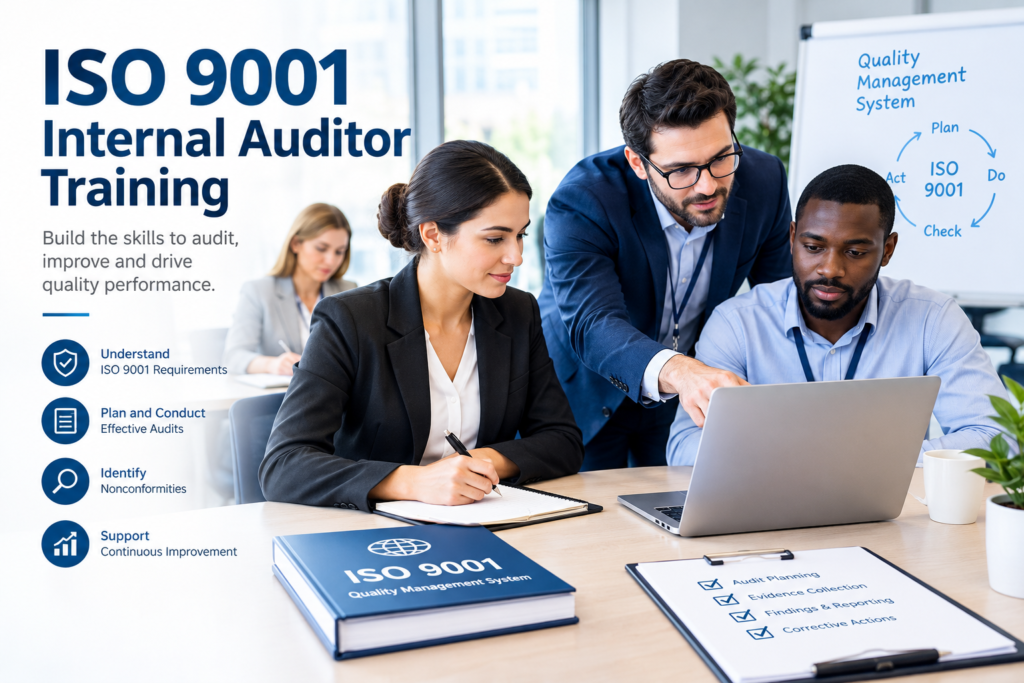
ISO 9001 internal auditor training helps professionals understand quality management systems and check whether an organization follows established quality standards. It provides the knowledge and skills needed to evaluate business processes, identify nonconformities, and support continuous improvement.
Today, many organizations focus on delivering consistent products and services while meeting customer expectations. A well-maintained Quality Management System (QMS) helps achieve these goals. Internal auditors play an important role in checking the effectiveness of this system and ensuring that quality procedures are followed.
What Is ISO 9001 Internal Auditor Training?
ISO 9001 internal auditor training teaches participants how to audit a Quality Management System based on the requirements of ISO 9001. The course explains auditing principles, audit planning, evidence collection, reporting, and corrective actions.
Participants learn how to determine whether processes meet ISO 9001 requirements and the organization’s own procedures. The training is suitable for employees who want to develop auditing skills and contribute to better quality management.
Why Is Internal Auditor Training Important?
Internal audits help organizations identify problems before they affect product quality or customer satisfaction. Trained auditors can examine processes objectively and recommend practical improvements.
The main benefits include:
- Improved quality control: Helps identify gaps in procedures and process performance.
- Better compliance: Checks whether the QMS meets applicable ISO 9001 requirements.
- Early problem identification: Detects nonconformities before they become serious issues.
- Continuous improvement: Supports corrective actions and better business processes.
- Career development: Builds auditing knowledge for quality and compliance professionals.
By conducting effective internal audits, organizations can strengthen their quality practices and improve operational efficiency.
Key Topics Covered in the Training
ISO 9001 internal auditor training generally covers the essential knowledge required to perform systematic audits. The course content may vary depending on the training provider.
Common topics include:
Understanding ISO 9001 Requirements
Participants learn about the structure and key requirements of ISO 9001, including organizational context, leadership, planning, support, operations, performance evaluation, and improvement.
Internal Audit Planning
This topic explains how to prepare an audit plan, define the audit scope, establish objectives, and create checklists. Proper planning helps auditors conduct assessments efficiently.
Conducting an Audit
Participants learn how to interview employees, review documents, observe activities, and collect objective evidence. They also understand how to evaluate findings against audit criteria.
Reporting and Corrective Actions
Auditors learn to document nonconformities, prepare audit reports, and communicate findings clearly. The course also explains how corrective actions can address the causes of identified problems.
Who Should Attend ISO 9001 Internal Auditor Training?
This training is suitable for quality managers, quality assurance professionals, internal auditors, production supervisors, process owners, compliance officers, and management representatives.
It can also benefit consultants and employees who want to understand quality management systems. Previous auditing experience may be helpful, but many introductory courses are designed for beginners.
How to Choose the Right Training Course
Choosing an appropriate course helps participants gain practical and relevant auditing skills. Before enrolling, consider the trainer’s experience, course syllabus, training format, assessment method, and certificate offered.
Look for a program that includes practical examples, audit exercises, and guidance on preparing reports. Online training may suit busy professionals, while classroom sessions can provide more direct interaction.
Also, check whether the course certificate meets your employer’s requirements. Completing a training course does not automatically make someone a certified lead auditor or guarantee professional recognition; these depend on the course and applicable certification arrangements.
Conclusion
ISO 9001 internal auditor training is a valuable learning opportunity for professionals who want to improve their understanding of quality management systems. It develops skills in audit planning, evidence collection, identifying nonconformities, and reporting findings.
With the right training, participants can help organizations improve processes, strengthen compliance, and maintain customer satisfaction. Investing in internal auditor training supports professional development and encourages a culture of quality and continuous improvement.