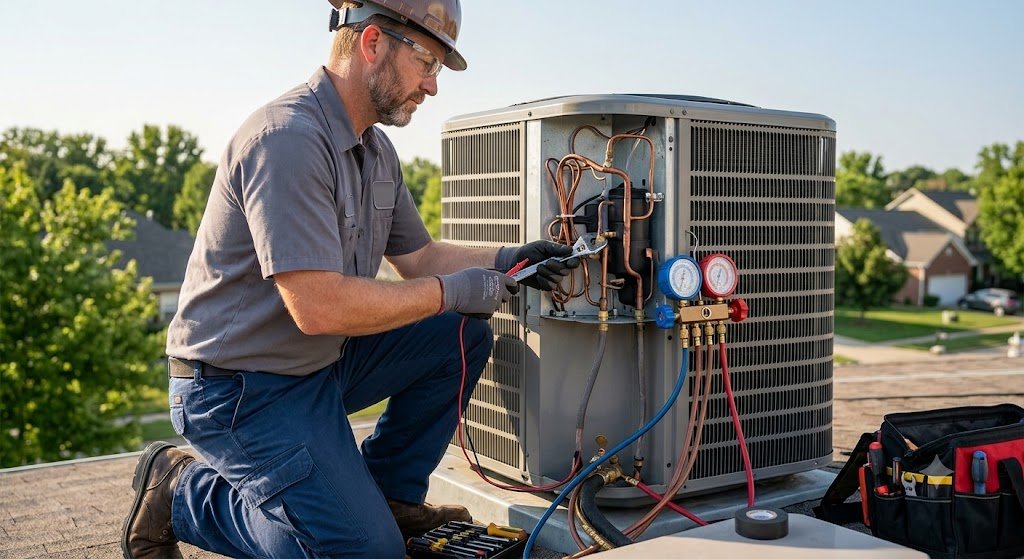
Bellevue’s hot summers and cold winters can place heavy seasonal demand on heating and cooling equipment. When an HVAC system enters a period of extreme heat or cold with worn components, restricted airflow, or other developing problems, the result can be an inconvenient and potentially costly mid-season failure. Regular attention helps keep essential components operating properly and reduces unexpected interruptions.
For homeowners seeking an HVAC contractor in Bellevue, NE, understanding seasonal maintenance is an important part of protecting heating and cooling equipment. Preparing your system before major temperature changes gives you an opportunity to identify worn components, restricted airflow, electrical concerns, and other issues before they affect indoor comfort. A planned approach also helps your equipment operate more efficiently during periods of high demand.
Why Seasonal HVAC Maintenance Matters in Bellevue
Heating and cooling systems contain several components that work together to regulate indoor temperature. Filters, blower motors, thermostats, electrical connections, coils, ductwork, and safety controls all influence system performance. When one component becomes dirty, damaged, or improperly adjusted, the entire system can experience reduced performance.
Seasonal maintenance provides an opportunity to inspect these components and address developing problems. Instead of waiting until a furnace stops producing heat or an air conditioner struggles to cool the home, homeowners can identify warning signs earlier.
For cooling equipment, the SEER2 rating provides a measure of seasonal energy efficiency, while the AFUE rating indicates how efficiently a furnace converts fuel into usable heat. Heat pumps provide both heating and cooling and also require seasonal attention to maintain proper operation.
Preparing Your HVAC System for Summer
Before warmer weather arrives in Bellevue, inspect your cooling system and make sure airflow is not restricted. A clogged air filter forces the blower to work harder and reduces the amount of conditioned air moving through the home.
Other useful preparation steps include:
A. Replacing a dirty HVAC filter
B. Checking supply and return vents for obstructions
C. Keeping outdoor equipment clear of leaves and debris
D. Inspecting visible ductwork for damage
E. Testing the thermostat for accurate operation
F. Scheduling professional cooling-system maintenance
Outdoor condenser units require adequate clearance because restricted airflow reduces heat transfer and places additional strain on the system.
Cooling maintenance is best scheduled during spring, before summer temperatures place heavier demand on the system. The condensate drain line should also be inspected for blockages so moisture can drain properly during cooling operation. This is also a good time to check duct sealing and confirm that a programmable or smart thermostat is operating correctly.
Preparing Your Heating System for Winter
Cold weather places significant demands on furnaces and other heating equipment. Before winter arrives, check that vents and registers remain open and unobstructed. Inspect the filter and replace it when necessary.
Professional maintenance should also address important heating components. Depending on the equipment, an inspection can include the heat exchanger, burners, ignition system, blower assembly, electrical connections, and safety controls. Gas-fired equipment requires particular attention because combustion and exhaust systems must operate safely.
Heating maintenance is best scheduled in early autumn, before the first cold snap increases demand on the furnace or heat pump. A cracked heat exchanger requires professional attention because it can create a risk of carbon monoxide entering the home. Carbon monoxide detectors should also be tested before the heating season and maintained according to the detector manufacturer’s instructions.
Homeowners with a whole-home humidifier should include it in seasonal heating-system preparation because proper humidity can improve indoor comfort during dry winter conditions. Heat pumps should also be inspected before cold weather to confirm that heating operation, airflow, electrical components, and controls are working correctly.
How Proper Maintenance Supports Efficiency
An HVAC system that operates with restricted airflow or neglected components often requires more effort to maintain the desired indoor temperature. Regular maintenance helps keep airflow, electrical operation, and temperature control working as intended.
Homeowners also benefit from replacing filters according to household conditions rather than relying on a single schedule. Grunwald Mechanical recommends checking the air filter monthly and replacing it every one to three months depending on usage and filter type. Homes with pets, construction dust, or frequent occupancy may require more frequent filter attention. When choosing a replacement, check the filter’s MERV rating and use a filtration level appropriate for the HVAC system so the filter can capture airborne particles without unnecessarily restricting airflow.
When Professional HVAC Service Is Necessary
Some HVAC concerns require professional diagnosis rather than basic homeowner maintenance. Persistent temperature differences between rooms, unusual noises, frequent cycling, weak airflow, unexplained increases in energy use, or repeated system shutdowns deserve inspection.
Working with an HVAC contractor in Bellevue, NE provides access to professional equipment and technical knowledge needed to identify problems that are not obvious during a basic visual inspection. Early service also gives you more time to compare repair and replacement options when equipment is approaching the end of its useful life.
Prepare Before Seasonal Demand Peaks
Spring cooling maintenance and early-autumn heating maintenance give homeowners an opportunity to address developing HVAC problems before periods of heavier system demand. If your system shows performance changes or warning signs, schedule an inspection before the next period of extreme weather. Working with a qualified HVAC contractor in Bellevue, NE for necessary maintenance and repairs helps keep your system dependable throughout the seasons.
Source URL: HVAC Contractor in Bellevue, NE: Preparing Your HVAC System for Seasonal Changes