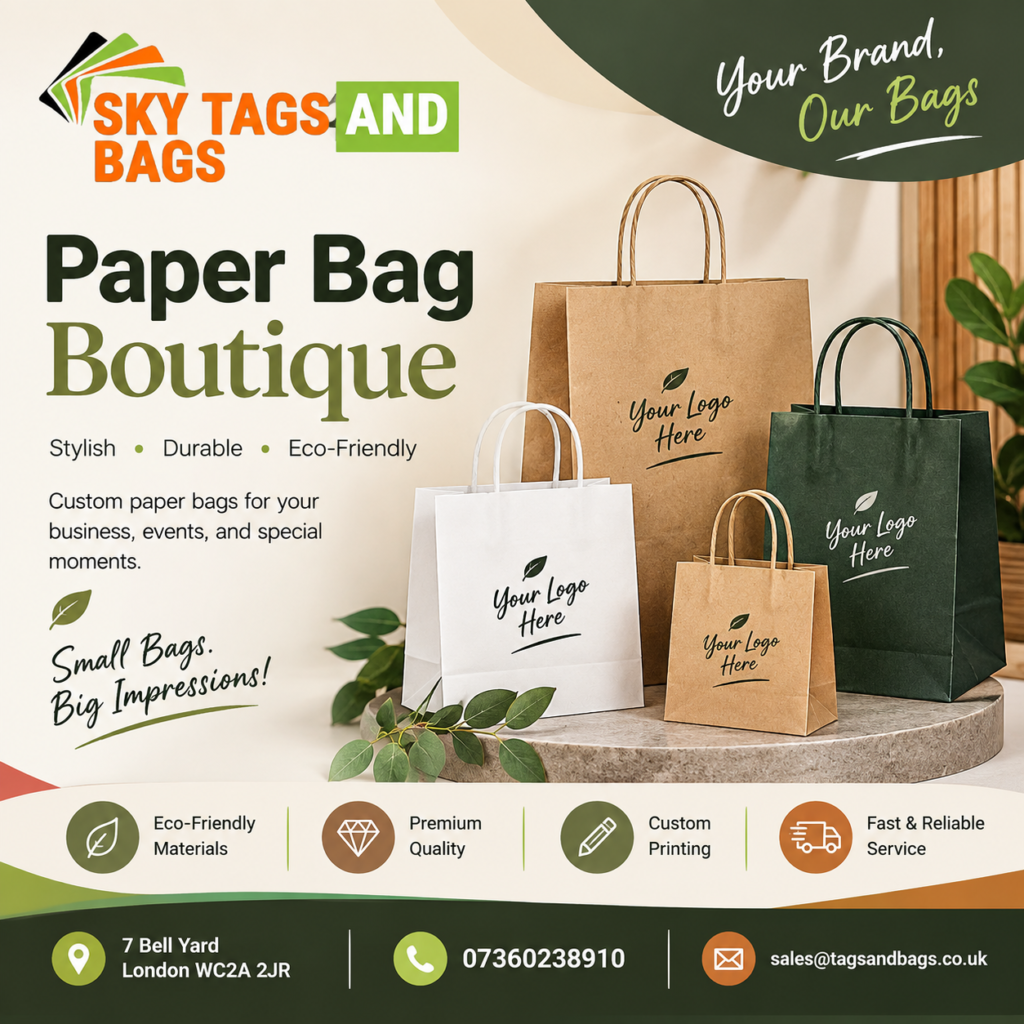
In retail, packaging is more than a practical way to carry products. It can influence how customers perceive a shop, product quality, and overall brand presentation. For fashion stores, gift shops, beauty retailers, jewellery businesses, and independent boutiques, the right packaging can create a more consistent experience from the checkout counter to the customer’s home.
A well-designed paper bag boutique solution can combine functionality with visual appeal while helping retailers present products in a professional way. In the UK, where independent retail continues to focus on customer experience and responsible packaging choices, paper bags have become an important part of everyday retail operations.
Why Paper Bags Matter in Boutique Retail
Boutiques often sell products where presentation plays an important role. Clothing, accessories, cosmetics, gifts, footwear, and lifestyle products can all benefit from packaging that reflects the character of the store.
Unlike generic plastic carriers, paper bags can provide a more structured and tactile presentation. Their natural paper texture also gives retailers opportunities to incorporate colours, typography, logos, handles, and other design elements.
For many retailers, Boutique Paper Bags serve several practical purposes:
- Carrying purchases securely after checkout
- Protecting products during short journeys
- Creating a consistent retail presentation
- Providing space for branding or decorative elements
- Supporting paper-based packaging strategies
- Offering customers a reusable option for suitable products
The important point is that packaging should be selected according to the product and customer journey rather than appearance alone.
Choosing Boutique Paper Bags With Handles
Handle design is one of the most important considerations when selecting retail bags. Boutique paper bags with handles can make carrying purchases easier, particularly when customers are purchasing clothing, gifts, or multiple smaller products.
Retailers should consider the expected weight and dimensions of the products before selecting a bag. A lightweight bag may be suitable for small accessories, while heavier garments or boxed products require stronger construction.
Several factors should be assessed:
Bag Size
The bag should be large enough to accommodate the product without excessive empty space. Oversized packaging can increase material usage, while a bag that is too small may cause creasing or damage.

Handle Strength
Handles need to withstand normal carrying conditions. Twisted paper handles, flat handles, and reinforced handle constructions can provide different levels of comfort and durability.
Paper Weight
Paper thickness influences the bag’s strength and overall appearance. Heavier paper can provide a more substantial feel, although retailers should balance durability with material efficiency.
Product Protection
Fragile or premium products may require additional internal packaging. The outer bag should work as part of a broader packaging system rather than being expected to provide all protection by itself.
Current Trends in Boutique Retail Packaging
Retail packaging is increasingly influenced by sustainability, minimalism, and customer expectations. Many businesses are reviewing packaging materials and looking for practical alternatives that can reduce unnecessary plastic use.
Paper-based packaging can support this shift, particularly when bags are appropriately sized and used efficiently. However, responsible packaging involves more than simply choosing paper. Retailers should also consider material sourcing, production methods, durability, reuse potential, and disposal.
Another noticeable trend is simpler visual design. Rather than heavily decorated packaging, some retailers are choosing understated colours, clean typography, and small branding details. This approach can create a professional appearance while keeping the packaging adaptable across different products.
Black paper bags are another option used by fashion, beauty, gift, and lifestyle retailers. Dark packaging can create a distinctive appearance and work effectively with contrasting logos or minimal printed designs.

Common Packaging Challenges and Practical Solutions
Small retailers frequently face several packaging challenges. One is selecting a bag that works across multiple product categories without creating excessive stock variations.
A practical approach is to establish a small range of standard sizes. For example, a boutique might use one compact bag for accessories, a medium bag for clothing, and a larger option for multiple purchases.
Another challenge is storage. Buying excessive quantities can take up valuable back-room space. Retailers should estimate average weekly or monthly usage and consider seasonal changes before ordering packaging in bulk.
Consistency is another consideration. Bags, tissue paper, stickers, labels, and other packaging components should work together visually. Even simple paper bags can appear more professional when the complete packaging experience follows a consistent design approach.
Businesses researching different formats can review specialist packaging suppliers such as Tags and Bags to understand the range of paper bag options available for UK retail applications.
Where Boutique Paper Bags Can Be Used
The versatility of paper retail bags makes them suitable for a wide range of businesses. Common applications include:
- Fashion boutiques and clothing shops
- Jewellery and accessory retailers
- Beauty and cosmetics stores
- Gift shops
- Florists and lifestyle retailers
- Independent department stores
- Pop-up shops and market traders
- Corporate and promotional events
The appropriate choice depends on product weight, bag dimensions, handling requirements, storage conditions, and desired presentation.

Conclusion
Packaging decisions can influence both operational efficiency and the customer’s retail experience. Boutique Paper Bags offer retailers a practical way to transport purchases while supporting a more considered presentation.
For businesses choosing boutique paper bags with handles, factors such as size, paper weight, handle construction, product protection, storage capacity, and sustainability should all be considered. Rather than selecting packaging based purely on appearance, retailers can achieve better results by matching bag specifications to real-world product and customer requirements.
A carefully planned paper bag boutique strategy can therefore support everyday retail operations while contributing to a consistent and professional customer experience. The most effective approach is one that balances practicality, presentation, material efficiency, and the expectations of today’s retail customers.