Choosing the Right Commercial Plumbing Company Melbourne
Commercial plumbing plays an important role in keeping businesses, retail premises, offices, hospitality venues, warehouses, and other commercial properties operating safely and efficiently. Unlike residential plumbing, commercial systems often involve larger pipe networks, higher water demand, specialised fixtures, drainage infrastructure, and stricter requirements for maintenance and compliance.
For Melbourne businesses, choosing among commercial plumbing companies in Melbourne requires more than simply finding someone available for an urgent repair. The right provider should understand the demands of commercial properties, respond appropriately to plumbing problems, and provide practical solutions that support long-term reliability.
Whether a business needs scheduled maintenance, drainage work, pipe repairs, fixture installation, or emergency assistance, understanding what to look for can make the selection process easier.
Understanding Commercial Plumbing Requirements
Commercial plumbing covers a broad range of systems and services. A small retail shop may need routine toilet and sink maintenance, while a large commercial building can have complex hot-water systems, multiple bathrooms, stormwater drainage, backflow prevention equipment, and extensive pipework.
Common commercial plumbing requirements include:
- Blocked drains and sewer lines
- Leaking or burst pipes
- Commercial bathroom repairs
- Hot-water system servicing
- Water-pressure problems
- Backflow prevention
- Drainage and sewer maintenance
- Plumbing installations during renovations
- Kitchen and food-service plumbing
- Preventive plumbing maintenance
- Emergency plumbing repairs
The scale and complexity of these systems mean that commercial plumbing should be approached differently from occasional residential repairs. A plumber working on a business premises must consider the effect of a plumbing fault on employees, customers, equipment, stock, and daily operations.
For example, a blocked drain in a retail store may initially appear minor. However, if wastewater begins backing up into customer areas, the problem can quickly become a business disruption. Early diagnosis and appropriate repair can help reduce the likelihood of more extensive damage.
What to Look for in a Commercial Plumbing Company Melbourne Businesses Can Rely On
When comparing a commercial plumbing company Melbourne businesses can work with, it is useful to assess several practical factors rather than focusing on a single characteristic.
1. Relevant Commercial Experience
Commercial properties can have different plumbing configurations depending on their purpose. Restaurants, offices, retail stores, warehouses, medical facilities, and industrial premises may all present different challenges.
Ask whether the plumbing provider has experience with properties similar to yours. Relevant experience can help technicians identify potential causes more efficiently and recommend appropriate repair or maintenance strategies.
2. Clear Communication
Good communication is particularly important when plumbing work affects business operations. A useful plumbing provider should explain:
- What problem has been identified
- What may have caused it
- Whether immediate action is required
- What repair options are available
- What areas of the property may be affected
- What maintenance could reduce future problems
Clear explanations allow business owners and facility managers to make informed decisions rather than simply reacting to an unexpected plumbing failure.
3. Appropriate Licensing and Compliance
Commercial plumbing work can involve regulatory and safety requirements. Businesses should confirm that the plumbing professional they engage has the appropriate qualifications and licensing for the work being performed.
Depending on the project, compliance considerations may include plumbing standards, water efficiency, backflow prevention, drainage requirements, and local regulations.
For significant installations or renovations, documentation and inspection requirements may also need to be considered. Checking these details before work begins can help avoid complications later.
Comparing Local Commercial Plumbing Services
People often search for a local commercial plumbing service near me when an urgent problem occurs. Location can matter, particularly when a plumbing issue threatens normal business operations. However, proximity should not be the only consideration.
A nearby provider with appropriate commercial experience may be more suitable than a company that is geographically closer but unfamiliar with the requirements of a particular property.
When comparing providers, consider the following:
| Factor | Why It Matters |
|---|---|
| Commercial experience | Helps address complex business plumbing systems |
| Emergency response | Useful when leaks or drainage failures disrupt operations |
| Preventive maintenance | Can identify developing problems earlier |
| Licensing | Supports compliant plumbing work |
| Communication | Makes repairs and recommendations easier to understand |
| Documentation | Useful for property managers and maintenance records |
| Service capability | Helps businesses handle different plumbing requirements |
For businesses managing several properties, maintaining a relationship with a consistent plumbing provider can also simplify maintenance scheduling and service records.
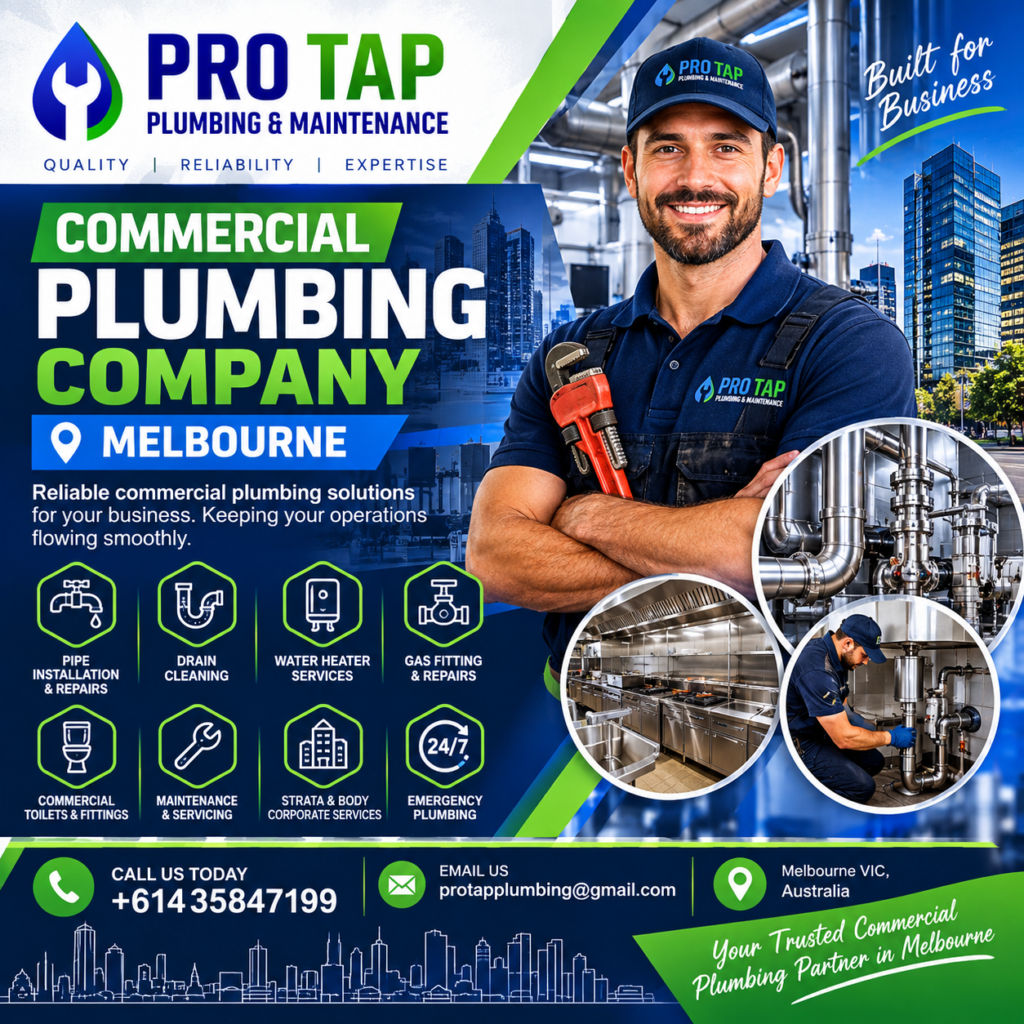
Pro Tap Plumbing and Maintenance is one example of a Melbourne-based plumbing provider serving commercial and property-related plumbing requirements. When evaluating any provider, businesses should independently review its services, qualifications, experience, and suitability for the specific job.
Common Commercial Plumbing Challenges and Practical Solutions
Commercial plumbing problems can develop gradually or occur suddenly. Recognising common warning signs can help property managers respond before a minor issue becomes a major disruption.
Recurring Drain Blockages
Repeated blockages may indicate more than a temporary obstruction. Grease accumulation, foreign objects, damaged pipes, tree roots, or inadequate drainage design can contribute to recurring problems.
Instead of repeatedly clearing the same blockage, businesses should investigate the underlying cause. Drain inspections and appropriate cleaning methods can help determine whether a larger issue exists.
Low Water Pressure
Low water pressure can affect taps, commercial kitchens, showers, toilets, and equipment. Possible causes include partially closed valves, leaks, blocked pipes, pressure-regulating equipment, or problems within the building’s plumbing system.
A professional assessment can help identify whether the issue is isolated to one fixture or affects the wider property.
Leaking or Burst Pipes
Leaks can waste significant amounts of water and potentially damage walls, floors, ceilings, stock, and electrical equipment. A burst pipe requires particularly rapid attention because water can spread quickly through a commercial environment.
Businesses should know where their main water isolation points are and ensure staff or facility managers understand how to shut off the water supply when appropriate.
Commercial Hot-Water Problems
Hot-water failures can be especially disruptive for restaurants, accommodation providers, healthcare facilities, gyms, and businesses with staff amenities.
Warning signs can include inconsistent temperatures, unusual noises, visible leaks, insufficient hot water, or repeated system shutdowns. Regular inspection and maintenance may help identify deterioration before complete failure occurs.
Why Preventive Maintenance Matters
One of the most effective ways to manage commercial plumbing is to move from reactive repairs toward preventive maintenance.
A maintenance program can include scheduled inspections of:
- Water supply pipes
- Drainage systems
- Commercial fixtures
- Hot-water equipment
- Valves and isolation points
- Backflow prevention devices
- Pumps and associated equipment
- Kitchen drainage
- Toilets and amenities
The appropriate maintenance frequency depends on the property, usage levels, equipment, and plumbing infrastructure.
For example, a busy restaurant may require more frequent drainage attention than a small office because food waste, grease, and heavy water usage place different demands on the system.
Preventive maintenance can also provide an opportunity to identify aging components. Replacing a deteriorating valve or repairing a small leak may be considerably less disruptive than waiting until the component fails during business hours.
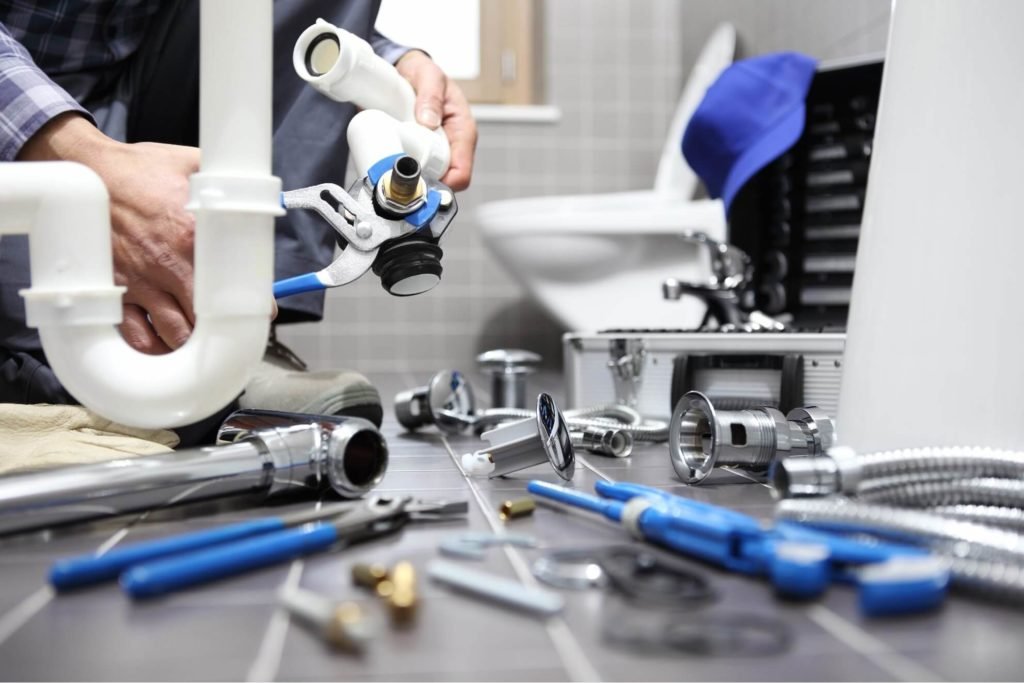
Technology and Changing Commercial Plumbing Practices
Modern commercial plumbing increasingly incorporates technology to improve maintenance and resource management. CCTV drain inspections, electronic leak detection, water-monitoring systems, and improved plumbing fixtures can provide useful information about building infrastructure.
Water efficiency is another important consideration for Melbourne businesses. Efficient taps, toilets, shower systems, and other fixtures can reduce unnecessary water consumption when correctly selected and installed.
For property managers, digital maintenance records can also make it easier to track previous repairs, recurring problems, inspections, and replacement schedules. This information can help identify patterns over time.
Technology does not eliminate the need for experienced plumbing professionals, but it can give them better information when diagnosing complex problems.
How to Prepare Before Calling a Commercial Plumber
When a plumbing problem occurs, having basic information ready can make the initial assessment more efficient.
Before contacting a plumbing provider, if it is safe to do so, record:
- The location of the problem
- When the issue first appeared
- Whether the problem is getting worse
- Any visible water damage
- Whether multiple fixtures are affected
- Whether the water supply has been isolated
- Any unusual smells, noises, or changes in water pressure
- Previous repairs associated with the same issue
Photographs can also help communicate the situation, particularly when a facility manager is coordinating work remotely.
Businesses should avoid attempting complex plumbing repairs themselves, especially where electrical equipment, contaminated wastewater, gas systems, or significant water leaks are involved.
Making an Informed Choice
Finding the best commercial plumbing companies near me should not simply mean choosing the first result in a search engine. Search visibility, location, and availability can help create a shortlist, but businesses should then evaluate the practical factors behind each provider.
Look for evidence of relevant experience, appropriate licensing, clear communication, suitable service capabilities, and an understanding of commercial maintenance requirements. For larger projects, businesses may also benefit from requesting a clear scope of work and understanding what inspections or documentation are required.
A reliable commercial plumbing strategy combines appropriate emergency response with regular maintenance and careful planning. This approach can help businesses reduce disruption, protect their property, and maintain functional plumbing infrastructure.
Ultimately, selecting a commercial plumbing company Melbourne businesses can work with is about matching the provider’s experience and capabilities to the property’s actual requirements. By assessing providers carefully and investing in preventive maintenance, Melbourne businesses can take a more structured approach to plumbing management rather than waiting for every problem to become an emergency.
Read More: