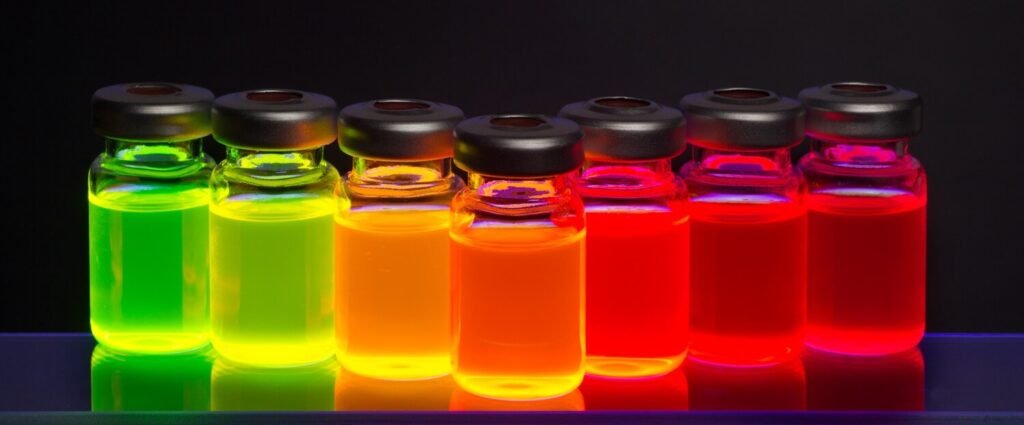
Gold nanoparticles have changed the way scientists study materials at the nanoscale. These tiny particles are much smaller than a human hair, yet they have remarkable optical, chemical, and biological properties. Because of these unique features, researchers use them in medicine, diagnostics, electronics, sensors, and advanced materials.
Today, scientists are also exploring methylated gold nanoparticles for specialized research. Surface modification changes how nanoparticles behave in different environments. It also helps researchers improve stability, control interactions with molecules, and design materials for specific laboratory applications.
This guide explains how gold nanoparticles are made, what makes them special, and why they are becoming essential tools in modern research.
What Are Gold Nanoparticles?
Gold nanoparticles are tiny particles of pure gold that usually measure between 1 and 100 nanometers. At this size, gold behaves very differently from the metal we see in jewelry or coins.
The small size gives these particles a much larger surface area compared to their volume. This means they can interact more easily with chemicals, light, proteins, and DNA. Their behavior also changes depending on their size and shape.
Researchers create gold nanoparticles in several forms, including:
- Spheres
- Rods
- Stars
- Shells
- Cubes
Each shape offers different optical and chemical properties. Scientists choose the right structure based on the needs of their experiment.
How Gold Nanoparticles Are Synthesized
The synthesis process determines the size, shape, and quality of gold nanoparticles. Researchers generally use three main methods.
Chemical Synthesis
Chemical synthesis is the most common approach. A gold salt is mixed with a reducing agent that converts gold ions into tiny gold particles. Stabilizing molecules are then added to stop the particles from clumping together.
This method offers excellent control over particle size and produces highly uniform nanoparticles.
Physical Synthesis
Physical methods use heat, lasers, or evaporation to create nanoparticles. These techniques often reduce the need for chemical reagents and produce highly pure materials.
Although physical synthesis requires specialized equipment, it is useful for applications that demand precise particle quality.
Green Synthesis
Green synthesis uses plant extracts, microorganisms, or other natural materials to produce nanoparticles. This method has gained attention because it is more environmentally friendly and can reduce the use of harsh chemicals.
Researchers continue to improve green synthesis methods for sustainable nanotechnology.
Why Surface Functionalization Matters
A gold nanoparticle is only as useful as its surface. The outer layer determines how the particle interacts with its environment.
Scientists often attach molecules such as polymers, antibodies, peptides, or functional chemical groups to the nanoparticle surface. This process is called surface functionalization.
For example, methylated gold nanoparticles contain methyl groups on their surface. These modifications can improve stability, change chemical interactions, and support specialized research applications where controlled surface chemistry is important.
Surface engineering allows researchers to customize nanoparticles for different experiments without changing the gold core itself.
Key Properties of Gold Nanoparticles
Gold nanoparticles are popular because they combine several valuable properties in one material.
Excellent Optical Properties
Gold nanoparticles interact strongly with light through a phenomenon called localized surface plasmon resonance. This gives them bright colors and makes them highly sensitive to changes in their surroundings.
Researchers use this property in imaging, spectroscopy, and biosensors.
High Surface Area
Their large surface area allows many molecules to attach to a single particle. This makes them excellent carriers for drugs, proteins, DNA, and other biological materials.
Strong Chemical Stability
Gold resists corrosion and oxidation better than many other metals. This stability helps nanoparticles maintain consistent performance during experiments.
Easy Functionalization
Scientists can modify gold nanoparticles with many different chemical groups. This flexibility makes them suitable for applications ranging from diagnostics to materials science.
Applications in Biomedical Research
Biomedical research is one of the fastest-growing fields for gold nanoparticles.
Scientists study these particles for drug delivery, medical imaging, and molecular diagnostics. Their small size allows them to interact with cells while their optical properties improve imaging sensitivity.
Researchers are also investigating methylated gold nanoparticles because surface modifications may improve particle stability and influence how nanoparticles interact with biological systems.
Although many applications remain experimental, gold nanoparticles continue to support important advances in medical research.
Gold Nanoparticles in Biosensing
Biosensors detect biological molecules quickly and accurately. Gold nanoparticles make these devices more sensitive and reliable.
When a target molecule binds to the nanoparticle surface, the particle’s optical properties change. Scientists can measure this change to detect proteins, DNA, viruses, or disease biomarkers.
This technology supports research in:
- Disease detection
- Environmental monitoring
- Food safety
- Laboratory diagnostics
Because gold nanoparticles produce strong optical signals, they often outperform many traditional sensing materials.
Applications in Electronics
Gold nanoparticles are also valuable in electronics because they conduct electricity while remaining chemically stable.
Researchers use them in flexible circuits, conductive inks, wearable electronics, and printed sensors. Their nanoscale size helps engineers create smaller and more efficient electronic devices.
As flexible electronics continue to grow, gold nanoparticles are becoming increasingly important in next-generation technology.
Advanced Materials and Catalysis
Nanotechnology is transforming material science, and gold nanoparticles play an important role in this progress.
Scientists incorporate nanoparticles into coatings, polymers, ceramics, and composite materials to improve strength, conductivity, and durability.
Gold nanoparticles also act as catalysts in certain chemical reactions. Their high surface area allows reactions to occur more efficiently, making them useful in energy and environmental research.
These applications continue to expand as researchers discover new ways to engineer nanoparticle surfaces.
Factors to Consider Before Choosing Gold Nanoparticles
Selecting the right nanoparticle depends on your research goals. Several factors should always be considered.
Particle Size
Size affects optical behavior, biological interactions, and surface area. Smaller particles often behave differently from larger ones.
Shape
Spheres, rods, and stars each offer unique optical and chemical characteristics. The right shape depends on the intended application.
Surface Chemistry
Surface functionalization determines stability and compatibility with biological or chemical systems. Researchers should select particles with surface groups that match their experimental design.
Purity and Characterization
Always review technical data before purchasing nanoparticles. Important information includes particle size distribution, concentration, purity, and stability.
High-quality characterization improves reproducibility and research accuracy.
The Future of Gold Nanotechnology
Gold nanoparticle research continues to grow every year. Scientists are developing smarter nanoparticles with improved precision, better targeting, and enhanced functionality.
Future applications may include personalized medicine, wearable health sensors, quantum technologies, advanced imaging, and intelligent diagnostic platforms.
Artificial intelligence is also helping researchers design nanoparticles with optimized structures for specific applications. As manufacturing techniques improve, gold nanoparticles will become even more valuable across multiple scientific disciplines.
Conclusion
Gold nanoparticles are among the most versatile materials in modern nanotechnology. Their unique optical properties, chemical stability, and customizable surfaces make them valuable tools for researchers in medicine, electronics, diagnostics, and materials science.
Surface-engineered materials such as methylated gold nanoparticles offer even greater flexibility by allowing scientists to tailor nanoparticle behavior for specialized applications. As research continues, these advanced materials will play an increasingly important role in scientific discovery and technological innovation.
If you’re looking for high-quality gold nanoparticles for research and development, NN Crystal US Corporation provides reliable nanomaterials designed to support laboratories, universities, and advanced research organizations. Explore their specialized nanoparticle solutions to find the right material for your next scientific breakthrough.