Organizations across industries are constantly seeking ways to deliver seamless, memorable experiences while maintaining a strong, recognizable brand. Whether you manage corporate conferences, music festivals, or community events, one tool is proving transformative: White Label Event Management Software.
This software solution empowers businesses to take control of the attendee experience, automate operations, and enhance their service portfolio—all under their own brand. In essence, it’s a strategic lever for companies looking to scale events, strengthen their brand, and differentiate themselves in a competitive market.
In this article, we’ll explore what white label event management software is, why it matters, and how your organization can leverage it to create a superior event experience while elevating your brand presence.
Understanding White Label Event Management Software
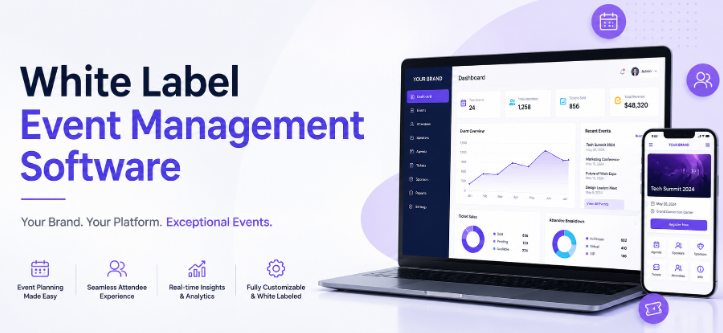
At its core, White Label Event Management Software is a platform provided by a third-party company that can be rebranded and customized as your own. It allows you to offer event management solutions like registration, ticketing, mobile apps, analytics, and attendee engagement—without building software from scratch.
Unlike traditional event software that comes with a provider’s branding, a white label solution lets your logo, color scheme, and messaging dominate the interface, providing a seamless experience for your clients and attendees.
Key components typically include:
- Event Registration & Ticketing: Secure, customizable ticketing options through a branded Event Ticketing Platform.
- Attendee Engagement Tools: Networking features, session schedules, push notifications, and live polls.
- Event Analytics & Reporting: Real-time insights into attendance, ticket sales, and engagement metrics.
- Mobile Apps: Fully branded white label event apps for iOS and Android, allowing attendees to navigate your events effortlessly.
By leveraging these capabilities, businesses can deliver professional, scalable, and branded events without investing in a costly, in-house development team.
Why Your Brand Benefits from White Label Event Management
1. Strengthen Brand Recognition
When your software, website, or app carries your branding, attendees and clients associate the entire experience with your organization. This consistency builds credibility and reinforces your brand identity across every touchpoint, from event registration emails to the mobile event interface.
2. Create Additional Revenue Streams
White label solutions allow event management companies, venues, and service providers to package the software as part of their offerings. For example:
- Charging clients for premium features like custom ticketing or app integrations.
- Offering subscription-based access to your event management tools.
- Bundling software with event services for a higher-value proposition.
This positions your company not only as a service provider but as a technology partner, opening avenues for recurring revenue.
3. Enhance Attendee Experience
Attendees expect seamless interactions, from ticket purchase to event navigation. A branded white label event app allows:
- Personalized schedules and notifications.
- Interactive maps and session guides.
- Direct communication between organizers and attendees.
By providing a consistent, branded experience, your organization demonstrates professionalism and a commitment to user satisfaction, strengthening loyalty and repeat attendance.
4. Improve Operational Efficiency
Managing events involves countless logistical challenges: ticket sales, registrations, check-ins, surveys, and analytics. White label event platforms consolidate these functions in a single dashboard, reducing manual work and operational overhead.
For example, automated ticket scanning and attendee check-ins streamline entry processes, while integrated reporting tools provide actionable insights to optimize future events.
5. Gain Competitive Advantage
Offering a proprietary event management solution differentiates your business. Competitors may rely on off-the-shelf solutions that feel generic or lack customization. With a white label approach, your company can:
- Demonstrate technological sophistication.
- Offer a personalized solution aligned with your brand identity.
- Expand service offerings without extensive software development costs.
Implementing White Label Event Management Software
Transitioning to a white label event platform involves strategic planning to maximize its impact on your brand. Here’s a step-by-step approach:
Step 1: Define Your Brand Experience
Determine how your brand should be represented across the platform. Consider:
- Logo and color scheme.
- Messaging tone and voice.
- Customer journey touchpoints from registration to post-event engagement.
Step 2: Select the Right Platform
Not all white label solutions are created equal. Evaluate potential platforms based on:
- Customization flexibility.
- Mobile app capabilities.
- Integration with your existing CRM or marketing tools.
- Security and compliance features.
Step 3: Customize the User Interface
A white label solution’s strength lies in its flexibility. Customize:
- Registration forms and ticketing options.
- Event website design and navigation.
- Push notifications, session schedules, and attendee engagement tools in the white label event app.
Step 4: Train Your Team
Ensure staff are familiar with the platform’s features, from ticket management to analytics. This knowledge enables your team to deliver smooth, professional events.
Step 5: Launch and Gather Feedback
After deploying the platform for your first event, gather attendee and client feedback. Use insights to refine the experience and optimize your platform for future events.
Real-World Applications
White label event management software isn’t just theoretical—it’s actively transforming businesses across industries. Some common applications include:
- Corporate Events: Companies hosting conferences, product launches, or training sessions use branded software to manage attendees, distribute materials, and collect feedback.
- Entertainment & Festivals: Organizers can manage large audiences with ticketing, check-ins, and mobile apps, enhancing the festival experience.
- Educational Institutions: Schools and universities implement branded platforms for workshops, lectures, and alumni events.
- Nonprofits & Fundraisers: Nonprofits benefit from branded ticketing and registration solutions, providing a professional look while collecting donations efficiently.
Each example illustrates how white label software strengthens the organization’s brand while delivering a superior event experience.
The Future of Event Management
With technological advancements, white label platforms continue to evolve. Emerging trends include:
- AI-Powered Personalization: Recommending sessions, networking opportunities, or products based on attendee preferences.
- Integrated Virtual/Hybrid Events: Seamlessly combining in-person and online event experiences under one branded platform.
- Advanced Analytics & Reporting: Offering predictive insights for improved planning and ROI measurement.
- Enhanced Engagement Tools: From gamification to interactive surveys, white-label platforms are becoming more dynamic and participant-focused.
These trends highlight that adopting a white-label platform is not only about immediate operational efficiency but also about preparing your organization for the future of event experiences.
Conclusion
White Label Event Management Software offers a powerful way to elevate your brand, streamline operations, and enhance attendee experiences. By investing in a fully branded solution, businesses can differentiate themselves, generate new revenue streams, and provide a consistent, professional event journey.
From branded ticketing through an Event Ticketing Platform to immersive experiences via a white label event app, the right software transforms events from logistical challenges into memorable brand touchpoints.
Ultimately, white label event platforms allow your organization to focus on what matters most: delivering exceptional experiences while reinforcing your brand identity at every step of the attendee journey.