How Video Conferencing Rooms Support Hybrid Work in Beaverton
Beaverton’s workforce is hybrid in a way that isn’t going to change. The Sunset Corridor’s tech corridor, Nike’s campus culture, and the dense concentration of professional services firms in Washington County have all built teams that expect to work effectively whether they are in the office or remote. The challenge is that the technology environments in most Beaverton offices were built before hybrid work was the expectation. They were built for the room.
Effective video conferencing room setup in Beaverton is what brings those environments up to the standard hybrid work actually demands. And that standard is higher than most organizations realize when they start planning.
What Hybrid Work Demands From a Video Conferencing Room
A hybrid meeting has two audiences: the people in the room and the people on the call. The in-room audience has always been well served by conference room technology designed for their presence. The remote audience has been an afterthought in most room designs.
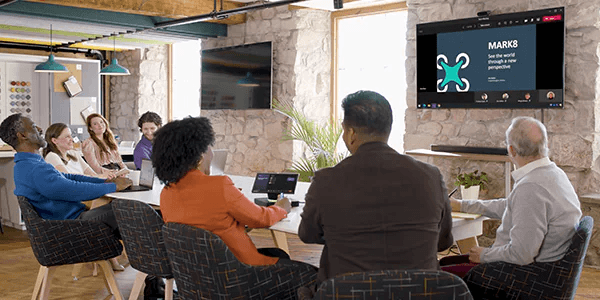
Proper video conferencing room setup serves both audiences equally. Remote participants can see the in-room participants clearly. They can hear every voice without asking for repetition. They can see content being shared in real time. They do not feel like observers of someone else’s meeting. That is the standard, and it is achievable with the right design and deployment.
The Camera Problem in Hybrid Meetings
The most common failure in Beaverton video conferencing room setups in Beaverton is camera placement that serves presentations but not conversations. A camera mounted at the front of the room captures the presenter well and captures the backs of heads for everyone else. When the conversation moves around the table, remote participants lose the visual context that makes participation natural.
Modern video conferencing room cameras with auto-framing and speaker-tracking capabilities solve this. They detect who is speaking and frame them automatically, keeping remote participants visually connected to the conversation throughout the meeting rather than only during the presentation portion.
Audio: The Invisible Foundation
Audio quality in a video conferencing room setup is the element most likely to determine whether remote participants feel included or excluded. A room where some participants are clearly audible, and others are not, creates a participation barrier that no amount of good facilitation can fully overcome.
Beaverton’s office environments present real audio challenges: many of the region’s most desirable office spaces feature the kinds of hard surfaces and open layouts that create acoustic conditions microphones struggle with. Professional video conferencing room setup in Beaverton accounts for these conditions in the design phase with appropriate microphone selection, placement, and acoustic treatment where needed.
Platform Consistency Across the Organization
For Beaverton organizations with multiple rooms or multiple locations, the video conferencing room setup must deliver a consistent platform experience across every space. Users who encounter different interfaces, different control systems, or different meeting behaviors in different rooms spend cognitive energy managing the variation rather than focusing on the meeting. Standardization is the solution.
The ROI of Getting It Right
The return on a properly executed video conferencing room setup is measurable: higher room adoption rates, fewer IT support calls, lower meeting start times, and a meaningful improvement in the hybrid participant experience that retains and engages a distributed workforce.
Companies like Projectus deliver video conferencing room setups in Beaverton built to these standards, with documentation and ongoing support that keeps the investment performing over time.