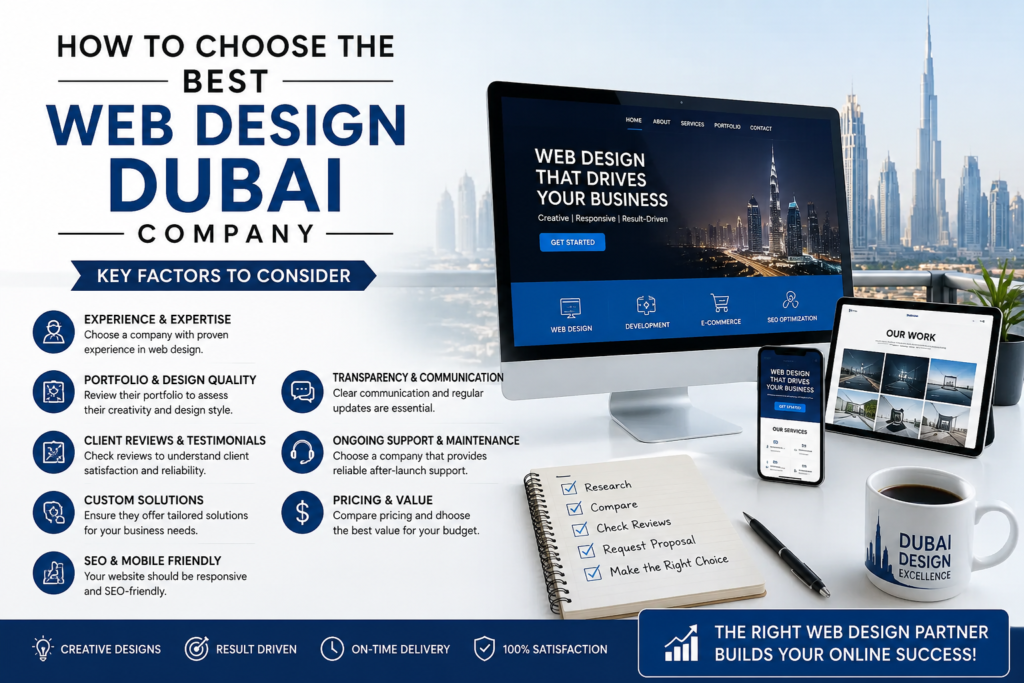
Dubai’s digital economy is growing faster than almost anywhere else in the world. From boutique retail brands in Jumeirah to logistics giants in Jebel Ali, every business now understands that a website is often the first — and sometimes the only — impression a customer will ever form of a company. With hundreds of web design Dubai company advertising their services across the city, choosing the right one can feel overwhelming. This guide breaks down exactly what to look for, step by step, so you can make a confident, informed decision.
Why the Right Web Design Partner Matters
Before diving into selection criteria, it’s worth understanding why this decision carries so much weight. A website isn’t just a digital brochure anymore — it’s a sales tool, a customer service channel, a brand ambassador, and often the backbone of your marketing strategy. A poorly designed site can cost you leads, damage credibility, and even hurt your search engine rankings. On the other hand, a well-built website compounds in value over time, generating traffic, conversions, and trust long after the initial launch.
Because Dubai is such a competitive and internationally diverse market, your web design partner needs to understand not just code and color palettes, but also local consumer behavior, multilingual audiences, and the expectations of both regional and global customers.
Define Your Goals Before You Start Searching
Many businesses make the mistake of contacting agencies before they know what they actually need. Before requesting quotes, clarify:
- The primary purpose of the website — lead generation, e-commerce, portfolio, booking system, or corporate presence
- Your target audience — local UAE customers, GCC-wide, or international
- Budget range — this shapes which tier of agency you should even be talking to
- Timeline — do you need a site live in weeks or can the project unfold over months
Having clarity here allows you to evaluate agencies against your actual needs rather than being swayed by a flashy portfolio that doesn’t align with your goals.
Check Their Portfolio and Industry Experience
A company’s past work tells you more than any sales pitch. When reviewing portfolios, look beyond visual appeal and ask:
Relevance to Your Industry
Has the agency built websites for businesses similar to yours — retail, hospitality, real estate, healthcare, or professional services? Industry familiarity often translates into faster turnaround and fewer revisions, since the team already understands common features and compliance requirements.
Design Consistency and Quality
Do the sites in their portfolio feel current, or do they look dated? Web design trends shift quickly, and an agency still producing 2018-style layouts may not be keeping pace with modern UX standards.
Live, Functioning Websites
Always click through to the actual live websites rather than static screenshots. Test loading speed, mobile responsiveness, and navigation flow yourself. A portfolio image can hide a slow, clunky backend.
Evaluate Technical Capabilities
Good design is only half the equation — the underlying technology determines how well your site performs and how easily it can grow with your business.
Custom Development vs. Templates
Ask whether the agency builds custom websites or relies heavily on pre-made templates. Templates can be cost-effective for simple sites, but if you need unique functionality or a distinctive brand identity, custom development is usually the better long-term investment.
Platform Expertise
Whether it’s WordPress, Shopify, Webflow, or a fully custom framework, make sure the agency has demonstrable expertise in the platform best suited to your needs — not just the one they default to for every client.
Mobile Responsiveness and Speed Optimization
With mobile traffic dominating in the UAE, your site must perform flawlessly on smartphones. Ask potential agencies how they approach responsive design and page speed optimization, since both directly affect user experience and search rankings.
SEO-Friendly Architecture
A beautiful website that search engines can’t properly index is a wasted investment. The right agency should build with clean code, proper heading structures, fast load times, and SEO best practices baked in from the start — not bolted on afterward.
Understand Their Design Process
The best agencies follow a structured, transparent process rather than jumping straight into design without a plan. Ask about:
- Discovery and research — do they study your competitors and target audience before designing?
- Wireframing and prototyping — will you see a structural blueprint before final visuals are applied?
- Revision rounds — how many rounds of feedback are included, and what happens if you need more?
- Testing — do they test across browsers, devices, and screen sizes before launch?
A clear process signals professionalism and reduces the risk of miscommunication or scope creep later in the project.
Read Reviews and Ask for References
Client testimonials on an agency’s own website are helpful, but independent reviews carry more weight. Check platforms like Google Reviews, Clutch, and LinkedIn for honest feedback. Pay attention to:
- How the agency handled challenges or delays
- Whether clients mention ongoing support after launch
- Patterns in complaints, if any (missed deadlines, poor communication, hidden costs)
Don’t hesitate to ask the agency directly for two or three references you can contact. A confident, established company will have no issue connecting you with past clients.
Consider Communication and Local Presence
Dubai’s business culture values responsiveness and personal relationships. Even if an agency offers competitive pricing, poor communication can derail a project.
Time Zone and Availability
If you prefer face-to-face meetings or same-timezone collaboration, working with a locally based Dubai agency can streamline the process considerably compared to an overseas team.
Language and Cultural Understanding
If your website needs to serve Arabic-speaking audiences alongside English, ensure the agency has genuine experience with right-to-left (RTL) design and bilingual content structuring — this is a common weak point for agencies unfamiliar with the region.
Project Management Transparency
Ask how updates will be communicated — through a dedicated project manager, a shared dashboard, or regular calls. Clear communication channels prevent misunderstandings and keep projects on schedule.
Compare Pricing — But Don’t Choose Based on Price Alone
Pricing in Dubai’s web design market varies dramatically, from a few thousand dirhams for a basic template site to six-figure investments for complex, custom-built platforms. When comparing quotes:
- Ask exactly what’s included — design, development, content, SEO setup, hosting, and post-launch support
- Watch for hidden costs like plugin licenses, stock photography, or maintenance fees
- Be cautious of unusually low quotes, which often signal template reuse, offshore outsourcing without oversight, or corners cut on quality assurance
The cheapest option rarely delivers the best return on investment. Instead, focus on value — what you get for what you pay, and how that investment will perform for your business over time.
Ask About Post-Launch Support
A website is never truly “finished” — it needs ongoing updates, security patches, and occasional redesign as your business evolves. Before signing a contract, clarify:
- Is there a maintenance package, and what does it cover?
- How quickly will they respond to technical issues after launch?
- Can they support future growth, such as adding e-commerce functionality or new landing pages?
Agencies that disappear after the final invoice are a red flag. The best partners think in terms of long-term relationships, not one-off projects.
Final Thoughts
Choosing the best web design company in Dubai isn’t about finding the agency with the flashiest portfolio or the lowest price — it’s about finding a partner whose process, expertise, and communication style align with your business goals. Take the time to define your objectives, scrutinize real portfolio work, ask detailed questions about technical capability and support, and verify client feedback independently.
A website built by the right team becomes a genuine growth asset — one that reflects your brand accurately, performs reliably, and adapts as your business expands in one of the world’s most competitive digital markets.