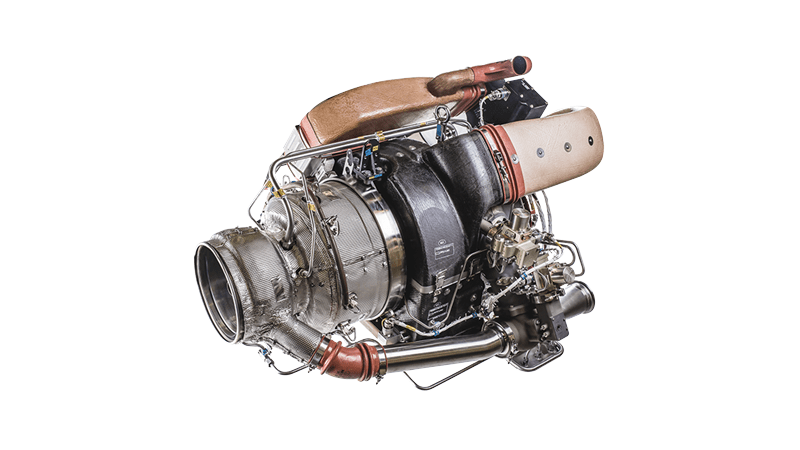
The Boeing 787 auxiliary power unit operates in a fundamentally different environment than APUs on conventional commercial aircraft. Most commercial APUs provide both electrical power and bleed air for cabin conditioning and engine starting. The 787 was designed without a traditional bleed-air system, which means the APS5000 provides only electrical power, generating 450kVA for ground operations and main engine starting without pneumatic extraction. That architectural difference affects how the Boeing 787 auxiliary power unit accumulates wear, what overhaul findings look like, and how 787 fleet teams should approach coverage planning.
Why the All-Electric Architecture Changes Maintenance Assumptions
On a conventional aircraft, the APU offloads bleed air extraction to the main engines during flight, reducing cumulative thermal demand on the APU itself. On the 787, the APS5000 operates in a higher electrical load environment during ground operations, which affects thermal cycling patterns and wear rates in ways that do not map directly onto experience with other platforms.
MRO teams inducting APS5000 units from early-production 787s into their first overhauls are encountering hot section findings that reflect the cumulative effect of this operating profile. Operators who base shop cost projections on experience with the GTCP131 series or other widebody APU models frequently find the APS5000 overhaul scope broader than anticipated. Accounting for this when budgeting shop visits and evaluating the cost of keeping an aging unit in service versus sourcing a replacement is part of what distinguishes mature 787 program management from assumptions carried over from other fleets.
How Fleet Maturity Is Reshaping the Sourcing Environment
The 787 entered commercial service in 2011. Early-production aircraft are now approaching fifteen years of operation, and a growing number of APS5000 units are cycling through their first major overhaul events simultaneously. As demand for serviceable units with acceptable LLP limiter values increases and supply at those conditions tightens, the lead time required to source a replacement at acceptable condition without AOG-rate premiums grows longer.
787 Dreamliner APU leasing programs address this by giving operators access to serviceable units for defined terms without the full capital commitment of outright purchase. For 787 operators managing planned shop visits, a 787 Dreamliner APU leasing arrangement covers the aircraft while the unit is in the shop and returns the slot to the operator at lease end without ongoing ownership exposure. For AOG situations, a lessor who holds direct inventory can confirm availability and initiate delivery faster than one sourcing through the secondary market after the order is placed.
Planning Across Multiple 787 Variants
The 787 family covers three variants: the 787-8, 787-9, and 787-10. All three use the APS5000, but operators managing mixed-variant fleets should track LLP limiter status at the individual unit serial number level rather than the fleet level. Cycle accumulation rates vary by route profile, and a fleet average that appears healthy can contain individual units approaching their thresholds faster than the average suggests.
The APS5000 carries three life-limited parts with thresholds at 24,000, 41,000, and 44,000 cycles. The shortest-interval LLP is the primary driver of shop visit timing. Operators who track actual CSN per unit against these thresholds and set planning triggers well above the minimum acceptance value for incoming units have time to source replacement or coverage units on favorable terms. Those who wait until a unit is removed are entering a tightening market under time pressure with less leverage on pricing, documentation quality, and delivery timing.
Setting the Right Acceptance Criteria Before Sourcing
Before evaluating any APS5000 unit on offer, operators should define their minimum acceptable LLP limiter value based on their fleet’s actual cycle accumulation rate and the planned service period for the incoming unit. A unit accepted below the minimum threshold will reach its next shop visit earlier than planned, generating costs that were not in the original maintenance budget.
Every APS5000 transaction should arrive with FAA/EASA Form 8130-3, full ATA 106 ownership trace, a non-incident statement, AD compliance records, and current LLP status including CSN and remaining life for all three life-limited parts.
Requiring this package as a condition of commitment, before any transaction is agreed, keeps the documentation burden with the supplier and protects the operator from airworthiness exposure at the next lease return or asset review.
Conclusion
Operators managing Boeing 787 auxiliary power unit programs who apply this standard consistently at intake avoid the documentation disputes that typically surface at lease return or asset sale and that cost significantly more to resolve than the original intake review would have required.