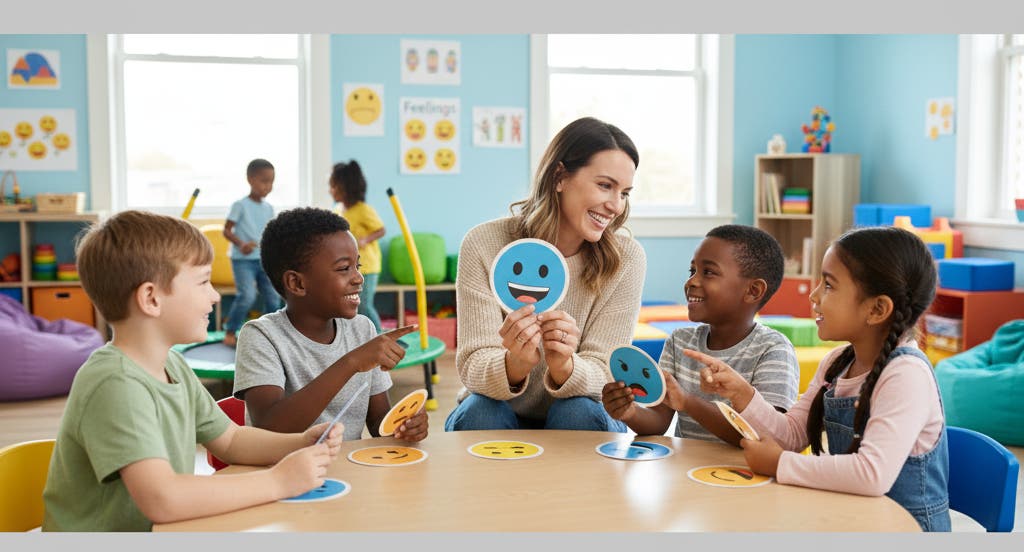
Conversation looks effortless from the outside. Two people trade words, read each other’s reactions, adjust, and move on. But for a child who finds social interaction difficult, that smooth exchange is anything but automatic. Knowing when to speak, how to listen, when to ask a question, and how to notice what another person is feeling are separate skills, each one learnable but none of them guaranteed to develop on its own. For many families, the search for support begins with a simple wish: that their child could join a conversation and feel, for once, that it went well.
More Than Shyness: The Real Barrier
The challenge often runs deeper than shyness. Many children genuinely want friendship but have not yet learned to read the cues of others or to sustain the back-and-forth that keeps an interaction going. When their attempts do not land, the responses from peers can be discouraging, and a child may begin avoiding the very situations where connection happens. It is easy to mistake this withdrawal for a lack of interest. More often, it reflects a gap in skills that can be taught with the right structure and support.
How Conversation Is Broken Into Steps
That structure is what social skills groups Scottsdale are built to provide. Grounded in the principles of Applied Behavior Analysis, these groups turn the abstract goal of “being social” into concrete steps. Conversation is broken down into its parts: greeting someone, asking a question, waiting for a response, staying on topic, and knowing how to wrap things up. Each element is introduced, modeled by trained behavior professionals, and rehearsed through role-play before a child tries it in a live interaction with peers.
Nurturing Empathy Alongside Conversation
Empathy is woven into the same process. Recognizing how another person feels and responding in a way that shows you noticed is one of the most important ingredients of lasting friendship, and it can absolutely be nurtured. Through group discussions, collaborative activities, and real-world practice, children learn to read facial expressions, tone, and body language, and to consider a perspective other than their own.
The group setting itself is part of the value. A child cannot practice conversation or empathy alone, and a group provides a supportive space full of the very interactions they need to rehearse. Sessions typically balance structured lessons with games and activities where children apply what they have learned, so practice never feels purely like drilling.
When Individualized Support Helps
For children who need more concentrated or individualized support, social skills therapy Scottsdale can complement group work by focusing closely on a child’s particular challenges. Some children benefit from building a specific foundation before a group setting feels manageable, or from extra practice on a skill that is proving especially tricky. The aim in every case is the same: to help a child gain abilities they can carry into friendships, classrooms, and daily life.
Carrying Skills Into the Wider World
Generalization is the true measure of success. It is not enough for a child to hold a great conversation inside a session. The goal is for that skill to appear at the lunch table, in the neighborhood, and at family gatherings. Well-designed social skills groups in Scottsdale connect lessons to the situations children actually encounter, giving them repeated, supported chances to transfer new abilities into the wider world where friendships are made.
Families should expect progress to unfold gradually rather than overnight. Social behavior is complex and changes with age, context, and group, which makes it genuinely hard to master, generalize, and maintain.
The Family’s Part in Lasting Growth
Parents and caregivers play an essential role in that progress. Because they see their child across every part of daily life, their insight helps shape goals and reinforce new skills at home, extending the work well beyond any single session. The strongest outcomes from social skills therapy in Scottsdale grow from three things together: care that is individualized to each child, a genuine partnership between families and the professionals guiding the work, and patience with growth that is, by its nature, gradual. Step by step, conversation and empathy become not a source of stress but a bridge to real connection.