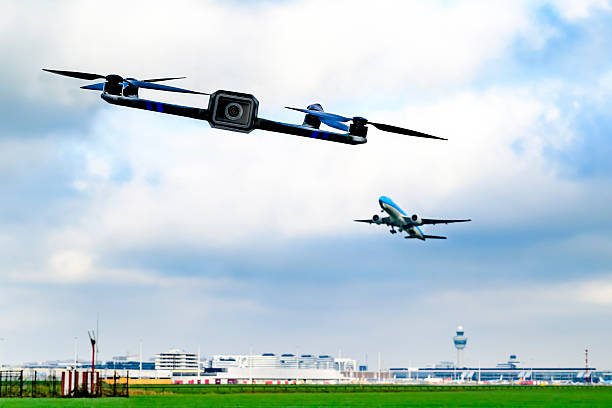
Surveillance is changing, and it’s happening faster than a lot of people expected. Security Drones are becoming a serious part of that shift, moving beyond the idea of simple cameras flying around a site. They can watch large areas, respond to incidents, and give security teams a view that fixed cameras simply can’t provide. It’s not science fiction anymore. The technology is already being used in real places, for real security problems.
For businesses, industrial sites, warehouses, construction projects, and even large public spaces, that matters. Traditional surveillance still has its place, obviously. But when something happens outside the camera’s field of view, there isn’t much it can do. A drone can move.
Why Security Drones Are Becoming More Useful
One of the biggest advantages of drone-based surveillance is coverage. A fixed camera might monitor one gate, entrance, or section of a property. A security drone can cover much more ground, especially when the area is difficult or expensive to monitor with a large number of cameras.
That makes a difference for places like energy facilities, ports, mines, farms, and large warehouses. These sites can stretch over huge areas. Security guards can’t realistically stand everywhere at once.
Drones can patrol certain areas on a schedule, or be sent to a location when an alert comes in. That second use is especially interesting. Instead of sending a person across a large property just to check whether an alarm is genuine, a drone can get there first.
If nothing is happening, the security team doesn’t waste time. If there is a real problem, they have video information before arriving. Simple idea, but pretty useful.
The Role of AI in Drone Surveillance
The drone itself is only part of the story. Modern surveillance systems are increasingly being connected with artificial intelligence, sensors, thermal cameras, GPS and automated flight systems.
AI can help identify unusual movement or distinguish between people, vehicles, and other objects. Thermal imaging can also make a big difference at night or in poor visibility. A person hiding behind equipment might not show up clearly on a normal camera, but heat signatures can tell a different story.
This doesn’t mean AI is going to replace security workers. That idea gets thrown around a lot, and it’s probably too simplistic. Human judgment still matters. What the technology can do is handle the boring, repetitive part of surveillance and flag things that deserve attention.
That can make security operations quicker without simply adding more people to the payroll.
UAS Hardware Is Improving Too
The other piece that often gets overlooked is the hardware. Better UAS Hardware is making these systems more practical for everyday security operations.
Modern unmanned aircraft can carry better cameras, longer-lasting batteries, stronger communication equipment and additional sensors without becoming completely impractical to operate. Battery life is still a limitation, of course. Anyone claiming drones can stay in the air forever is selling a fantasy.
Still, improvements are happening. Better power systems, lighter components, and more capable onboard computers are helping drones stay useful for longer periods.
There is also more focus on docking stations and automated charging. A drone can return to a designated station, recharge, and be ready for another patrol. That starts to change the economics of drone surveillance. It becomes less of a gadget that a security officer manually flies and more of an ongoing security system.
Drones Can React Faster Than Traditional Surveillance
Speed is another major reason drone surveillance is getting attention.
Imagine an alarm goes off on the far side of a large industrial property. A guard might need several minutes to reach the location. A drone can potentially get there much faster and send live footage back to the control room.
That early information can be valuable. Security staff can see whether there is an intruder, a vehicle, a damaged fence, smoke, or something completely harmless.
And sometimes the answer really is “nothing happened.” That’s still useful.
Faster verification means fewer unnecessary responses and better use of security resources. In higher-risk environments, those extra minutes could be much more important.
The Challenges Shouldn’t Be Ignored
Drone surveillance isn’t perfect, and pretending otherwise would be a mistake.
Privacy is one obvious concern. People are understandably uncomfortable with flying cameras watching public or private spaces. Regulations around drone operations also vary, and security companies have to understand where and how these systems can legally be used.
Weather can be another problem. Strong winds, heavy rain and extreme temperatures can affect flight performance and battery life. Cybersecurity matters too. A connected drone is still a connected device, which means it needs proper protection from hacking, interference and unauthorized access.
There is also the question of cost. Buying a drone is one thing. Building a reliable system around it is another. Operators, maintenance, software, training and compliance all add up.
So, no, drones aren’t going to magically fix every security problem.
What the Future Looks Like for Drone-Based Security
The future will probably involve a mix of technologies rather than drones replacing everything else. Fixed cameras, access control, human guards, alarms, and aerial surveillance can all work together.
As autonomous flight improves, drones may become more capable of handling routine patrols with less human involvement. A security operator could monitor several drone systems from one location, stepping in when something unusual happens.
That is where things get interesting. The value isn’t really in having a flying camera. It’s in having another layer of information and response available when security teams need it.
For large properties especially, that can be a big deal.
Conclusion
Security is moving toward systems that can see more, respond faster, and make better use of limited resources. Security Drones are becoming part of that future because they offer something traditional surveillance often can’t: mobility.
The technology still has weaknesses, from battery limits to privacy concerns and the need for better UAS Hardware. But those issues are being worked on, and the technology is getting more capable.
The bigger change may be that surveillance is no longer tied to a wall, pole, or fixed camera position. It can move. It can investigate. And when combined with AI and other security tools, that flexibility could make drone-based surveillance a normal part of protecting large and complex environments.