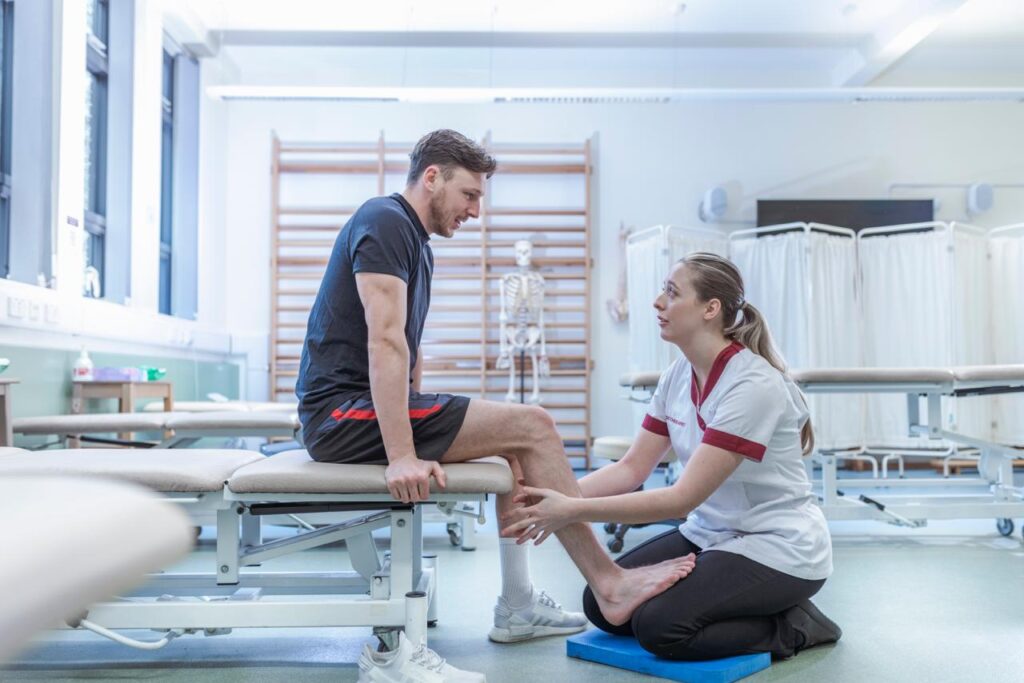
The surgery went well. But now you’re stiff, sore, and moving like someone twice your age.
This is one of the most common post-operative experiences — and one of the most treatable. Stiffness and pain after surgery aren’t just discomfort to endure. They’re clinical problems with specific causes, and a best physiotherapist in Noida addresses them systematically rather than waiting for them to resolve on their own.
Because here’s the reality: they often don’t resolve on their own. Not fully. Stiffness that isn’t actively managed in the early weeks after surgery can become a long-term restriction. Pain that’s left unaddressed changes how you move, and altered movement patterns create secondary problems that outlast the original surgery by years.
This article explains exactly what causes post-surgical stiffness and pain, what physiotherapists do about it, and what you can do to support your own recovery between sessions.
What Actually Causes Stiffness and Pain After Surgery
Understanding the cause helps you take the treatment seriously. There are several distinct mechanisms at work.
Inflammation and Fluid Accumulation
Surgery — even minimally invasive surgery — triggers an inflammatory response. This is normal and necessary for healing. But inflammation brings fluid into the tissues, and that fluid increases pressure, limits movement, and contributes directly to both pain and stiffness.
Swelling in a joint actively inhibits the muscles around it. This isn’t just discomfort — it’s a measurable neurological effect. Quadriceps inhibition after knee surgery is a well-documented example: the quad shuts down proportionally to the amount of fluid in the knee joint, regardless of whether the muscle itself was touched during the operation.
Scar Tissue Formation
The body repairs surgical incisions and tissue disruption by laying down collagen — scar tissue. This is how healing works. The problem is that early scar tissue is disorganized and adhesive. It can bind to surrounding structures — tendons, joint capsules, fascia, nerves — creating restrictions that limit movement and generate pain with normal activities.
If this scar tissue isn’t managed while it’s still malleable — roughly within the first 8–12 weeks — it matures into a more permanent restriction that’s much harder to shift.
Muscle Inhibition and Weakness
Muscles weaken rapidly after surgery, through a combination of disuse, pain inhibition, and the neurological shutdown response described above. Research shows measurable strength loss within the first few days of immobilization — and significant weakness can develop within 1–2 weeks.
Weak muscles around a joint don’t protect it properly. They can’t absorb load normally, which means the joint itself bears more stress than it should — which produces pain with movement.
Joint Capsule Tightening
Immobilization causes the joint capsule — the fibrous tissue encasing the joint — to tighten and lose elasticity. This is particularly significant after shoulder surgery, where frozen-shoulder-like stiffness can develop surprisingly quickly if range of motion work isn’t started appropriately.
Capsular tightening produces a characteristic pattern of movement restriction that responds well to manual therapy but becomes increasingly resistant to treatment the longer it’s left.
How the Best Physiotherapist in Noida Addresses Post-Surgical Stiffness
Manual Therapy — Working Directly With Restricted Tissue
Manual therapy is one of the primary tools physiotherapists use to reduce stiffness after surgery. It encompasses several distinct techniques, each targeting a different aspect of the problem.
Joint mobilization involves gentle, graded oscillatory movements applied to the joint to restore normal arthrokinematics — the small accessory movements within the joint that must be present for full, pain-free range of motion. These movements can’t be achieved through exercise alone. They require hands-on input from a physiotherapist.
Soft tissue mobilization addresses the muscles, fascia, and connective tissue around the surgical site — releasing areas of tension and restriction that limit movement and contribute to pain.
Scar tissue management begins once the surgical wound has sufficiently closed — typically 2–3 weeks post-operatively. The physiotherapist works directly on and around the scar, mobilizing the tissue to prevent adhesion formation and encourage the collagen fibers to align in directions that permit normal movement.
Done consistently in the first 8–12 weeks, scar tissue management can make a significant difference to long-term flexibility and comfort. Left untreated, the same tissue can produce restrictions that are noticeable for years.
Therapeutic Exercise — Restoring Strength and Movement
Exercise in post-surgical physiotherapy isn’t general fitness work. It’s carefully selected, precisely dosed, and progressively loaded based on where you are in the healing process.
Early on, the focus is neuromuscular activation — getting the inhibited muscles to fire again. This might look like simple isometric contractions, but these exercises are doing important work: re-establishing the communication between the nervous system and the muscles that switched off after surgery.
As healing progresses, exercises become more demanding — isotonic strengthening, closed-chain loading, balance and proprioception work. Each stage builds on the previous one, and the progression is guided by how your body is actually responding rather than a fixed calendar.
Electrotherapy and Pain Modulation
Several electrotherapy modalities are used to manage pain and support healing in the post-surgical period.
TENS (Transcutaneous Electrical Nerve Stimulation) works by stimulating sensory nerve fibers to modulate pain signals — effectively reducing the pain experience without medication. It’s particularly useful for managing background pain between sessions.
Ultrasound therapy uses sound waves to promote tissue healing and reduce inflammation in deeper structures. Evidence for its efficacy varies by condition, so a good physiotherapist uses it selectively rather than as a default.
Neuromuscular electrical stimulation (NMES) uses electrical current to produce muscle contractions in inhibited muscles — particularly useful for quadriceps reactivation after knee surgery when voluntary contraction is significantly impaired.
Swelling Management Techniques
Reducing swelling is a priority in the early post-operative weeks because swelling directly drives both pain and muscle inhibition. Physiotherapists use several approaches.
Compression — bandaging or compression garments — reduces fluid accumulation and supports venous return. Correctly applied, it makes a measurable difference to swelling levels.
Elevation combined with active movement (ankle pumps, for example) uses the muscle pump mechanism to move fluid out of the limb more effectively than rest alone.
Manual lymphatic drainage — a specific gentle massage technique — is used in some post-surgical cases to promote lymphatic flow and reduce persistent swelling.
Post Surgical Physiotherapy in Noida — Procedure-Specific Approaches
Different surgeries create different stiffness and pain patterns. Here’s how post surgical physiotherapy in Noida addresses the most common ones.
After Knee Surgery
Knee replacement and ACL reconstruction both produce significant stiffness — but for slightly different reasons and requiring somewhat different approaches.
After knee replacement, regaining flexion range is the primary challenge. The target is typically 0–90 degrees within the first two weeks, and 120+ degrees by 6–8 weeks. Falling short of these benchmarks significantly impacts function — particularly stair climbing, which requires around 100 degrees, and comfortable sitting, which needs more.
Manual joint mobilization of the tibiofemoral and patellofemoral joints, combined with progressive flexion exercises, is the standard approach. Scar management along the anterior knee is also important because the surgical incision here can restrict patellar mobility if adhesions form.
After ACL reconstruction, the challenge in the first phase is achieving full extension — which actually requires more active attention than flexion in the early weeks. A reconstructed knee that lacks full extension develops a characteristic gait pattern that creates secondary problems in the hip and lower back.
After Shoulder Surgery
The shoulder is probably the joint most vulnerable to post-surgical stiffness. The capsule tightens quickly with immobilization, and the surrounding muscles — particularly the rotator cuff and periscapular muscles — weaken rapidly.
Physiotherapy typically begins within days of shoulder surgery with pendulum exercises and passive range of motion work. The progression from passive to active-assisted to active movement is carefully timed based on the specific procedure and surgeon’s protocol.
Manual therapy to the glenohumeral joint and surrounding soft tissue, combined with progressive rotator cuff and scapular strengthening, is the core of shoulder rehabilitation. Getting the scapular stabilizers functioning properly is often what makes the difference between a shoulder that recovers full function and one that remains symptomatic despite adequate rotator cuff strength.
After Spinal Surgery
Post-surgical stiffness after lumbar procedures — discectomy, fusion, laminectomy — presents differently from limb surgery. The primary concern isn’t usually joint range of motion but rather the loss of spinal control and the development of protective muscle guarding.
After spinal surgery, the paraspinal muscles often go into protective spasm — tight, tender, and limiting movement. This guarding is a protective response, but it can persist well beyond the healing period if not addressed.
Physiotherapy focuses on graduated mobilization, soft tissue release of the paraspinal muscles, and early introduction of deep stabilization exercises targeting the transversus abdominis and multifidus — the muscles that provide segmental spinal control. These muscles are the foundation of a spine that moves freely and with confidence.
What a Good Physiotherapy Centre in Noida Provides for Post-Surgical Patients
A Structured, Phased Program
Post-surgical rehabilitation needs clear phases with specific goals for each. A quality physiotherapy centre in Noida doesn’t put every patient on the same generic program — they build a plan around your specific procedure, surgeon’s protocol, and personal goals.
Regular Objective Assessment
Progress should be tracked with objective measures — not just “how are you feeling today.” Range of motion measurements, strength testing, functional benchmarks. These tell you honestly whether you’re on track and flag issues early if you’re not.
Clear Communication With Your Surgeon
The physiotherapy program needs to align with what your surgeon has specified. Any good physiotherapy centre maintains this communication — respecting post-operative precautions, staying within the permitted parameters, and referring back to the surgical team if complications arise.
MotionRX coordinates closely with referring surgeons to ensure post-surgical programs are both safe and optimally progressive. That communication loop matters more than most patients realize.
Practical Tips to Manage Stiffness and Pain Between Sessions
Your physiotherapist sees you 2–3 times a week. What you do on the other days matters.
Use ice consistently in the early weeks. 15–20 minutes of ice over the surgical site after exercise or activity significantly reduces post-exercise swelling and pain. Don’t underestimate how much this helps.
Do your home exercises every day. Not on the days you feel like it. Every day. The compounding effect of daily exercise on tissue healing and strength rebuilding is significant — skipping days slows progress in ways that are hard to recover.
Elevate the limb when resting. Gravity works against you when you’re sitting or lying with a limb dependent. Keep it elevated — above heart level if you can — to reduce fluid accumulation.
Move within permitted ranges rather than staying still. Gentle movement within safe parameters promotes circulation, prevents further stiffening, and maintains the neurological connection to the muscles. Rest is necessary but shouldn’t be total.
Report pain that changes character. Some pain and discomfort during rehabilitation is expected. Pain that becomes significantly worse, is associated with increased swelling or warmth, or develops a new character — these warrant prompt communication with your physiotherapist and potentially your surgeon.
When Stiffness After Surgery Is a Red Flag
Most post-surgical stiffness is manageable with physiotherapy. But some presentations warrant medical review rather than just physiotherapy management.
Increasing warmth, redness, and swelling at the surgical site — particularly with fever — suggest possible infection. This needs urgent medical assessment.
Stiffness that worsens significantly despite consistent physiotherapy, or that is associated with severe night pain, may indicate complications like heterotopic ossification (abnormal bone formation) or implant issues after joint replacement. These need imaging and surgical team review.
A good physiotherapist recognizes these patterns and refers appropriately. MotionRX treats post-surgical rehabilitation as a clinical responsibility — which means knowing when the problem is beyond physiotherapy’s scope and acting on that clearly.
Conclusion
Post-surgical stiffness and pain are predictable, treatable, and in many cases preventable with the right physiotherapy approach started at the right time.
The best physiotherapist in Noida doesn’t just supervise exercises — they actively work the restricted tissue, manage the pain drivers, and guide your body through each phase of healing with clinical precision. That active, hands-on approach is what separates rehabilitation that restores full function from recovery that stops at “good enough.”
If you’ve had surgery or are planning one, take the rehabilitation as seriously as the procedure itself. It’s where your actual recovery happens.