Planning a backyard upgrade involves more than picking out a grill. An outdoor kitchen needs the right appliances, durable materials, adequate workspace, and proper utility connections. Understanding outdoor kitchen appliance costs before construction begins helps you set a realistic budget and avoid paying for features you don’t need.
The final price depends on the size of your kitchen, the appliances you choose, and the work required to prepare your backyard. The best approach is to plan your appliance package alongside the layout instead of treating it as a last-minute decision.
What Drives the Cost of an Outdoor Kitchen?
The biggest expenses usually come from construction, appliances, countertops, cabinetry, and installation. However, the amount you spend in each area depends on your priorities.
A simple grill station requires less work than a custom-built kitchen with refrigeration, multiple cooking appliances, and extensive counter space. Likewise, an island built near existing utility connections may require less additional work than one located farther from the house.
Before comparing contractor estimates, make sure each quote covers the same items. Some proposals include appliances and installation, while others cover only the structure and countertops. Comparing the complete project cost gives you a clearer picture of what you’re paying for.
Which Outdoor Kitchen Appliances Are Worth the Investment?
Your appliance choices should reflect how you plan to use the space. Start with the equipment you’ll use regularly, then consider additional features as your budget allows.
A Built-In Grill
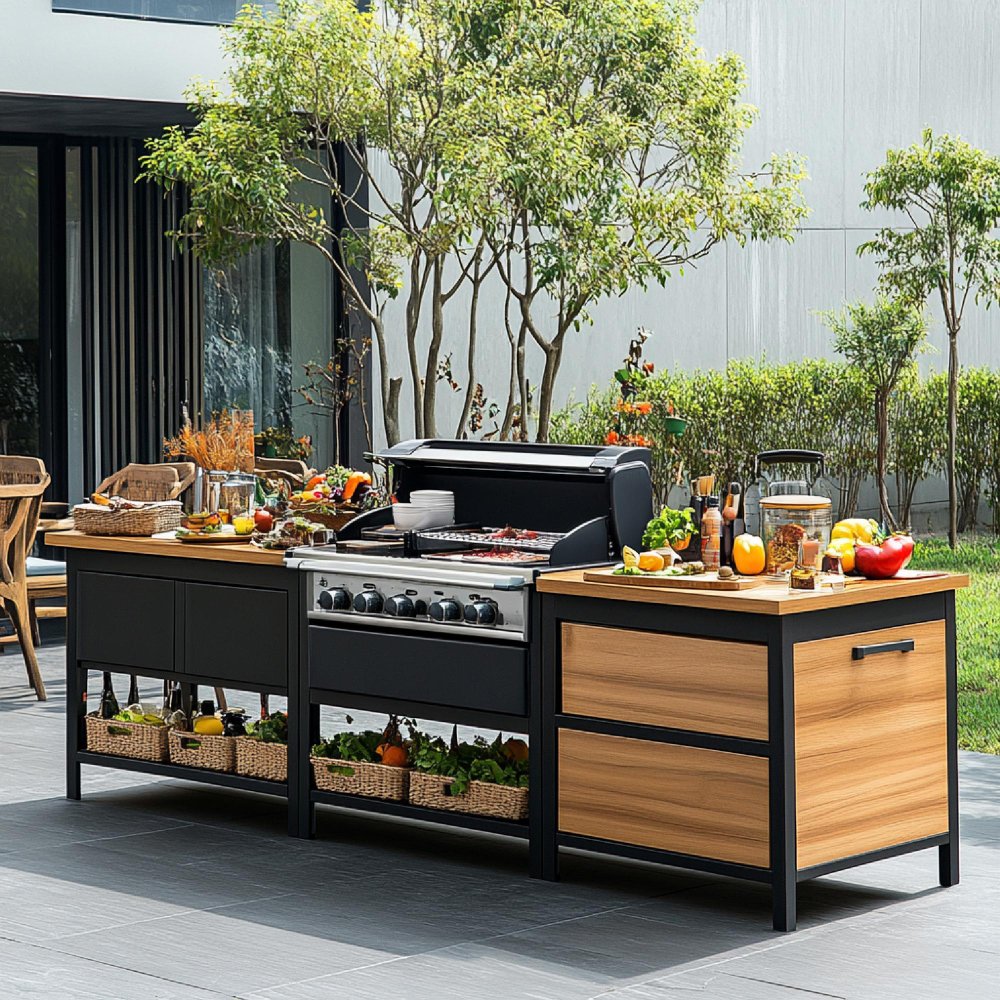
The grill is often the centerpiece of an outdoor kitchen. Cooking area, heat control, construction quality, and fuel type all affect your decision. Choose a model that suits your cooking habits rather than paying for features you rarely use.
A quality grill also needs adequate clearance, ventilation, and a properly designed installation space. Confirm these requirements before finalizing the island dimensions.
Outdoor Refrigeration
An outdoor-rated refrigerator keeps drinks and ingredients close to the cooking area. This can be especially useful when you’re entertaining guests or preparing a full meal outside.
However, outdoor refrigerators add to both the appliance budget and electrical requirements. Consider how frequently you’ll use one before making it part of your initial installation.
Side Burners and Specialty Cooking Appliances
Side burners, pizza ovens, and smokers can expand your cooking options. Still, each addition requires space and increases the overall investment.
Prioritize appliances that complement your grill and cooking style. A well-planned setup with fewer, carefully selected appliances can be more useful than a crowded island filled with equipment.
Don’t Overlook Construction and Installation Costs
Appliances are only one part of the budget. The island, cabinets, countertops, plumbing, electrical work, and gas connections can significantly affect the final price.
Material selection matters, too. Outdoor cabinetry and countertops must withstand changing temperatures, moisture, and regular exposure to the elements. Choosing materials based only on appearance can lead to higher maintenance costs later.
In addition, finalize your appliance specifications before construction begins. Grill dimensions, refrigerator openings, ventilation requirements, and utility locations should be incorporated into the design. Otherwise, you may face costly modifications after the cabinets or countertops are installed.
Ask your contractor to separate construction, appliances, utility work, and installation in the estimate. This makes it easier to compare proposals and identify where adjustments could bring the project within budget.
What Should St. Louis Homeowners Consider?
Missouri’s changing seasons make weather protection an important part of outdoor kitchen planning. Summer heat, rain, and winter freezes can affect appliance performance and long-term durability.
Choose appliances specifically designed for outdoor use. Indoor refrigerators and other indoor-rated products aren’t automatically suitable for backyard installations.
Water lines also need attention before winter. Discuss drainage and winterization with your contractor to reduce the risk of freeze damage. In addition, confirm the manufacturer’s requirements for appliance covers, ventilation, clearances, and maintenance.
Planning for seasonal conditions from the beginning helps protect your investment and keeps your outdoor kitchen ready for future use.
Where Can You Save on Your Outdoor Kitchen?
The easiest way to control costs is to distinguish essential features from optional upgrades. Start with a dependable grill, sufficient counter space, and practical storage. Then add refrigeration or specialty appliances if they support the way you entertain.
You can also control expenses by keeping the layout practical and selecting materials that balance durability with your budget. Most importantly, avoid changing appliance sizes or configurations after construction starts.
A clear appliance plan helps your contractor prepare an accurate estimate and reduces the chance of unexpected changes during installation.
Plan Your Outdoor Kitchen With AUTCOhome
Understanding outdoor kitchen cost helps you make informed decisions about appliances, construction, and installation before work begins. The right combination of cooking equipment, durable materials, and thoughtful planning can help you create an outdoor kitchen that fits your budget and entertaining needs.
Explore AUTCOhome’s outdoor kitchen appliance collection to compare options for your project. You can also visit the St. Louis showroom to discuss your plans and get guidance on selecting appliances for your outdoor cooking space.