Electric vehicles are becoming more common on Long Island, and many homeowners want the ease of charging at home. Proper electrical planning matters because an EV charger can add a steady load to a home’s electrical system. BiCounty Electric helps homeowners understand their electrical needs and complete new electrical work with care.
What Should Homeowners Know Before Installing an EV Charger?
Before installing EV chargers in Nassau County, a homeowner should have the existing electrical system checked by a qualified electrician. The right setup depends on the home’s electrical service, available capacity, wiring, panel condition, and the charger’s requirements.
A charger is not simply another appliance that can always be plugged into an existing outlet. Some home charging systems require a dedicated circuit and suitable wiring. The electrical installation should match the charger’s specifications and the home’s existing system.
A professional assessment can help identify:
- The available electrical capacity
- The condition of the existing panel
- The correct circuit requirements
- The best location for the charger
- The required wiring and electrical equipment
- Any service upgrade or new work that may be needed
This step can also help homeowners avoid choosing a location before they know what the electrical work will involve.
How Can an Electrician Prepare a Home for EV Charging?
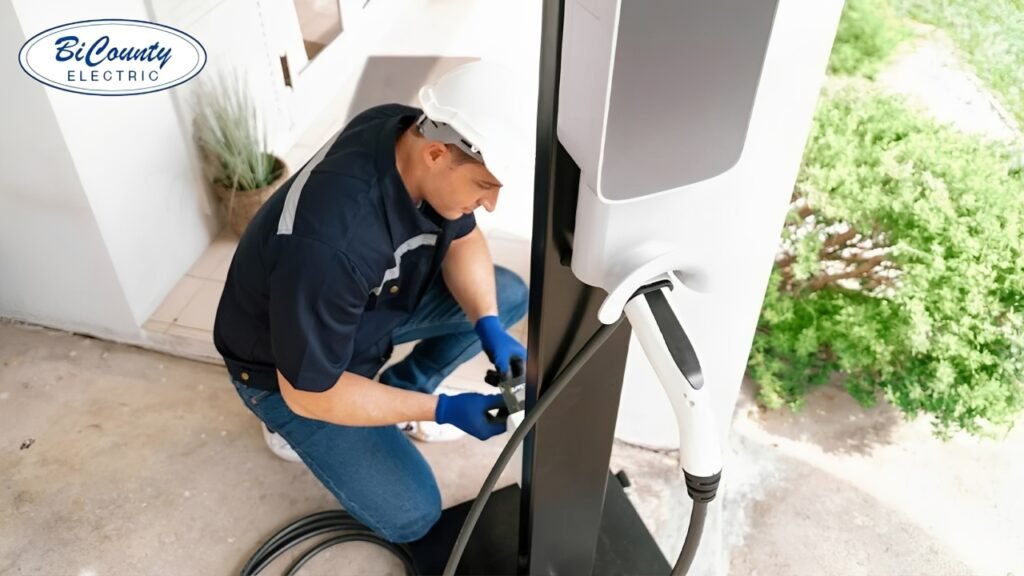
A home EV charging project should begin with planning, not guesswork. A licensed electrician can review the electrical system and determine what work is needed to support the charger safely.
The charger location also matters. Homeowners may want a garage, driveway, or another convenient parking area. The electrical route from the panel to the charging location should be planned carefully. This can affect the type of wiring, equipment, and installation work required.
A typical project may involve:
- Reviewing the home’s electrical service.
- Checking the electrical panel and available capacity.
- Identifying the charger’s electrical requirements.
- Planning the circuit and wiring route.
- Installing the required electrical equipment.
- Testing the completed work.
Good electrical work should also leave the homeowner with a clear understanding of how the new system operates.
For homeowners looking for a Residential Electrician in Bellmore, experience with residential electrical work can make the process easier. BiCounty Electric has served Long Island customers since 1958 and provides residential electrical services, including repairs, renovations, service upgrades, and new work.
What Electrical Issues Can Affect Home EV Charging?
An older electrical system may need attention before it can support a new charging setup. This does not mean every older home needs major electrical work. Each property should be assessed on its own electrical condition and requirements.
Some common issues include:
| Electrical consideration | Why it matters |
| Panel capacity | The panel must support the added electrical load |
| Existing wiring | Wiring should be suitable for the planned circuit |
| Circuit requirements | The charger may require a dedicated circuit |
| Charger location | The distance and route can affect installation |
| Older equipment | Existing components may need evaluation |
| Service capacity | Some homes may require additional electrical work |
A professional inspection helps separate what is required from what is simply optional. That gives homeowners a clearer picture before work begins.
EV charging also creates a regular electrical demand. Unlike a small device that operates for a short time, a vehicle charger may draw power for an extended period. Proper circuit planning is therefore an important part of the installation.
Why Choose BiCounty Electric for Residential Electrical Work?
BiCounty Electric is a family-owned electrical company that has served Long Island customers since 1958. The company provides residential and commercial electrical services and focuses on careful workmanship, professional service, and customer satisfaction.
Its electricians handle a wide range of electrical needs, including:
- Residential electrical repairs
- New electrical work
- Renovations
- Service upgrades
- Electrical troubleshooting
- Emergency service calls during business hours
The company states that its electricians are trained and keep up with changes in the electrical field. This matters for projects involving newer technology, such as home EV charging equipment.
For homeowners who need a Residential Electrician in Bellmore, working with an established local electrical company can also make communication easier. Every home has different wiring, panel conditions, and electrical demands. A practical assessment helps ensure the work fits the property instead of relying on a one-size-fits-all approach.
What Does BiCounty Electric Focus On?
BiCounty Electric focuses on professional electrical service for residential and commercial customers. Its customer promise centers on quality work, clear communication, and dependable service.
The company’s broader electrical services include:
- Repairs
- Renovations
- New work
- Service upgrades
- Emergency services during business hours
This approach also applies to newer electrical needs. As more homeowners consider electric vehicles, the electrical side of home charging deserves the same careful attention as any other home improvement project.
What Should You Ask Before Starting an EV Charger Project?
Homeowners can make the planning process easier by asking a few practical questions before work begins.
Can my current electrical system support an EV charger?
An electrician can inspect the existing service, panel, and wiring to determine what the property can support.
Does the charger need its own circuit?
The answer depends on the specific charger and its electrical requirements. The installation should follow the manufacturer’s requirements and applicable electrical standards.
Where should the charger be installed?
The best location depends on parking habits, vehicle access, electrical panel location, and the practical route for the wiring.
Will my home need electrical upgrades?
Not every home requires an upgrade. An electrician should evaluate the existing system before recommending additional work.
Can I use an existing outlet?
That depends on the charger and the outlet’s electrical rating and circuit. A qualified electrician should determine whether the existing setup is appropriate.
The Bottom Line
Home EV charging starts with the electrical system. Before installing EV chargers in Nassau County, homeowners should understand their property’s electrical capacity, charger requirements, wiring needs, and installation location.
BiCounty Electric brings decades of Long Island electrical experience to residential projects. Since 1958, the family-owned company has served customers with repairs, renovations, new work, service upgrades, and other electrical needs. Homeowners can contact BiCounty Electric to discuss their electrical project and get professional guidance based on their home’s specific needs.