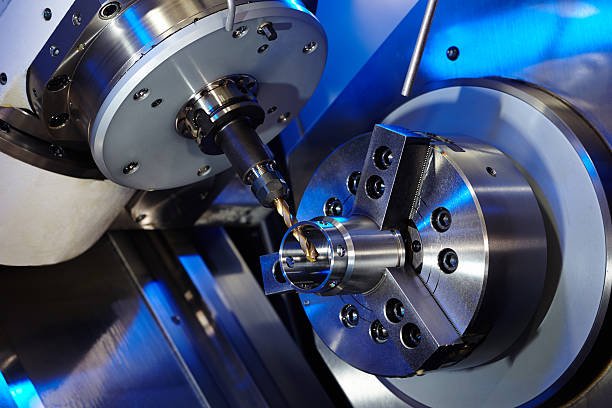
Modern manufacturing has little room for guesswork. Customers expect parts to fit properly, perform consistently, and arrive on time, while manufacturers are under constant pressure to keep costs under control. This is where cnc precision turned parts have become so useful. These components are produced with computer-controlled turning equipment that can hold tight tolerances and repeat the same machining process again and again. That matters when a single small error can throw off an entire assembly. Truth is, precision machining isn’t just about making a part look neat. It is about making production more predictable. Less variation, fewer surprises, and better results from one batch to the next. For modern factories, that kind of consistency can make a bigger difference than people realise.
Better Accuracy Means Fewer Production Problems
One of the biggest advantages of precision turning is accuracy. CNC equipment follows programmed instructions rather than relying entirely on manual adjustments, which helps control dimensions, cutting paths, speeds, and feeds. The result is a much tighter level of consistency across a production run. Think about components such as shafts, pins, bushings, threaded parts, fittings, or small cylindrical housings. If one dimension is slightly off, the part may still look fine but fail during assembly. That’s where problems start. CNC turning reduces that risk by producing components according to the same digital specifications each time. Operators still matter, obviously. Machines don’t magically solve everything. But when the setup, tooling, material, and programming are right, the process becomes much more stable and repeatable.
Higher Productivity Without Cutting Corners
Speed is another reason CNC-turned components fit modern manufacturing so well. A CNC lathe can perform cutting operations quickly and maintain a consistent cycle, especially when producing repeated batches. Once a job is properly programmed and set up, the machine can continue producing parts with relatively little manual intervention. This doesn’t mean every job becomes lightning fast. Complex components still take time, and rushing a machining process is usually a bad idea. But compared with heavily manual production, automated turning can reduce unnecessary handling and downtime. It also allows skilled machinists to focus on setup, inspection, tooling decisions, and solving actual production issues instead of constantly making basic manual cuts. That shift is important. You’re getting more useful work out of the same production resources.
Less Waste, Lower Costs Over Time
Nobody in manufacturing wants to throw expensive material into a scrap bin. Yet material waste happens when machining isn’t controlled properly. CNC precision turning can help reduce this by following accurate tool paths and repeatable machining parameters. The machine removes material where it is supposed to, rather than relying on repeated manual corrections. There can also be savings beyond the raw material. Fewer defective components mean less rework, fewer rejected assemblies, and less time spent investigating why a batch went wrong. The short answer is, better process control can reduce the hidden costs that don’t always appear on the original quotation. Labour, inspection, delays, and replacement parts all add up. A slightly more efficient machining process can therefore have a surprisingly big effect on the final production cost.
Consistency Makes Assembly Easier
Modern products are often built from dozens, hundreds, or even thousands of individual components. They all need to work together. A precision-turned component that consistently meets its drawing requirements is much easier to integrate into an assembly line. There is less need for workers to sort parts manually or make small adjustments just to get components to fit. This is particularly important in industries where tolerances are tight and reliability matters, such as automotive, medical equipment, electronics, aerospace, and industrial machinery. CNC machining supports this consistency because the same programmed process can be repeated across production batches. If the design changes, the CNC program can also be updated rather than rebuilding an entire manual process from scratch. It’s not glamorous, maybe, but that flexibility is valuable when products keep changing.
Where Swiss CNC Machining Fits In
For very small, detailed, or complex components, standard CNC turning isn’t always the whole answer. This is where swiss cnc machine contract manufacturers can bring something different to the table. Swiss-style machining is designed around high-precision work, particularly where components have long, slender profiles or require several machining operations. The material is supported close to the cutting tool, which can help control deflection while maintaining accuracy. That’s useful for miniature shafts, medical components, connectors, precision fasteners, and other difficult little parts. Contract manufacturing also gives businesses access to specialised equipment without having to buy and maintain every machine themselves. Let’s be real, CNC equipment isn’t cheap, and neither is the skilled labour needed to run it properly. Outsourcing certain work can make financial sense, especially when production volumes or technical requirements don’t justify bringing everything in-house.
Automation Helps Manufacturers Stay Flexible
Another important benefit is adaptability. Manufacturing today isn’t always about producing one product in huge quantities for years. Companies may need smaller batches, frequent design changes, custom dimensions, or several versions of the same component. CNC machining handles these changes more easily than many traditional production methods. A new digital drawing or updated program can change the machining process without completely rebuilding the production setup. Tooling may still need adjustment, of course, and testing is necessary before full production. But the basic workflow is flexible. That makes CNC turning useful for both established manufacturers and businesses developing new products. Prototypes can be refined, production parts can follow, and design improvements can be introduced without starting from zero every time. That flexibility is a big deal in markets where customer demands can change quickly.
Quality Control Becomes More Reliable
Precision machining is only useful if manufacturers can prove the parts are actually within specification. Modern CNC production often works alongside inspection equipment such as coordinate measuring machines, optical systems, gauges, and other measurement tools. These checks help identify dimensional issues before faulty parts move further down the production line. In a well-managed operation, inspection isn’t treated as an afterthought. Measurements can be used to monitor trends and catch tooling wear before it creates a larger batch problem. That is one of the quiet advantages of CNC manufacturing. You’re not simply making parts faster. You’re building a production process that can be measured, monitored, and improved. Of course, good inspection still requires experienced people. A machine can produce the same mistake very efficiently if nobody checks what’s happening.
Conclusion: Precision Supports Smarter Manufacturing
CNC precision turning has become an important part of modern manufacturing because it brings together accuracy, repeatability, productivity, and flexibility. It can help manufacturers reduce waste, control production costs, simplify assembly, and produce demanding components with consistent dimensions. For specialised projects, swiss cnc machine contract manufacturers can also provide the precision machining expertise needed for complex and tight-tolerance components. More importantly, it supports a manufacturing approach based on predictable processes rather than constant correction. That’s the real value. CNC machining isn’t a magic fix for poor planning, bad materials, or weak quality control. Those problems still need to be dealt with. But when the process is properly engineered and managed, precision-turned components can make production considerably more dependable. And in a manufacturing environment where time, quality, and cost are always being watched, dependable is exactly what you want.