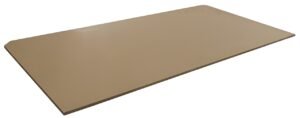
A tidy workshop is not simply a space with fewer items on display. It is a place where staff can locate parts quickly, return tools consistently and notice when stock is running low. The 276-1186 Storage Rack Shelf helps address this everyday challenge by providing a practical surface for an existing compatible storage frame.
Designed as a replacement or additional shelf-board set, the 276-1186 Storage Rack Shelf from RS PRO contains five brown MDF panels. Manufacturer documentation identifies each board as 900 × 300 × 4 mm and lists compatibility with the RS PRO 276-1185 metal storage rack. It is a board set, not a complete shelving unit.
Why Does a Simple Rack Shelf Make a Difference?
Storage performance often depends on small details. A shelf that fits correctly keeps cartons, trays and equipment within reach while helping a team assign a consistent home to frequently used items.
MDF, or medium-density fibreboard, is made from fine wood fibres compressed into a relatively uniform panel. Its smooth, knot-free surface is useful for organised indoor shelving and can be machined where an appropriate installation permits modification.
Understanding the 276-1186 Specifications
Before selecting the board set, confirm these details against the intended rack:
- Brand and part number: RS PRO 276-1186.
- Product format: A pack containing five separate shelf boards.
- Material and finish: Brown medium-density fibreboard.
- Nominal board dimensions: 900 mm long, 300 mm deep and 4 mm thick.
- Recommended pairing: RS PRO metal rack 276-1185 or a suitably matched 900 × 300 mm shelving arrangement.
The panel dimensions describe the boards only. They do not establish a safe loading limit, which depends on the supporting frame, shelf engagement and the load distribution.
How Can Better Shelf Planning Speed Up Work?
Consider a maintenance technician collecting washers, connectors and spare fittings for a repair. If every item has a labelled location, preparation becomes quicker and less dependent on one person’s knowledge.
Rather than filling every available centimetre, group items by how they are used. Keep frequently requested supplies at comfortable reaching height, protect fragile packages and reserve lower positions for heavier approved loads.
Build Zones Around Everyday Tasks
An effective layout can follow a few straightforward principles:
- Put fast-moving consumables near the point of use.
- Separate clean electrical parts from dusty workshop materials.
- Leave visible space for labels, stock counts and safe handling.
- Store awkward or unstable items in suitable containers.
- Review shelf positions when stock patterns change.
This approach supports a clearer workflow in repair workshops, school maintenance rooms, service depots and small industrial stockrooms.
Which Storage Accessories Work Well with Shelf Boards?
Flat shelving works particularly well when loose items have their own containers. For instance, Storage Boxes can group similar spare parts while making it easier to remove a complete kit for a specific task.
Storage Bins can also separate nuts, bolts and small maintenance consumables, provided their dimensions and combined weight suit the rack. Meanwhile, Tool Boxes give technicians a portable option for tools that regularly move between workstations.
Labelling each location creates another benefit: staff can spot missing or incorrectly returned items without opening every container. A simple location code often provides more value than a complicated inventory system nobody maintains.
What Should You Check Before Installing MDF Shelves?
Fit is the first consideration. Measure the supporting shelf position, check the rack model and confirm that every panel has appropriate support across its intended edges. Never assume that boards with similar nominal dimensions will fit different frame designs correctly.
Next, consider the environment. Fibreboard is generally best kept in dry indoor conditions. Persistent dampness, standing water or repeated soaking can affect the material, so a protected storage area and sensible cleaning routine matter.
Why Weight Distribution Matters
Thin panels should not be treated as heavy-duty structural platforms on their own. A concentrated load from a metal part may behave differently from the same weight spread across a broad carton.
Check the complete rack manufacturer’s loading guidance, inspect the supports and avoid exceeding any rated capacity. If a storage job involves unusually heavy equipment, select a purpose-designed shelving assembly instead of relying on the MDF board alone.
How Do You Maintain an Organised Storage Rack?
A good arrangement needs occasional attention. During routine housekeeping, check that the shelves sit securely, labels remain legible and packages have not begun to overhang the edges.
When expanding Storage Racking, maintain consistent shelf depths and verify the compatibility of every new board and support. Mixing unmatched components can create uneven surfaces or gaps that compromise safe handling.
Use a dry or lightly damp cloth for routine cleaning, and remove moisture promptly. Replace any board that shows significant swelling, cracks or deformation rather than attempting to hide damage beneath stored goods.
Make Stock Checks Part of the Layout
Assign a maximum quantity and reorder point to high-use items. Then position the label where someone can read it without shifting boxes. This small discipline helps prevent both unexpected shortages and unnecessary purchases.
For shared workspaces, agree on a simple return-to-location rule. Even an intelligently designed shelf becomes inefficient when multiple teams use different storage habits.
Is the 276-1186 Shelf Right for Your Space?
The RS PRO 276-1186 offers a practical way to refresh compatible 900 × 300 mm storage positions with five matching MDF boards. Its appeal lies in straightforward replacement, organised small-parts storage and the flexibility to plan around actual daily tasks.
For a new installation or a larger redesign, compare complete Shelving Systems alongside replacement boards to match the required dimensions, environment and certified load capacity. Good storage is ultimately measured by how safely and quickly people can find what they need.