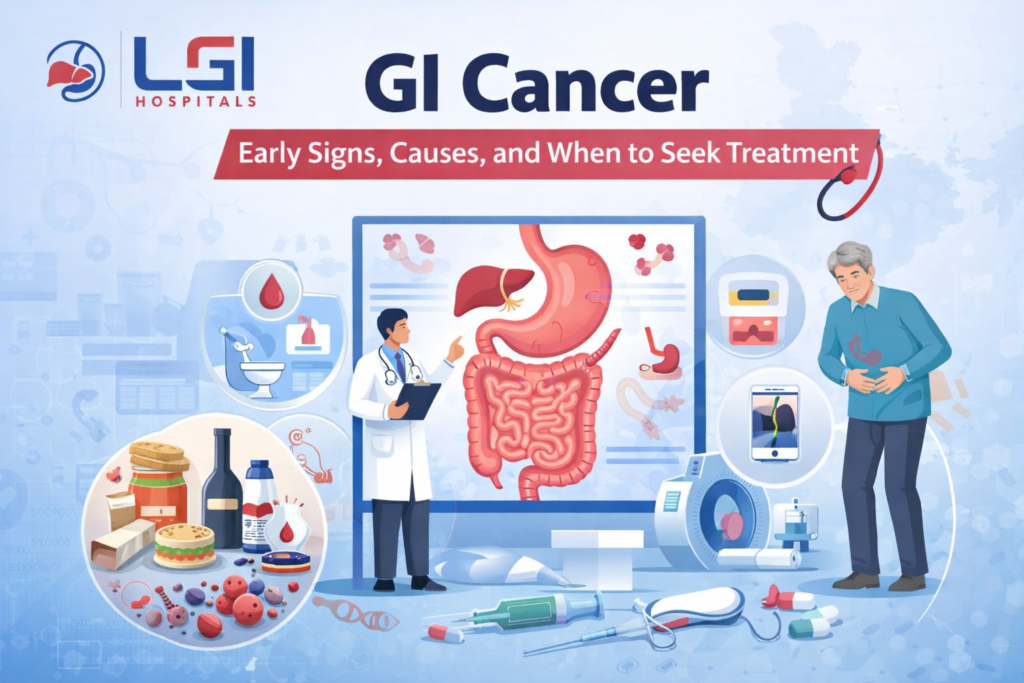
Understanding GI Cancer
GI cancer refers to cancers that affect the gastrointestinal (digestive) system, including the esophagus, stomach, liver, pancreas, small intestine, colon, and rectum. These cancers are increasingly being diagnosed in India, often due to lifestyle changes, dietary habits, and late detection.
What makes GI cancer particularly concerning is that early symptoms are often mild or ignored. Many patients mistake early signs for common digestive issues, which delays diagnosis and treatment.
At LGI Hospitals, specialists emphasize early detection and timely treatment to improve patient outcomes and quality of life.
Early Signs of GI Cancer You Should Not Ignore
Recognizing the early symptoms of GI cancer can make a significant difference in treatment success. While symptoms vary depending on the type of cancer, some common warning signs include:
- Persistent abdominal pain or discomfort
- Unexplained weight loss
- Difficulty swallowing
- Changes in bowel habits
- Blood in stool or black stools
- Ongoing fatigue or weakness
These symptoms may not always indicate cancer, but if they persist, medical evaluation is essential.
Patients experiencing such symptoms can consult a GI cancer specialist for evaluation to identify the underlying cause early.
Common Causes and Risk Factors
There is no single cause of GI cancer, but several risk factors can increase the likelihood of developing it.
Lifestyle Factors
- Smoking and alcohol consumption
- Diet high in processed or fatty foods
- Low fiber intake
Medical Conditions
- Chronic liver disease
- Inflammatory bowel disease (IBD)
- Gastroesophageal reflux disease (GERD)
Genetic Factors
Family history of gastrointestinal cancers can also increase risk.
Understanding these factors helps individuals take preventive steps and seek early medical advice when needed.
At LGI Hospitals, comprehensive screening and diagnostic services are available to assess these risks effectively.
Types of GI Cancer
GI cancer is not a single disease but a group of cancers affecting different organs in the digestive system.
Esophageal Cancer
Affects the food pipe and often presents with difficulty swallowing.
Stomach Cancer
May cause indigestion, bloating, and abdominal pain.
Liver Cancer
Often associated with chronic liver conditions.
Pancreatic Cancer
One of the more aggressive cancers, often detected late.
Colorectal Cancer
Affects the colon or rectum and may present with changes in bowel habits.
Each type requires specialized diagnosis and treatment, which is why expert care is essential.
Importance of Early Diagnosis
Early diagnosis plays a crucial role in improving survival rates in GI cancer. When detected at an early stage, many gastrointestinal cancers can be treated more effectively.
Modern diagnostic tools include:
- Endoscopy
- Colonoscopy
- Imaging tests such as CT scans and MRI
- Biopsy for confirmation
Timely screening helps detect abnormalities before they progress into advanced stages.
If you want to understand more about symptoms and prevention, you can read detailed insights on GI cancer to stay informed.
Treatment Options for GI Cancer
Treatment for GI cancer depends on the type, stage, and overall health of the patient. A multidisciplinary approach is often required.
Surgical Treatment
Surgery is commonly used to remove tumors and affected tissues.
Chemotherapy
Used to destroy cancer cells or slow their growth.
Radiation Therapy
Targets cancer cells using high-energy radiation.
Targeted Therapy
Focuses on specific cancer cells while minimizing damage to healthy tissues.
Patients can explore advanced gastrointestinal oncology treatment options to receive specialized care.
At LGI Hospitals, treatment plans are personalized to ensure the best possible outcomes for each patient.
When Should You See a Doctor?
Many people ignore digestive symptoms until they become severe. However, early consultation can prevent complications.
You should seek medical attention if you experience:
- Persistent digestive discomfort
- Sudden unexplained weight loss
- Difficulty swallowing or eating
- Blood in stool
- Chronic fatigue
Early consultation with specialists at LGI Hospitals can help detect conditions at an early stage and improve treatment success.
Prevention and Lifestyle Tips
While not all cases of GI cancer can be prevented, certain lifestyle changes can reduce risk:
- Eat a balanced diet rich in fruits, vegetables, and fiber
- Avoid smoking and excessive alcohol consumption
- Maintain a healthy weight
- Stay physically active
- Get regular health check-ups
Prevention combined with early detection is the most effective strategy against gastrointestinal cancers.
Why Specialized Care Matters
Treating GI cancer requires expertise, advanced technology, and a coordinated approach. From diagnosis to treatment and recovery, every stage requires careful planning.
At LGI Hospitals, patients receive:
- Advanced diagnostic services
- Experienced gastroenterologists and oncologists
- Personalized treatment plans
- Comprehensive post-treatment care
This integrated approach ensures that patients receive complete support throughout their treatment journey.
Final Thoughts
GI cancer is a serious condition, but early detection and proper treatment can significantly improve outcomes. Understanding the symptoms, risk factors, and available treatment options empowers individuals to take timely action.
If you or your loved ones experience persistent digestive symptoms, do not ignore them. Seeking expert care at the right time can make a life-saving difference.
With specialized services and patient-focused care, LGI Hospitals continues to provide advanced treatment and support for individuals dealing with gastrointestinal cancers.