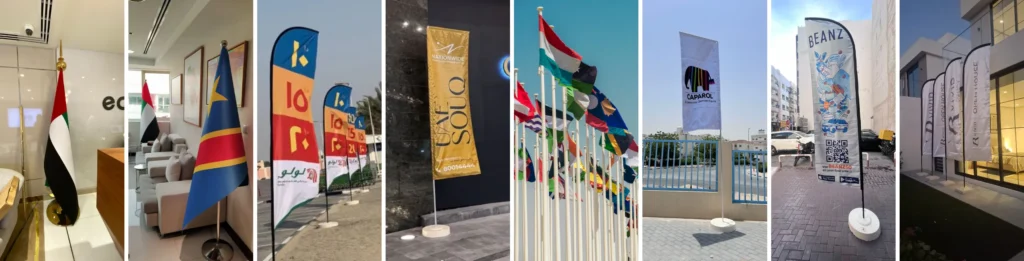
Flags are a practical way for businesses to increase visibility at entrances, exhibitions, outdoor promotions, sporting events, retail locations, and corporate gatherings. Unlike fixed signs, flags can often be moved, reused, and positioned where people are most likely to see them.
For businesses comparing custom flag printing services in Dubai for outdoor business promotion, the right choice depends on the location, available space, expected weather conditions, viewing distance, and the type of message being displayed. Different flag shapes serve different purposes, so selecting the format before designing the artwork can make the final display more effective.
Why Do Businesses Use Promotional Flags?
Business flags can perform several functions beyond simply displaying a logo. They can help identify an entrance, attract attention to a promotional area, guide visitors toward an event, or create a consistent visual identity across an outdoor space.
Common applications include:
- Retail store entrances
- Exhibitions and trade shows
- Hotels and restaurants
- Real estate developments
- Sports events
- Corporate events
- Product launches
- Outdoor promotional campaigns
- Construction and property sites
- Temporary event venues
The most suitable flag depends on how and where it will be used.
L-Shape Flags for Structured Outdoor Displays
An L-shape flag has a distinctive horizontal extension at the upper section, creating a format that can provide a relatively broad area for branding.
Businesses may consider L-shape flags for outdoor business displays when they want a flag that presents graphics in a more structured shape.
This format can work well near entrances, promotional areas, and outdoor business locations where the flag needs to complement other signs or displays.
When using an L-shape design, the artwork should account for the shape of the fabric and avoid placing important text too close to the edges.
Sail Flags for Events and Business Locations
Sail flags have a curved, flowing appearance and are commonly used where businesses want a tall vertical display that remains noticeable from a distance.
Sail flags for outdoor events and business promotion can be useful around entrances, exhibition areas, shopping locations, hospitality venues, and temporary promotional spaces.
Their vertical format provides room for a logo, short message, or simple graphic. Because people may view the flag while walking or driving past, keeping the design straightforward is generally more effective than filling the entire surface with detailed information.
Teardrop Flags for Promotional Areas
Teardrop flags have a rounded, tapered appearance that gives them a distinct silhouette. They are often selected for outdoor marketing because their shape makes them visually different from conventional rectangular banners.
Teardrop flags for outdoor promotional displays can be positioned outside retail spaces, at exhibitions, around event entrances, or alongside temporary promotional installations.
The lower section of a teardrop flag can become less visible depending on how the fabric sits, so important branding should be positioned where it remains easy to see.
Feather Flags for High-Visibility Branding
Feather flags are tall and narrow, with a curved shape that can create strong vertical visibility. They are frequently associated with promotions, outdoor events, retail entrances, and sports-related activities.
Feather flags for exhibitions and outdoor promotions can be useful when space is limited but vertical visibility is still important.
For these flags, short text and recognizable graphics tend to work better than lengthy messages. A passerby should be able to understand the purpose of the display quickly.
Telescopic Flags for Flexible Displays
Telescopic flag systems use adjustable poles, making them useful when businesses need flexibility in setup or display height.
Telescopic flags design with adjustable poles can be considered for events, outdoor promotions, temporary installations, and locations where display requirements may change.
Their adjustable nature can also make transportation and setup more convenient. However, the base should still be selected according to the surface and conditions where the flag will be installed.
Bunting for Decorative Business Promotion
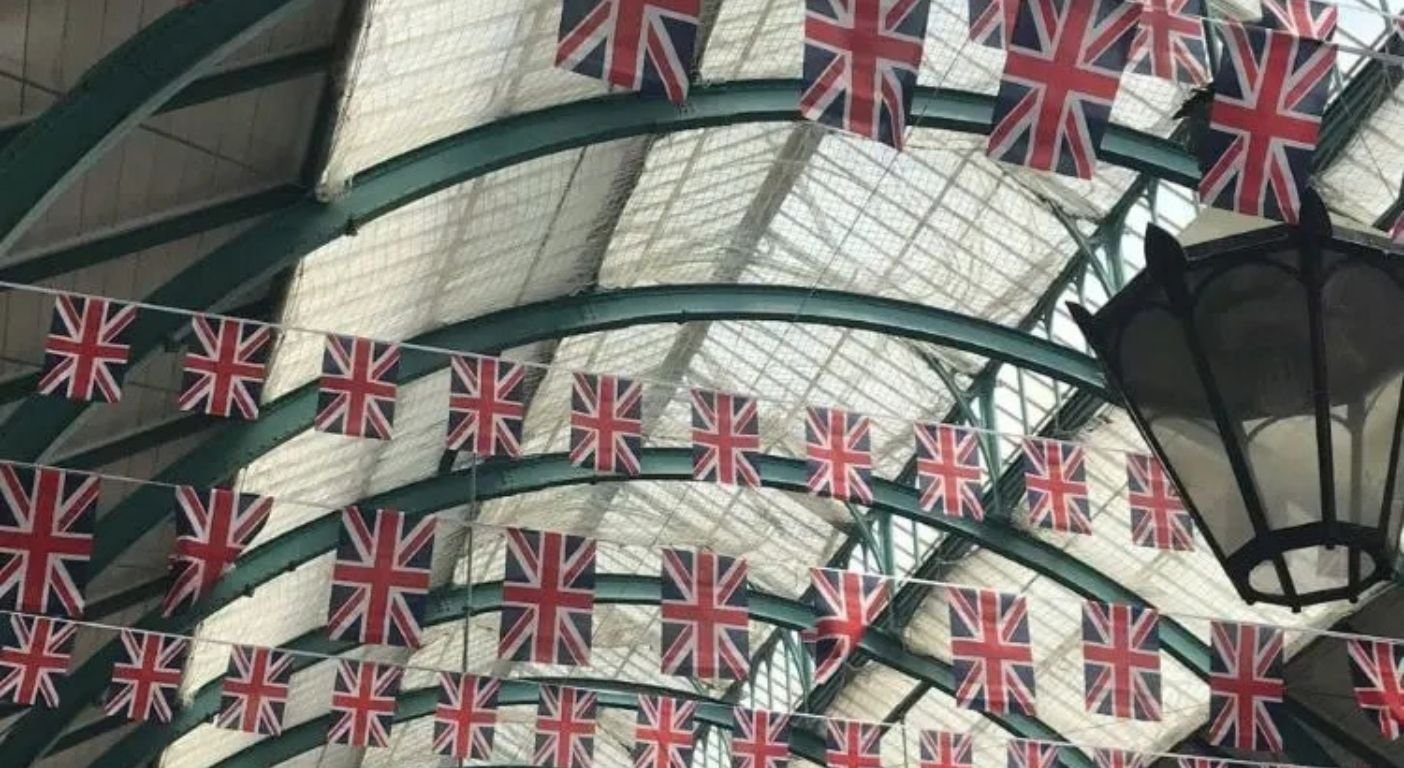
Bunting is different from the tall individual flags discussed above. It normally consists of a series of connected triangular or similarly shaped pieces arranged along a line.
For example, bunting can be used to decorate event areas, retail spaces, celebrations, promotional zones, or temporary outdoor installations.
Bunting works particularly well when the objective is to create a broader decorative effect rather than direct a visitor toward a particular location.
How to Choose the Right Flag Type
The flag shape should be selected according to the actual environment rather than appearance alone.
Consider the Location
An entrance, roadside area, exhibition stand, and indoor event space may require completely different display formats.
Think About Wind and Weather
Outdoor flags need an appropriate base and material for the conditions in which they will be displayed. Wind exposure is particularly important because a lightweight indoor base may not be suitable for an exposed outdoor location.
Consider Viewing Distance
If people will see the flag from far away, large graphics and short messages are usually easier to understand than detailed information.
Check Available Space
Measure the installation area before selecting the flag and pole height. A tall flag may work well in an open outdoor space but may be unsuitable beneath a low canopy or inside a small exhibition booth.
Think About Reuse
Businesses that attend several events may benefit from a flag system that can be packed, transported, and assembled repeatedly.
Designing Flags for Better Visibility
Good flag design is generally simple and easy to recognize.
A practical design should consider:
- Brand logo placement
- Contrast between text and background
- Limited wording
- Readable typography
- Clear visual hierarchy
- Appropriate image resolution
- Visibility from different angles
It is also important to remember that fabric moves. A design that looks perfect on a flat computer screen may appear different when the flag is curved or moving in the wind.
Zahrat Al Madina Printing is one example of a Dubai-based printing business that provides different custom flag formats, illustrating why businesses can benefit from comparing available shapes and display systems before placing an order.
Choosing the Right Base
The flag itself is only part of the display system. The base determines how the flag is supported.
Depending on the location, options may include ground spikes, cross bases, water-weighted bases, or other support systems. The correct choice depends on the surface, whether the display is indoors or outdoors, and expected wind conditions.
For outdoor business promotion in Dubai, it is particularly important to consider whether the display will be installed on grass, pavement, concrete, or another surface.
Conclusion
Choosing a business flag is mainly about matching the format to the environment and purpose. Sail and feather flags can provide strong vertical visibility, teardrop flags offer a distinctive silhouette, L-shape formats provide a structured display, while telescopic systems offer flexibility. Bunting, meanwhile, can add a decorative element to promotional or event spaces.
Before ordering, businesses should consider location, weather exposure, available space, viewing distance, artwork, base type, and future reuse. A well-planned flag display can then become a practical part of an outdoor or event branding setup without relying on excessive text or complicated designs.
Frequently Asked Questions
1. Which flag type is suitable for business promotion?
There is no single format for every business. Sail, feather, teardrop, L-shape, and telescopic flags can each suit different locations and display requirements.
2. Are promotional flags suitable for outdoor use?
Many flag systems are designed for outdoor applications, but the fabric, pole, base, and installation method should match the expected environmental conditions.
3. What should be printed on a business flag?
A logo, short brand message, product name, event name, or simple call to action can work well. Long paragraphs and excessive information are generally difficult to read on moving fabric.
4. How should a flag base be selected?
Consider the surface, flag size, indoor or outdoor location, and expected wind conditions. A stable base is especially important for outdoor displays.
5. Can custom flags be reused?
Yes, many flag systems are designed to be assembled and transported repeatedly. Reusability depends on the material, construction, storage conditions, and how the display is handled.