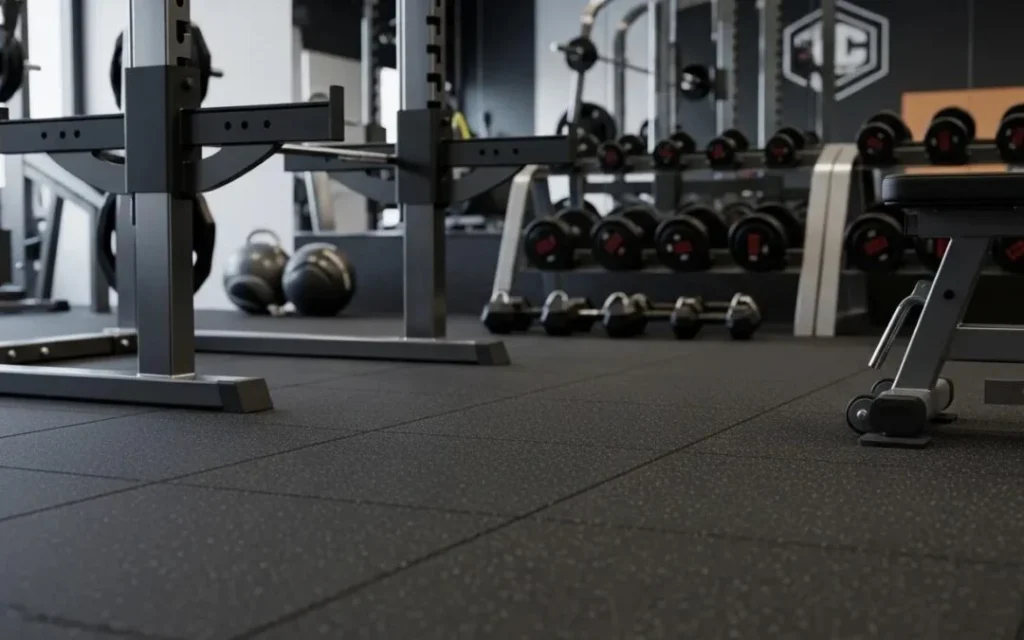
Gym flooring rarely makes headlines until something goes wrong. A member slips in a high-traffic zone. A piece of equipment rocks on an uneven surface. A barbell drop rattles the subfloor hard enough to raise concerns from the building below. At that point, the cost of inadequate commercial gym flooring stops being abstract and becomes very concrete, very quickly.
For commercial facility operators, flooring is not just a surface to stand on. It is a layer of protection for members, equipment, and the facility itself. Getting it right from the beginning is far less expensive than dealing with the consequences of getting it wrong.
The Member Safety Equation
Commercial training environments are high-impact spaces. Weights move, bars get dropped, athletes push hard, and the floor absorbs all of it. When flooring is too thin, improperly installed, or made from material that degrades under repeated use, it stops performing the job it was specified to do.
Worn or insufficient flooring creates uneven surfaces that compromise footing during dynamic movements. Lifting with an unstable base is a setup for injury, and in a commercial facility, member injuries carry liability implications that go well beyond the immediate medical concern. Slip hazards, edge lifting, and surface deterioration are not cosmetic problems. They are risk management problems.
How Flooring Affects Equipment Longevity
The relationship between flooring and equipment condition is underappreciated. Rubber gym mats or properly installed commercial gym flooring absorb the impact load that would otherwise transfer directly into both the equipment and the subfloor. When that buffer is absent or inadequate, the mechanical components of strength machines, the welds on racks and frames, and the legs of cable stacks absorb vibration and point-load stress that compounds over time.
Commercial equipment is expensive. Protecting it from unnecessary wear through appropriate flooring is one of the lowest-cost insurance policies a facility can invest in. Rubber gym mats placed strategically under high-use equipment and in heavy drop zones extend the functional lifespan of the equipment they cover.
Sanitation and Surface Maintenance in High-Traffic Environments
Commercial gym flooring takes a beating from more than just equipment and weights. Sweat, cleaning chemicals, bacteria, and moisture contact the surface daily. Flooring that is not rated for commercial sanitation demands degrades faster, harbors bacteria in surface pores and seams, and becomes harder to clean effectively over time.
Dense rubber surfaces resist moisture absorption and hold up against the cleaning agents that commercial gyms require. The difference matters most in high-traffic zones: free weight areas, stretching floors, turf lanes, and near-entrance transition zones where foot traffic peaks throughout the day.
Seams and edges are the most vulnerable points in any flooring installation. Where tiles or rolls meet, moisture and debris collect. Well-executed installations minimize exposed seams and use appropriate adhesive or interlocking systems to prevent edge lifting, which is both a sanitation concern and a trip hazard.
The Long-Term Math on Flooring Investment
Facility operators who choose cheaper flooring to manage upfront cost typically face one of two outcomes: full replacement within a few years, or ongoing patch repairs that never fully address the underlying problem. Neither is cost-efficient.
Quality commercial gym flooring, correctly specified for the training activities taking place on it, holds up under years of daily use without significant degradation. The per-year cost of a quality installation spread over its useful life consistently undercuts the per-year cost of replacing inferior flooring more frequently.
The other factor that rarely shows up in initial cost comparisons is member perception. Flooring condition is one of the first things experienced athletes notice when they walk into a facility. Cracked, worn, or patchy flooring may signal that maintenance standards are low across the board. Quality flooring communicates the opposite.
Knowing What to Specify
The variables that matter most for commercial facility operators are material formulation, density, thickness relative to activity, seam placement, and surface texture. Each of these affects how the floor performs and how long it lasts under real training conditions.