Cheap equipment looks good right up until you put it to work.
That’s especially true when you’re digging through hard clay, compacted ground, gravel, or rock. A bucket that works perfectly fine in loose soil can struggle badly once the ground gets serious. And if you’re comparing excavator buckets for sale, price shouldn’t be the first thing you look at.
Because saving a few hundred dollars upfront doesn’t mean much if the bucket bends, teeth wear out quickly, or the machine spends half the day fighting the ground.
For contractors, landscapers, farmers, and equipment owners, that downtime adds up. Fast.
Rock and Clay Are Hard on Buckets
Digging in soft soil is one thing. Rock and clay are different animals.
Clay can pack tightly inside the bucket and make digging feel like you’re trying to pull a shovel out of concrete. Rock is worse. You’re dealing with impact, abrasion, and uneven loads that put stress on the bucket teeth, cutting edge, side plates, and mounting points.
That’s why bucket selection matters.
A light-duty bucket might be fine for landscaping work or loose dirt. But take that same bucket into rocky ground every day and you’re asking for trouble.
The bucket needs to match the job.
The Cheapest Bucket Can Become the Most Expensive
This is the part buyers sometimes learn the hard way.
You find two buckets online. One costs significantly less. Naturally, it looks like the better deal.
But what happens if the cheaper bucket has thinner steel? What if the teeth don’t hold up? What if the cutting edge starts bending after repeated impact?
Now you’re paying for repairs or another bucket.
And there’s something else people forget — labor.
If a bucket fails while a crew is working, you’re not just replacing equipment. You may also be losing productive hours.
That $500 or $1,000 you saved suddenly doesn’t look like much.
What Makes a Bucket Better for Rock?
A rock bucket needs to handle abuse without constantly deforming.
When you’re shopping for a bucket for rocky excavation, pay attention to the construction instead of just the price tag.
Look at the:
- Steel thickness
- Side plate construction
- Cutting edge
- Tooth design
- Weld quality
- Mounting points
A properly built bucket distributes digging forces more effectively. That matters when the ground isn’t cooperating.
You don’t necessarily need the biggest or heaviest bucket either. You need the right bucket for your excavator and the conditions you’re working in.
Clay Creates a Different Problem
Rock gets most of the attention, but hard clay can be just as frustrating.
Clay sticks. It packs. It can make a bucket difficult to fill and even harder to dump.
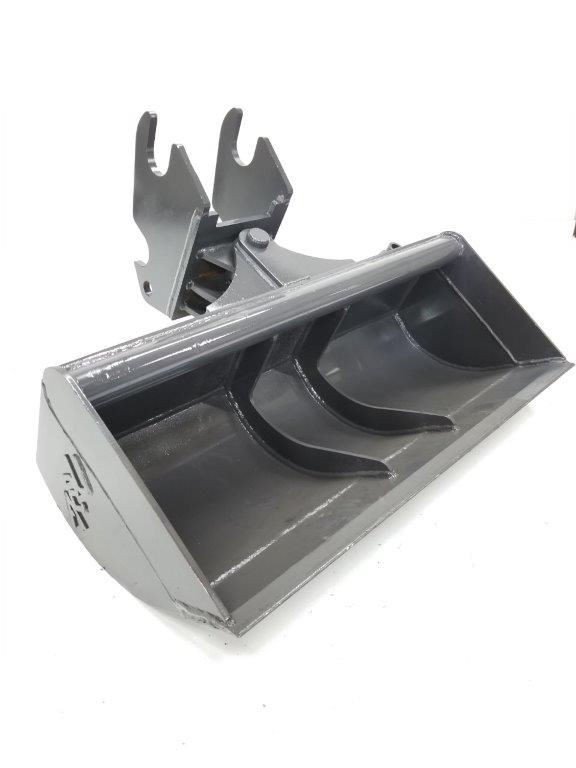
A bucket designed with appropriate spacing and geometry can help material release more easily. Tooth configuration matters too, especially when you’re breaking into compacted clay.
If you’re running a compact excavator, this becomes even more important. A smaller machine has less breakout force to work with, so the bucket needs to help rather than fight the machine.
That’s where choosing the right mini excavator attachment can make a noticeable difference.
Don’t Ignore the Teeth
If you’re digging rock or hard clay, teeth aren’t just a small detail.
They’re the first part of the bucket making contact with the ground. They need to penetrate hard material and transfer that force without wearing down immediately.
Worn teeth make the excavator work harder.
Instead of penetrating the soil, the bucket starts scraping across it. That can increase cycle times and put additional stress on the machine.
Good teeth won’t magically make granite disappear, obviously. But the right tooth setup makes hard digging considerably more manageable.
Bucket Weight Needs to Match the Machine
Here’s another mistake buyers make.
They see a heavier bucket and assume heavier means stronger and better.
Not always.
A bucket that’s too heavy for a compact excavator can reduce lifting performance and make the machine less efficient. You might gain some structural strength but lose useful digging performance.
The goal is balance.
Your excavator needs enough hydraulic and breakout power to work the bucket effectively.
That’s why machine specifications should always be checked before buying an attachment.
Consider What You’re Actually Digging
Not every rocky job needs the same bucket.
There’s a difference between:
- Hard clay with occasional rocks
- Gravel and loose rock
- Dense rocky soil
- Fractured rock
- Heavy excavation through large stones
If you’re mostly dealing with hard clay and occasional rock, a general-purpose heavy-duty bucket might make sense.
If you’re consistently working through rocky ground, you’ll probably want something designed specifically for that kind of abuse.
The right choice depends on the job, not what happens to be cheapest on the product page.
Why Contractors Should Think About Downtime
Contractors have a different calculation than someone doing a weekend project.
If your excavator is making money every hour, downtime has a real dollar value.
A damaged bucket can stop production. Then you’ve got a crew waiting, equipment sitting, and a customer wondering what’s taking so long.
That’s why experienced contractors tend to look beyond the initial purchase price.
A durable bucket that lasts longer can actually be cheaper over the life of the equipment.
Not glamorous. Just good business.
Where a Mini Excavator Attachment Fits In
Mini excavators are incredibly useful because they can get into places larger machines can’t. Backyards, narrow access areas, utility work, landscaping projects and smaller construction sites.
But their compact size means attachment selection becomes even more important.
The right mini excavator attachment can help you get more from a smaller machine without overloading it.
Whether you’re choosing a bucket for trenching, digging foundations, removing compacted soil, or working around rocks, make sure the attachment matches the machine’s weight, hydraulic capabilities, and intended application.
Don’t just buy because it fits the quick coupler.
Fit and performance are two different things.
What About Maintenance?
Even a well-built bucket needs attention.
Hard digging creates wear. That’s unavoidable.
Operators should regularly check:
- Teeth and adapters
- Cutting edges
- Welds
- Side plates
- Mounting points
- Pins and bushings
If something looks bent or cracked, deal with it early.
A small repair is one thing. Letting a crack spread across a major structural area is a completely different problem.
And yes, keeping spare wear parts around can save headaches when you’re working on a tight schedule.
FAQ: Choosing an Excavator Bucket for Rock and Clay
Can a standard excavator bucket dig through rock?
It can handle some rocky soil, but a standard bucket may not be the best choice for repeated heavy rock excavation. A heavier-duty or rock-focused bucket is generally better suited to demanding conditions.
What type of bucket is best for hard clay?
A bucket with an appropriate tooth configuration and digging geometry can perform better in compacted clay. The correct choice also depends on excavator size and hydraulic performance.
Is a heavier excavator bucket always better?
No. Too much bucket weight can reduce the machine’s useful digging and lifting performance. The bucket should be matched to the excavator.
What should I check when comparing excavator buckets for sale?
Look beyond price. Check steel construction, teeth, cutting edge, welds, mounting points, weight, and compatibility with your excavator.
Can a mini excavator dig rock?
Yes, depending on the machine’s size, hydraulic power, ground conditions, and attachment. Very hard rock may require specialized equipment or additional breaking methods.
Final Thoughts
There’s nothing wrong with saving money. Everybody wants a good deal.
But digging through rock and hard clay isn’t the place to chase the cheapest bucket you can find.
A bucket that costs a little more upfront may give you better wear resistance, stronger construction, and fewer headaches over time. That’s what matters when you’re putting equipment to work every day.
If you’re comparing excavator buckets for sale, look at the job first. Then the machine. Then the bucket.
Not the other way around.
And if you’re working with a compact machine, choosing the right mini excavator attachment can make a surprisingly big difference in productivity.
The cheapest bucket isn’t necessarily a bad bucket. It just may not be the right bucket for the ground you’re asking it to handle. Rock and clay don’t care how much you paid for the attachment. They’ll find the weak spot eventually.