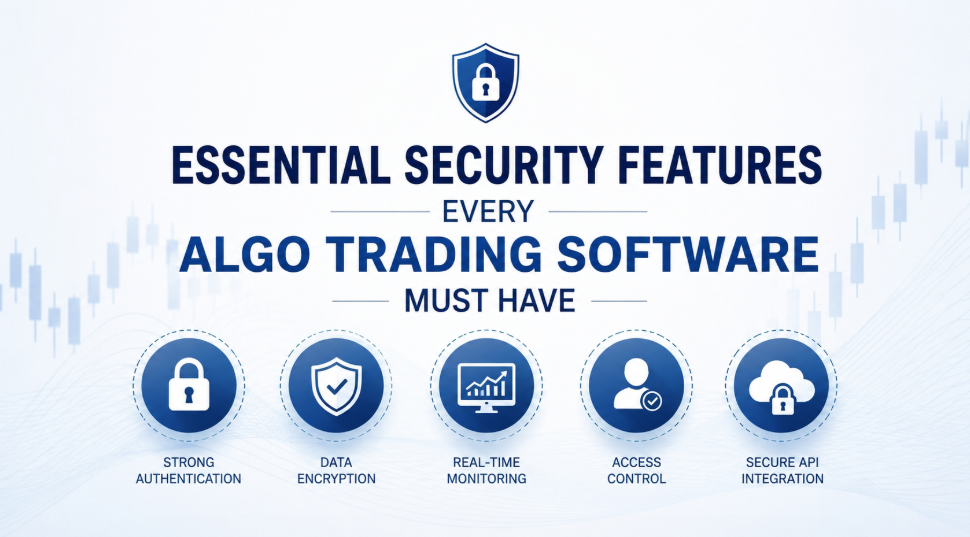
Essential Security Features Every Algo Trading Software Must Have
The financial markets have evolved dramatically over the last decade. Traders no longer rely solely on manual execution, spreadsheets, or constant monitoring of price charts. Instead, sophisticated algorithmic trading systems execute trades within milliseconds, making decisions based on predefined strategies and real-time market data. As automation becomes the backbone of modern trading, security has emerged as one of the most critical factors determining the success and reliability of trading solutions.
Businesses, hedge funds, brokers, fintech startups, and institutional investors are increasingly investing in algo trading software development services to create advanced trading ecosystems that can execute transactions efficiently and securely. While speed, automation, and accuracy remain essential, none of these benefits matter if the platform is vulnerable to cyberattacks, unauthorized access, data breaches, or system manipulation.
A single security loophole can lead to financial losses worth millions, damage customer trust, and result in regulatory penalties. Therefore, every algorithmic trading solution must be designed with a security-first approach. This article explores the most essential security features every algo trading software must have to ensure safe, uninterrupted, and reliable trading operations.
Why Security Matters in Algorithmic Trading
Algorithmic trading systems process enormous volumes of financial transactions every second. These platforms handle sensitive information such as user credentials, trading strategies, account balances, transaction histories, and API integrations with exchanges and brokers.
Unlike traditional software applications, trading platforms operate in an environment where milliseconds matter. Cybercriminals understand the value of financial data and often target trading systems to exploit vulnerabilities. Unauthorized access can lead to fraudulent transactions, manipulation of trading strategies, theft of proprietary algorithms, and exposure of confidential customer information.
Moreover, regulatory authorities across global financial markets require trading platforms to comply with strict security standards. Failure to maintain adequate security measures can result in operational disruptions, legal complications, and reputational damage.
For these reasons, security must be integrated into every layer of an algorithmic trading platform rather than treated as an afterthought.
Strong User Authentication Mechanisms
The first line of defense for any trading software is user authentication. Weak login systems make platforms vulnerable to credential theft and unauthorized access.
Modern algorithmic trading software should implement multi-factor authentication (MFA) to verify user identities beyond simple passwords. By requiring an additional verification factor such as a one-time password, authentication application, or biometric verification, platforms can significantly reduce the risk of account compromise.
Password management systems should also enforce complexity requirements, periodic updates, and protection against brute-force attacks. Advanced authentication protocols ensure that only authorized individuals can access sensitive trading accounts and functionalities.
Strong authentication not only enhances security but also builds confidence among traders and institutional clients who entrust platforms with significant financial assets.
End-to-End Data Encryption
Data encryption is one of the most fundamental security requirements in modern trading software. Sensitive information constantly moves between users, servers, exchanges, and third-party integrations.
Without proper encryption, cybercriminals can intercept and exploit valuable trading data during transmission. End-to-end encryption ensures that information remains protected from unauthorized access throughout its entire journey.
Secure communication protocols such as TLS encryption safeguard data transmitted across networks. At the same time, database encryption protects stored information from breaches even if attackers gain access to backend systems.
Encryption plays a critical role in securing user credentials, financial transactions, API communications, and proprietary trading algorithms from cyber threats.
Secure API Integration
Algorithmic trading platforms rely heavily on APIs for communication with brokers, exchanges, market data providers, and external services. These APIs form the backbone of automated trading operations.
However, poorly secured APIs create significant security vulnerabilities. Attackers can exploit insecure endpoints to access sensitive information, manipulate trades, or disrupt trading activities.
Every trading platform should implement API authentication methods such as OAuth, token-based access controls, and encrypted communication channels. API rate limiting should also be enforced to prevent abuse and denial-of-service attacks.
Regular API security assessments help identify vulnerabilities before they can be exploited. Since APIs are essential to modern trading ecosystems, securing them is critical for maintaining platform integrity.
Role-Based Access Control
Not every user within a trading organization requires the same level of access. Developers, administrators, analysts, traders, and compliance officers each have different responsibilities and permissions.
Role-Based Access Control (RBAC) ensures that users can access only the resources necessary for their roles. This minimizes the risk of accidental errors, insider threats, and unauthorized actions.
For example, a trader may execute trades but should not modify system configurations. Similarly, a developer may access code repositories but should not have permission to withdraw funds.
By implementing granular access controls, organizations can significantly reduce security risks while maintaining operational efficiency.
Real-Time Threat Monitoring
Cyber threats continue to evolve, making proactive monitoring essential for algorithmic trading platforms.
Real-time threat monitoring systems continuously analyze platform activities, user behavior, transaction patterns, and network traffic to identify suspicious activities. These systems can detect unusual login attempts, unauthorized transactions, abnormal trading behavior, and potential malware infections.
Advanced monitoring tools use machine learning and behavioral analytics to recognize emerging threats before they escalate into serious incidents.
Early threat detection enables organizations to respond quickly, minimizing financial losses and preventing widespread system compromise.
Protection Against DDoS Attacks
Distributed Denial-of-Service (DDoS) attacks remain one of the most common threats facing financial platforms. These attacks overwhelm servers with excessive traffic, causing service disruptions and downtime.
For algorithmic trading systems, even a few minutes of downtime can result in substantial financial losses. Trading opportunities may be missed, automated strategies may fail, and customer confidence can suffer.
Robust DDoS protection mechanisms include traffic filtering, load balancing, network redundancy, and cloud-based mitigation services. These solutions ensure that trading platforms remain operational even during large-scale attack attempts.
Maintaining platform availability is critical to preserving market competitiveness and ensuring uninterrupted trading.
Secure Storage of Trading Algorithms
Trading algorithms often represent a firm’s most valuable intellectual property. Proprietary strategies provide competitive advantages that organizations spend years developing and optimizing.
If these algorithms are stolen or exposed, competitors could replicate trading strategies, leading to financial and strategic losses.
Secure storage mechanisms should include encrypted repositories, access restrictions, version control systems, and audit logging. Sensitive algorithmic code should never be exposed unnecessarily within development or production environments.
Protecting intellectual property is just as important as safeguarding financial assets within modern trading ecosystems.
Comprehensive Audit Trails
Transparency and accountability are essential components of secure trading platforms. Comprehensive audit trails provide detailed records of all system activities, including logins, trade executions, configuration changes, and administrative actions.
Audit logs help organizations investigate security incidents, identify compliance violations, and track operational activities.
Regulatory authorities often require trading firms to maintain detailed records for auditing purposes. Secure audit trail systems ensure that records remain tamper-proof and readily accessible when needed.
A well-maintained logging infrastructure enhances both security and regulatory compliance.
Automated Risk Management Controls
Risk management is closely connected to platform security. Unexpected market conditions, system malfunctions, or unauthorized activities can generate significant financial exposure.
Automated risk controls help prevent catastrophic losses by enforcing predefined trading limits and safeguards. These controls may include position limits, stop-loss mechanisms, margin monitoring, exposure thresholds, and trading circuit breakers.
By continuously evaluating trading activity against established risk parameters, platforms can automatically intervene when abnormal situations occur.
Strong risk management frameworks provide an additional layer of protection for both traders and platform operators.
High-Frequency Trading Security Requirements
As markets become increasingly competitive, many financial institutions are adopting HFT software development solutions to gain speed advantages in trade execution. High-frequency trading environments process enormous transaction volumes within microseconds, creating unique security challenges.
In HFT ecosystems, even minor vulnerabilities can have amplified consequences due to the scale and speed of operations. Secure low-latency infrastructure, hardware-level security controls, encrypted communications, and real-time anomaly detection become essential components.
HFT platforms must also implement advanced monitoring systems that can identify suspicious activity without introducing latency. Balancing security and performance is critical for maintaining operational efficiency while protecting sensitive trading environments.
Organizations investing in high-frequency trading solutions must prioritize security architecture from the earliest stages of development.
Regulatory Compliance and Data Protection
Financial regulators worldwide continue to strengthen cybersecurity requirements for trading platforms. Compliance is no longer optional but a mandatory component of operating within regulated markets.
Trading software should support compliance with regulations related to data privacy, cybersecurity, anti-money laundering, and financial reporting. Security frameworks must include data retention policies, identity verification procedures, transaction monitoring, and incident reporting capabilities.
Compliance-focused security measures not only reduce legal risks but also demonstrate credibility to investors, partners, and customers.
Organizations that proactively address regulatory requirements position themselves for long-term success in competitive financial markets.
Disaster Recovery and Business Continuity Planning
No security strategy is complete without comprehensive disaster recovery capabilities. Hardware failures, cyberattacks, natural disasters, and unexpected outages can disrupt trading operations at any time.
A robust disaster recovery framework ensures that critical systems can be restored quickly with minimal impact on trading activities. Redundant infrastructure, automated backups, failover mechanisms, and geographically distributed data centers contribute to operational resilience.
Business continuity planning enables organizations to maintain service availability even during adverse circumstances. This level of preparedness is essential for protecting revenue streams and customer trust.
AI-Powered Security Enhancements
Artificial intelligence is transforming cybersecurity across multiple industries, including algorithmic trading. AI-driven security systems can analyze massive datasets, identify hidden threats, and respond to incidents faster than traditional approaches.
Machine learning models continuously learn from user behavior and market activities to detect anomalies that may indicate fraud, account compromise, or system manipulation.
AI-powered security tools can automate threat detection, vulnerability assessments, and incident response workflows, significantly improving overall protection levels.
As cyber threats become more sophisticated, AI-based security solutions will play an increasingly important role in safeguarding trading platforms.
The Future of Secure Algorithmic Trading Platforms
The future of financial technology will be defined by automation, artificial intelligence, and increasingly sophisticated trading infrastructures. As the adoption of algorithmic trading platforms continues to grow globally, security will remain a key differentiator between successful and vulnerable solutions.
Investors and traders are becoming more aware of cybersecurity risks and increasingly expect robust protection mechanisms from the platforms they use. Future trading systems will likely incorporate advanced biometric authentication, blockchain-based verification, quantum-resistant encryption, and predictive threat intelligence capabilities.
Organizations that prioritize security from the outset will be better positioned to attract customers, meet regulatory requirements, and maintain long-term operational stability. In a market where trust directly influences adoption, security will continue to serve as a competitive advantage rather than merely a technical requirement.
Conclusion
Algorithmic trading has revolutionized financial markets by enabling faster, smarter, and more efficient trade execution. However, the increasing sophistication of trading technology has also expanded the cybersecurity threat landscape. Security can no longer be viewed as an optional feature—it must be a foundational element of every trading platform.
From strong authentication and encrypted communications to secure API integrations, real-time monitoring, risk management controls, and disaster recovery planning, every layer of an algorithmic trading solution must be designed with protection in mind. Organizations that invest in robust security frameworks can safeguard financial assets, protect proprietary trading strategies, maintain regulatory compliance, and build lasting trust with users.
As algorithmic trading continues to evolve, the platforms that combine innovation with enterprise-grade security will lead the next generation of financial technology. Businesses developing modern trading solutions must ensure that security remains at the center of every design, development, and deployment decision to achieve sustainable success in the highly competitive trading landscape.