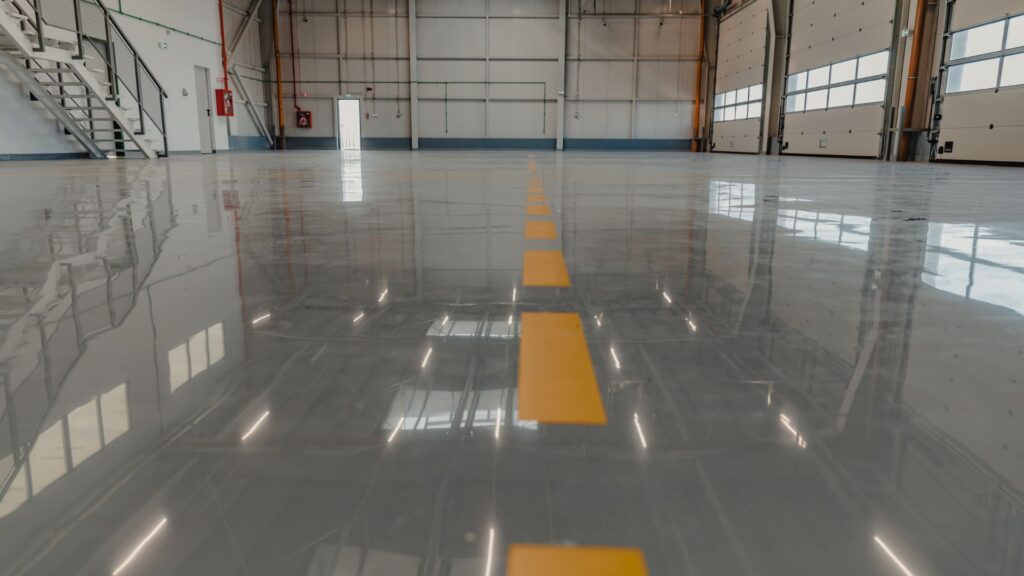
Few things worry a business owner more than the words “strong chemical smell” and “full staff on site” in the same sentence. You want a new floor, but you don’t want headaches, complaints, or a day of lost work. The honest answer is that it depends on the product, the space, and the plan. Many businesses do stay open, with some adjustments.
If you’re talking to a few commercial epoxy flooring companies, this guide explains what the smell is, who should stay clear of it, and how to plan around it.
Where the Smell Comes From
The odor comes from the liquid coating while it’s being mixed and applied. As the material cures, it releases vapors called VOCs, short for volatile organic compounds. Solvent-based products release a lot of them. That’s the sharp smell most people remember from old-school floor jobs.
Newer systems are different. Products labeled 100% solids and low-VOC contain little or no solvent, so there’s much less to evaporate. They still have a smell, since any coating does, but it’s usually milder and fades faster.
Epoxy and Polyaspartic Aren’t Identical
The smell of epoxy is usually not too strong and lasts for about a day. However, there are some polyaspartics that might emit a stronger smell when being installed. But at the same time, their curing process is faster, thus eliminating the problem quicker. The name of the brand and specific formula used are more important than what kind of epoxy was used.
Who Should Stay Away
Fumes affect different people in different ways. While the vast majority of normal, healthy adults will only notice an unpleasant odor, others may experience headaches, watering eyes, or a scratchy throat. People living with Asthma, allergy sufferers, and anyone else with breathing issues will find this difficult, while pregnant employees are advised to steer clear.
If your company can’t stand any smell at all, you would fall into this category. Restaurants, daycare centers, clinics, and veterinary facilities generally do. In this case, expect to keep the floor area cordoned off during the process.
How Crews Keep Air Clean
Installers have a few standard tools. Fans and open doors move fresh air through the space. Temporary plastic barriers can separate the work zone from the rest of the building. Some crews use air scrubbers or run exhaust fans to push vapors outside rather than letting them drift into hallways.
Dust is the other half of the story. Diamond grinding kicks up fine concrete dust, so ask whether the grinders connect to HEPA vacuums. Clean air during prep matters just as much as low odor during coating.
Working Around Your Schedule
The only real way to avoid the smell is by avoiding having to be there. Nighttime or weekend applications give your crew an opportunity to bypass that problem entirely. A restaurant can close for the night after Saturday operations and reopen on Monday. An office can take advantage of a long weekend. Systems like polyaspartics work well in this case, as many installations require just a single day’s worth of time, with light traffic occurring just a few hours later, reaching peak use within a day.
If closing the whole building is not an option, try sectioning the project into parts. Paint a section, give it some time to cure and ventilate, then proceed.
Questions to Ask Before You Sign
Keep it simple. Find out what type of product will be used and whether it’s low-VOC. Enquire about the usual period of the smell and the ventilation arrangement. Ask when it will be safe for the employees and clients to come back, as well as the measures to be taken in case it is humid or cold.
An honest contractor will always give you the right answer, even if it’s “lock that wing down for a day.
Choosing an Installer
Odor and safety are good tests of a contractor’s professionalism. The ones who explain their ventilation plan without being asked are usually careful about everything else too. Look for commercial insurance, a written warranty, and finished jobs in spaces like yours.
If you’re in North Alabama, Rocket City Epoxy is one local company you could add to your shortlist. The Huntsville team uses 100% solids, low-VOC materials, runs diamond grinders with HEPA vacuums, and offers night and weekend scheduling. Whoever you speak with, collect a couple of quotes first.
A Calmer Way to Plan
A floor that is covered with epoxy does not need to ruin your week while working from home. Pick the appropriate epoxy, plan when to apply the floor at times when people do not want to be disturbed by noise, and exclude sensitive persons from the place until the fumes disappear.
FAQs
Is epoxy fume exposure harmful?
Short-term exposure to the fumes when installing is not generally dangerous for healthy individuals, though it can result in headaches or dizziness. For sensitive individuals, it might lead to irritation. The use of ventilation, low VOC products, and segregation of the area can help minimize the exposure risk.
How long does the epoxy smell last?
This would depend upon what product you are using, temperature, and the presence of airflow. Low-VOC paints will typically start to disappear after about one day, while the more pungent products may stick around for about two days. Warm, ventilated rooms will have them disappear more quickly than cold and humid ones.
Can employees stay in the building during installation?
Usually, yes, but only when the work area is sealed and ventilated or when the installation process occurs during nighttime or weekend hours. Employees who have respiratory problems, for example, asthmatics, must stay away from the work site. Clinics and other establishments tend to close off the area altogether until the odor disappears.
How do I get rid of epoxy odor faster?
Let fresh air in through open doors, windows, and fans, and do not close up the room completely. Moderate temperatures will allow for the curing process to be more effective and speed up the release of the gases. You should never try to cover up the smell with an air freshener.
What should I ask about fumes before hiring a contractor?
Ask about the type of paint they will use and its VOC level, and how they will ensure proper ventilation. Ask for their safety data sheet and an estimate on when staff and customers can go back. When they give you a satisfactory answer, it is a positive indication that they take the task seriously.