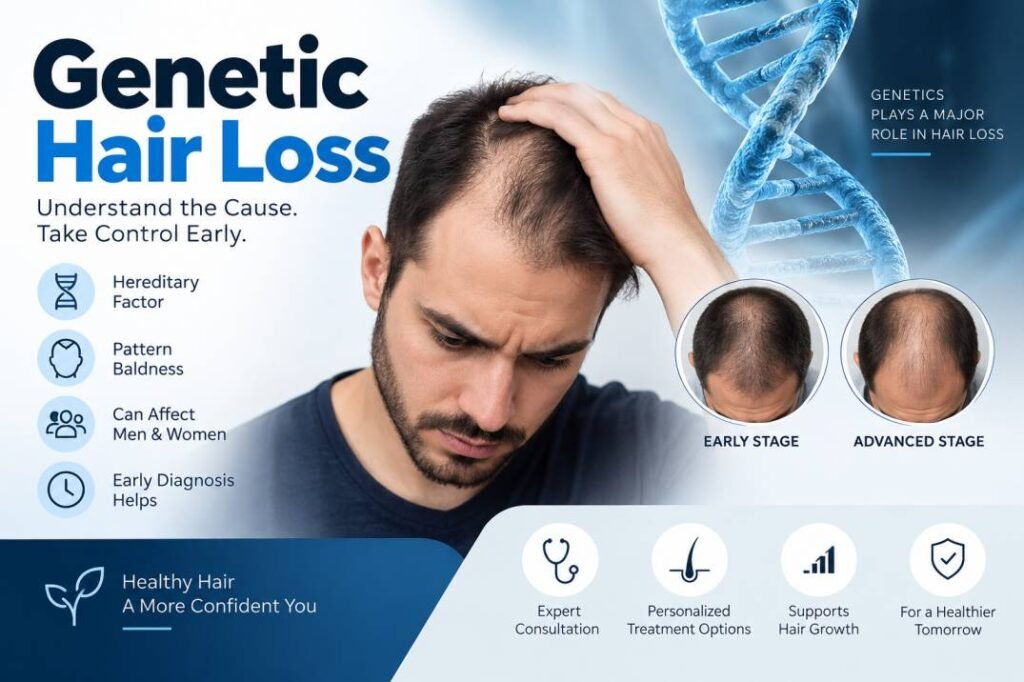
Genetic hair loss is a common condition that can gradually affect hair density, the hairline, temples, or crown. Because it often develops slowly, many people do not recognize the early changes until thinning becomes more noticeable. Understanding the early signs of Genetic Hair Loss can help you seek professional advice and explore suitable hair restoration options at the right time.
What Is Genetic Hair Loss?
Genetic Hair Loss, also known as androgenetic alopecia
Best Solutions for Genetic Hair Loss | Complete Hair Care Guide
Genetic hair loss is one of the most common causes of gradual hair thinning in both men and women. It can affect the hairline, temples, crown, or overall hair density and may progress slowly over time. Recognizing the condition early and choosing an appropriate treatment approach can help manage hair loss and support healthier-looking hair.
This complete guide explains the causes, early signs, treatment options, and hair care strategies associated with Genetic Hair Loss.
What Is Genetic Hair Loss?
Genetic Hair Loss is a form of progressive hair thinning influenced by inherited genetic factors. In people who are genetically predisposed, certain hair follicles can become increasingly sensitive to hormones such as dihydrotestosterone (DHT).
Over time, affected follicles may produce thinner and shorter hairs. With continued progression, visible thinning and changes in hairline or scalp coverage can occur.
Common Signs of Genetic Hair Loss
Identifying early changes can make it easier to seek professional evaluation. Common signs include:
Receding Hairline
A gradually receding hairline, particularly around the temples, can be an early indication of pattern hair loss.
Thinning at the Crown
Some people first notice reduced hair density around the crown or top of the scalp. The thinning may become more visible under bright lighting or when the hair is wet.
Widening Hair Part
Women experiencing Genetic Hair Loss may notice a progressively wider central hair part. Overall hair volume may also decrease.
Finer Hair Texture
Affected follicles may produce finer strands over time. This can make the hair appear less dense even when significant shedding is not obvious.
Increased Scalp Visibility
As hair density decreases, more of the scalp may become visible, especially around the hairline, crown, or parting area.
Best Solutions for Genetic Hair Loss
The most appropriate approach depends on the cause, stage, age, pattern of thinning, and overall scalp health. A qualified dermatologist or hair restoration specialist can assess the condition and recommend suitable options.
Medical Treatments
Certain prescription or clinically approved treatments may help slow progression or support hair growth in suitable patients. The choice depends on individual circumstances, and treatment should be used under appropriate professional guidance.
Medical treatment may be particularly useful when Genetic Hair Loss is identified at an early stage.
Read also: How a Photo Booth, DJ and Live Saxophone Player Can Elevate Your Wedding
Hair Transplantation
Hair transplantation can be considered when permanent areas of thinning or baldness have developed and sufficient donor hair is available.
Techniques such as Follicular Unit Extraction (FUE) involve harvesting individual follicular units from a donor area and placing them into areas affected by hair loss. Proper planning is important for achieving natural-looking density and hairline design.
Combination Hair Restoration
In some cases, specialists may recommend combining medical treatment with hair restoration procedures. This approach may help address both existing thinning and areas where hair density has already been significantly reduced.
The treatment plan should always be personalized according to the patient’s condition.
Importance of Early Treatment
Early attention to Genetic Hair Loss can be beneficial because progressive thinning may become more difficult to manage as follicular miniaturization advances.
People noticing persistent hairline changes, crown thinning, or reduced overall density should consider professional evaluation rather than relying solely on cosmetic hair products.
Hair Care Tips for Genetic Hair Loss
A healthy hair care routine can complement professional treatment. Consider the following practices:
- Use a gentle shampoo suitable for your scalp type.
- Avoid excessive heat styling and harsh chemical treatments.
- Maintain a balanced diet containing adequate protein, vitamins, and minerals.
- Avoid hairstyles that consistently place excessive tension on the hair.
- Follow prescribed treatments consistently.
- Manage stress and maintain healthy lifestyle habits.
- Schedule professional follow-ups when undergoing treatment.
Hair care alone cannot necessarily stop Genetic Hair Loss, but good scalp and hair practices can help maintain the condition of existing hair.
Can Genetic Hair Loss Be Prevented?
Because genetics plays a significant role, Genetic Hair Loss cannot always be completely prevented. However, early diagnosis and appropriate treatment may help manage progression in many cases.
Regular monitoring of hair density and changes in the hairline can help identify progression earlier.
When Should You Consult a Hair Specialist?
You should consider professional evaluation if you notice:
- Progressive hairline recession
- Increasing crown thinning
- Sudden or persistent changes in hair density
- A widening part
- Significant changes in hair texture
- Increasing scalp visibility
A specialist can determine whether the hair loss is genetic or related to another condition and recommend an appropriate treatment plan.
Conclusion
Genetic Hair Loss can gradually affect hair density and appearance, but recognizing the condition early provides an opportunity to explore suitable management and restoration options. Medical treatments, hair transplantation, combination approaches, and consistent hair care may all have a role depending on the individual’s needs.
If you are experiencing progressive thinning, consulting a qualified hair specialist can help identify the underlying cause and determine the most appropriate solution for your hair restoration goals.